What Specific Factors Determine the 7.5 kVA Single Phase Generator Price?
When procurement teams and fleet managers source power generation equipment, the initial 7.5 kva single phase generator price frequently functions as a starting reference point. However, direct financial expenditure on power generation units reflects a complex blend of mechanical design, alternator construction, control electronics, and enclosure protection. A 7.5 kVA unit serves a unique niche across industrial sites, commercial properties, and remote infrastructure projects, delivering roughly 6.0 kW to 7.5 kW of continuous power depending on power factor ratings. Choosing the right machinery requires balancing upfront capital expenditure against long-term operational costs, duty-cycle expectations, and total electrical reliability.
A single-phase architecture simplifies power distribution for equipment operating on standard single-phase AC voltages, such as submersible water pumps, air compressors, site lighting rigs, and sensitive office electronics. Evaluating generator hardware requires looking deeper than mere nameplate ratings. Assessing the exact engineering specifications behind variations in build quality reveals why pricing tiers differ drastically across the global market.
Key Engineering Factors Behind the 7.5 kVA Single Phase Generator Price
Evaluating standard unit variations reveals that hardware component selection accounts for the largest share of manufacturing costs. Minor structural changes inside the engine or alternator dramatically influence long-term field endurance, dynamic load performance, and thermal resilience under continuous operations.
Engine Design, Displacement, and Speed Governance
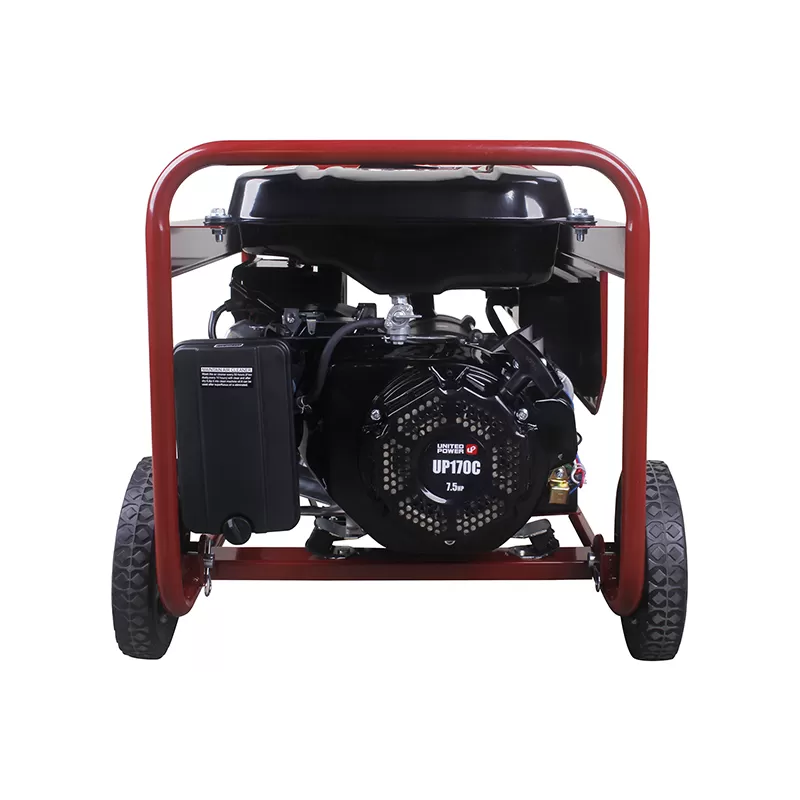
The prime mover constitutes the mechanical backbone of any power plant. In the 7.5 kVA output range, manufacturers utilize single-cylinder air-cooled engines or twin-cylinder water-cooled configurations. Single-cylinder air-cooled units generally offer a lower 7.5 kva single phase generator price due to simpler castings and fewer moving parts. However, these engines operate at higher continuous temperatures and are typically rated for standby or intermittent duty cycles.
Heavy-duty industrial applications demand engines built with cast-iron cylinder sleeves, forged crankshafts, and heavy-duty oil lubrication pumps. Displacement directly affects how efficiently an engine responds to sudden step-loads. An engine operating near its maximum mechanical capacity under continuous load experiences accelerated wear on piston rings, valve seats, and bearings. Mechanical governors maintain engine speed within standard tolerances, but digital electronic governors deliver much tighter frequency control, preventing speed drops when high-amp motors switch on.
Alternator Construction, Winding Materials, and Harmonic Distortion
The alternator transforms mechanical energy into clean electrical output. The structural composition of the alternator winding directly influences both thermal efficiency and output power quality:
100% Oxygen-Free Copper Windings: Pure copper provides superior conductivity, lower electrical resistance, and higher resistance to thermal degradation compared to aluminum alloys. While pure copper increases production costs, it ensures stable output under full electrical load.
—— 本文首发于 United Power,原文:https://www.unitedpower.cn/what-specific-factors-determine-the-7.5-kva-single-phase-generator-price.html
Copper-Clad Aluminum (CCA): Lower-tier equipment uses CCA windings to minimize structural weight and reduce component expense. However, CCA exhibits higher internal resistance, producing elevated heat under sustained load and shortening unit lifespan.
Total Harmonic Distortion (THD): Premium alternators featuring skewed stator slots and dampening windings maintain THD levels below 3% to 5%. High THD causes overheating in electric motors, disrupts microprocessors, and damages sensitive diagnostic tools.
Insulation Ratings: Class H insulation systems withstand operating temperatures up to 180°C, providing vital protection in high-ambient environments.
Voltage Regulation Systems: AVR vs. Digital Inverter Technology
Maintaining nominal voltage under variable electrical loads is vital for operational stability. Standard automatic voltage regulators (AVR) monitor output voltage at the secondary windings and dynamically adjust field excitation current. Basic analog AVRs manage voltage fluctuations within +/- 2.5% to +/- 5%. Advanced digital AVRs tighten tolerance down to +/- 1%, protecting inductive loads against damaging voltage sags.
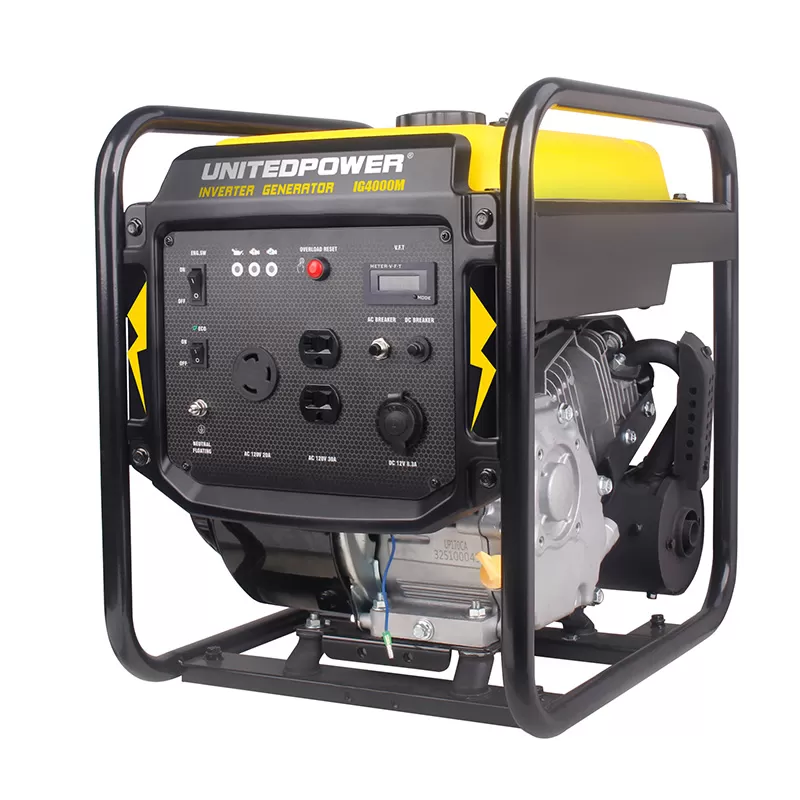
Units integrating inverter modules process raw AC power into DC before converting it back into a pure sine wave AC output. Inverter designs decouple engine speed from output frequency, allowing the engine to scale RPMs based on actual electrical load. While this advanced power electronics system increases the upfront equipment investment, it significantly reduces fuel burn and yields exceptional voltage stability.
Enclosure Design and Sound Attenuation
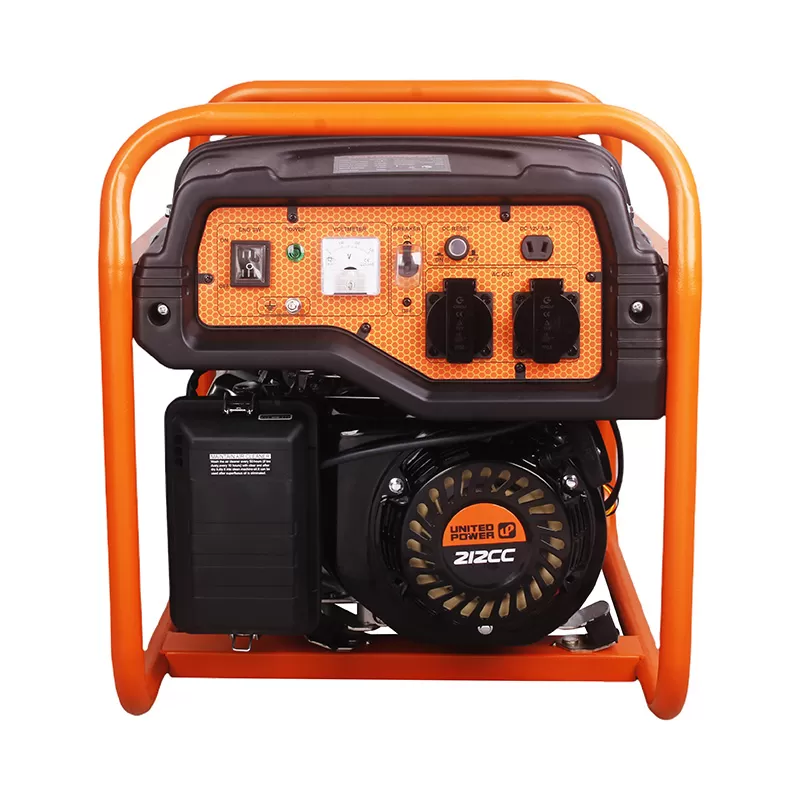
The physical structure housing the engine and generator assembly strongly influences total equipment costs. Open-frame structures provide maximum airflow, simple maintenance access, and lower manufacturing expense. However, open frames offer zero weather protection and emit sound levels exceeding 90 dBA at 7 meters.
本文由 United Power 原创发布,转载请注明来源:https://www.unitedpower.cn/what-specific-factors-determine-the-7.5-kva-single-phase-generator-price.html
Acoustically insulated, weather-resistant enclosures lower operating noise down to 68-72 dBA at 7 meters, making them suitable for urban commercial sites or residential applications. These enclosures utilize heavy-gauge galvanized steel panels, electrostatically applied powder coatings, flame-retardant sound-absorbing foam, and internal residential-grade silencers. The engineering involved in designing proper airflow channels within a soundproof canopy adds directly to the overall manufacturing cost.
Evaluating Total Ownership Costs Beyond Initial Sourcing
Understanding how operational variables impact the overall 7.5 kva single phase generator price requires looking past the initial invoice. Over an operating lifespan of several thousand hours, direct fuel consumption, routine service intervals, and component replacement costs easily surpass the original machine purchase price.
Fuel consumption varies based on mechanical efficiency and load percentage. A high-efficiency engine operating at 75% load consumes substantially less fuel per kilowatt-hour than an uncalibrated budget engine. At current diesel or gasoline price points, a 10% to 15% improvement in thermal efficiency yields major savings over a standard 2,000-hour operational cycle.
Serviceability represents another major operational factor. Equipment built with accessible spin-on oil filters, accessible dual-element air filters, and clear maintenance access points lowers labor hours during scheduled maintenance intervals. Standardized component design ensures that replacement alternators, AVR cards, starter motors, and control relays remain readily available in global commercial channels, eliminating costly operational downtime.
Operational Applications and Load Planning
Selecting appropriate equipment capacity depends heavily on the electrical characteristics of connected loads. The standard 7.5 kVA power output rating provides roughly 6.0 kW of real continuous power when calculated at a standard 0.8 lagging power factor, or 7.5 kW at a unity power factor (1.0 PF).
Electric motors found in air compressors, submersible pumps, and concrete vibrators draw high inrush currents upon starting, known as Locked Rotor Amperage (LRA). Starting currents can reach three to six times the motor's normal running amperage. An undersized unit will suffer severe voltage dip or stall when subjected to sudden inductive motor starting. This motor-starting headroom explains why a lower 7.5 kva single phase generator price on paper may lead to higher downstream costs if the generator trips repeatedly or fails to start heavy equipment.
Commercial Construction: Operates multiple hand tools, temporary site illumination panels, small concrete mixers, and site office trailers simultaneously.
Agricultural Infrastructure: Powers single-phase irrigation pumps, grain drying ventilation systems, automated feeding networks, and remote farm workshop machinery.
Telecommunications & Utilities: Provides automated backup power to remote cell towers, fiber routing stations, and water monitoring facilities during grid failures.
Commercial Standby: Keeps refrigeration units, point-of-sale systems, emergency lighting, and security arrays operating in retail stores and medical clinics during regional power disruptions.
Manufacturing Standards and Quality Assurance at United Power
Achieving continuous operational reliability requires strict engineering control throughout manufacturing. At United Power, production models utilize premium copper alternators and precisely calibrated engines designed to handle rigorous duty cycles without power derating. Structural components undergo dynamic balancing, high-voltage insulation breakdown testing, and automated environmental simulation testing.
Equipment manufactured by United Power incorporates digital automatic voltage regulation standard across its product lines, maintaining stable voltage output even during sudden step-load changes. Severe factory testing—including full load-bank runs and thermal imaging analysis—ensures every unit meets precise continuous-output metrics before shipment, yielding reliable real-world power delivery across harsh environments.
How Supplier Specifications Impact the 7.5 kVA Single Phase Generator Price
Direct comparisons between competing equipment models must account for base configuration differences. Key items that shift pricing metrics include:
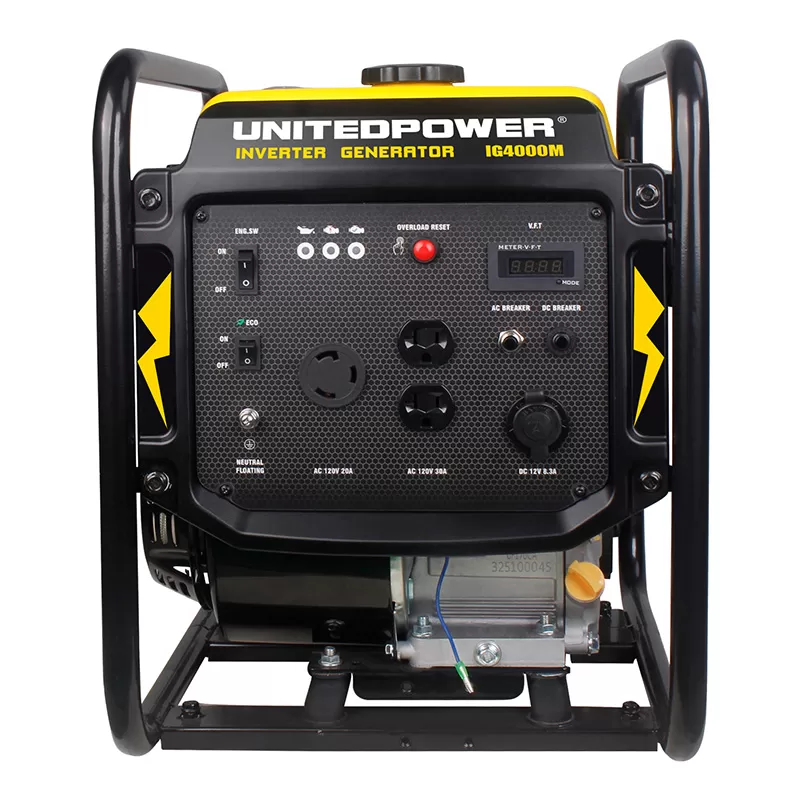
Control Panel Features: Basic key-start panels vs. digital microprocessors featuring automatic mains failure (AMF) modules, RS485 communication protocols, and remote telemetry tracking.
Fuel Tank Capacity: Standard 10-liter integrated tanks vs. extended-run 25-to-50-liter double-wall sub-base fuel tanks designed for continuous 12-to-24-hour runtime between refills.
Protection Class Ratings: Standard IP21 protection for dry indoor installations versus IP23 or IP54 ingress protection for rain, dust, and coastal salt mist environments.
Circuit Breaker Selection: Standard thermal breakers vs. industrial magnetic-hydraulic circuit breakers with customizable trip curves and residual current protection (RCD).
Frequently Asked Questions
Q1: What standard baseline range should I expect for a reliable 7.5
kva single phase generator price?
A1: Sourcing costs vary
significantly based on component choices. Open-frame gasoline models engineered
for light utility use represent the low end of the market, whereas soundproof,
heavy-duty diesel units featuring digital controls, industrial AVR systems, and
pure copper windings occupy the premium tier due to higher structural endurance
and lower operating costs.
Q2: Is a single-phase 7.5 kVA generator sufficient to start a 3 HP
water pump motor?
A2: Yes, provided the generator has high
motor-starting kVA capacity. A 3 HP single-phase motor draws roughly 2.2 kW
running power, but starting inrush current can spike between 7 kW and 11 kW
depending on motor design and starting system. An alternator with strong
transient response handles this brief load spike without stalling the
engine.
内容来源:United Power,原文地址 https://www.unitedpower.cn/what-specific-factors-determine-the-7.5-kva-single-phase-generator-price.html
Q3: How does power factor affect the actual usable wattage of a 7.5
kVA single phase generator?
A3: Power factor (PF) measures
electrical efficiency. For resistive loads like heaters and incandescent lights
(1.0 PF), a 7.5 kVA generator yields 7.5 kW of usable real power. For inductive
loads like electric motors and transformers (typically 0.8 PF), real available
power output drops to 6.0 kW (7.5 kVA x 0.8 = 6.0 kW).
Q4: Why are diesel-powered 7.5 kVA generators priced higher than
gasoline alternatives?
A4: Diesel engines require much higher
compression ratios, demanding heavy-duty cast-iron block construction,
reinforced connecting rods, and high-pressure fuel injection systems. Although
diesel units carry a higher initial purchase price, they offer longer service
intervals, lower fuel consumption, and extended operating lifespans compared to
gasoline engines.
Q5: What maintenance cycle is recommended for an industrial 7.5 kVA
generator under daily use?
A5: Initial engine break-in oil service
should occur after the first 20 to 50 operating hours. Following break-in,
routine engine oil and filter changes are typically performed every 100 to 250
running hours depending on operating conditions. Air filters require inspection
and cleaning weekly in dusty jobsite environments.
Request a Customized Commercial Quotation
Matching the right power equipment to specific field requirements requires detailed evaluation of operational loads, ambient conditions, and run-time expectations. Contact United Power today to speak directly with our engineering sales team, request tailored technical data sheets, or receive a factory-direct wholesale quotation customized to your regional distribution or fleet procurement needs.
.webp "2026 5 kW Silent Generator Price Guide: Costs, Features & Best Value Picks")