Inverter 3200 Watt Generator: The Complete 2026 Sizing & Performance Guide
Grid instability, extreme weather events, and expanding off-grid outdoor recreation have accelerated the demand for dependable portable energy. Equipment dealers, fleet managers, and retail distributors face customers who demand smaller, quieter, and cleaner power sources. The traditional open-frame contractor generator no longer meets the expectations of modern consumers who need to power sensitive electronics alongside heavy inductive motor loads.
This dynamic makes the 3200-watt inverter generator segment one of the most profitable and high-turnover categories in the portable power industry. It hits an operational balance between weight, acoustic performance, and electrical capacity. At United Power, our engineering teams build heavy-duty inverter platforms designed to withstand tough field conditions while maintaining microprocessor-grade power stability.
If you plan to expand your equipment inventory or source reliable units for commercial distribution, request a direct factory quote from United Power today. Our technical sales team can guide you through tailored OEM configurations and wholesale pricing programs.
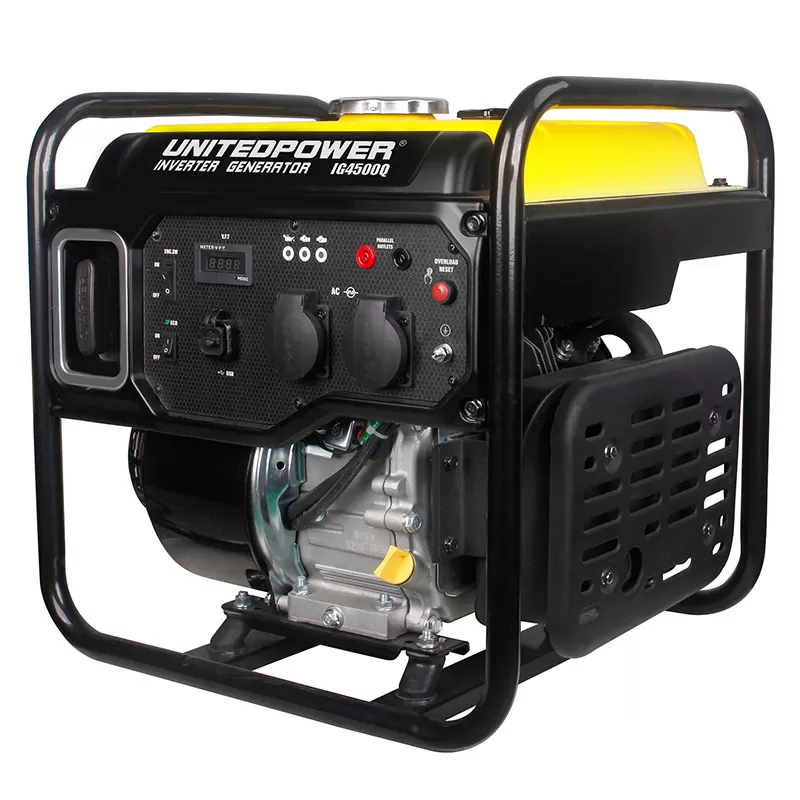
What Makes a 3200 Watt Inverter Generator Different?
Traditional generators run their combustion engines at a fixed speed of 3,600 RPM to produce standard 60-hertz alternating current. If the engine speed drops under load, the voltage and frequency fluctuate. This volatility risks frying computer motherboards, smart appliance controls, and digital displays. Conventional units also consume maximum fuel regardless of whether you draw 200 watts or 3,000 watts.
An inverter 3200 watt generator operates on an entirely different electrical architecture:
- Three-Phase AC Generation: The engine alternator produces raw, high-frequency, multiphase AC power.
- DC Rectification: Built-in rectifiers convert this unstable raw power into direct current (DC).
- Microprocessor Inversion: Advanced microprocessor modules invert the DC back into clean, single-phase 120-volt AC power.
This conversion process produces a pure sine wave with Total Harmonic Distortion (THD) strictly below 3%. Commercial utilities deliver grid power with THD levels typically between 3% and 5%. Using an inverter generator provides electricity that is equal to or cleaner than standard residential wall outlets. Modern heating systems, CPAP machines, laptops, and variable-speed tools run cooler, quieter, and without electronic interference.
Variable engine speed control represents another significant operational advantage. The generator's Electronic Control Module (ECM) senses load demands in real time. It throttles the internal combustion engine down when powering smaller loads, reducing mechanical wear, fuel consumption, and acoustic output.
Sizing Guide: What Can an Inverter 3200 Watt Unit Actually Run?
Electrical equipment specifications require a clear understanding of two critical metrics: running watts (continuous load) and starting watts (surge capacity). Resistive appliances, such as electric heaters and incandescent light bulbs, require the same wattage to start as they do to run. Inductive loads with electric motors, such as refrigerators, air conditioners, and compressors, require two to three times their operational wattage to break mechanical inertia at start-up.
A standard 3200-watt inverter generator typically provides 3,200 surge (starting) watts and between 2,800 to 3,000 rated (running) watts. Determining whether this platform fits your application requires tallying the concurrent operational demands of your equipment.
| Appliance / Tool | Average Running Watts | Estimated Surge Watts | Can a 3200W Unit Run It? |
|---|---|---|---|
| 13,500 BTU RV Air Conditioner | 1,200 – 1,500 | 2,800 – 3,000 | Yes (Direct start) |
| 15,000 BTU RV Air Conditioner | 1,500 – 1,800 | 3,300 – 3,500 | Yes (Requires Soft Starter) |
| Residential Refrigerator / Freezer | 150 – 400 | 800 – 1,200 | Yes (With power to spare) |
| Sump Pump (1/2 HP) | 800 – 1,050 | 2,100 – 2,200 | Yes (Dedicated run) |
| Microwave Oven (1000W Output) | 1,400 – 1,600 | 1,600 | Yes |
| Circular Saw (15 Amp) | 1,800 | 2,300 | Yes |
| Smart TV & Network Gear | 150 – 250 | 0 | Yes |
| Air Compressor (1 HP) | 1,500 | 3,000 | Yes (Isolated startup) |
Real-World Power Scenarios
How does this numerical data convert into everyday operational reliability? Let us examine two common real-world load scenarios:
Scenario 1: RV Off-Grid Comfort
A camper runs a standard
13,500 BTU rooftop air conditioner (1,400 running watts), an LED lighting
circuit (40 watts), a smart TV (100 watts), and an RV converter maintaining
battery charge (200 watts). Total continuous demand equals 1,740 watts. An
inverter 3200 watt unit easily manages this load profile, leaving over 1,000
continuous watts available for occasional use of a blender or laptop
charger.
Scenario 2: Emergency Home Outage
During a severe winter
power failure, a homeowner must run a full-size kitchen refrigerator (250
running watts), a forced-air furnace blower motor (600 running watts), multiple
LED room lamps (60 watts), a satellite internet terminal (75 watts), and a phone
charging station (30 watts). The continuous load registers at approximately
1,015 watts. The 3200W inverter handles this base demand smoothly, keeping
household infrastructure online without approaching engine overload limits.
2026 Performance Benchmarks and Engineering Specs
Engine designs continue to improve across the portable power equipment sector. For models entering distribution channels in 2026, manufacturers must achieve strict milestones across acoustic insulation, fuel delivery systems, and safety integration.
A primary selection factor for recreation and municipal work sites is the noise profile. High-performance inverter generators feature acoustic-dampening composite enclosures, multi-stage intake baffles, and oversized exhaust mufflers. Under typical operational loads (25% to 50% capacity), sound output measures between 52 and 58 dBA at 23 feet. This sound level matches a normal residential conversation and complies fully with the strict regulations enforced by the RV Industry Association (RVIA) and public park authorities.
Fuel efficiency has also advanced through optimized engine combustion chambers. When switched into Eco-Mode, the generator alters its engine speed based on active amperage demands. Standard 3200-watt models equipped with a 1.8 to 2.2-gallon fuel tank deliver operational runtimes ranging from 7.5 to 12 hours under a 25% load factor. This fuel endurance allows users to sleep through the night without getting up to refuel.
Commercial equipment buyers increasingly demand a dual fuel inverter generator platform capable of switching between standard gasoline and liquid propane (LPG). Propane provides several practical advantages for backup storage:
- LPG does not degrade, gum up carburetors, or form varnish during multi-year storage.
- Propane burns with reduced carbon emissions, aligning with regional clean-air guidelines managed by organizations such as the U.S. Department of Energy.
- Dual-fuel technology offers end users flexible supply options during regional emergency fuel shortages.
United Power continues to lead dual-fuel development. We engineer dual-feed carburetion systems and high-pressure brass regulators that deliver quick engine starts across broad temperature ranges. If your market requires specialized dual-fuel or tri-fuel units, our engineering division can build custom configurations that suit your operational requirements.
When end users occasionally require heavy 50-amp commercial power, parallel capabilities provide a modular solution. Integrated parallel ports allow operators to link two inverter units together with a specialized bridging cable. Connecting two 3200-watt inverters provides 6,400 surge watts without the logistical hassle of moving a single 250-pound industrial generator.
Why Choose 3200W? The Power-to-Weight Sweet Spot
Purchasing power equipment always involves managing trade-offs between physical mass and electrical output. Compact 2000-watt inverters are lightweight and easy to carry, averaging around 45 to 50 pounds. However, a 2000-watt model cannot supply the startup current demanded by a 13,500 BTU air conditioner or a 1-horsepower industrial contractor tool. They fall short for medium-duty power applications.
Conversely, 4000-watt and 4500-watt inverter models supply plenty of overhead capacity, but their weight frequently exceeds 95 to 115 pounds. Lifting an engine of that size into a pickup truck bed or RV storage compartment typically requires two people, which limits everyday mobility.
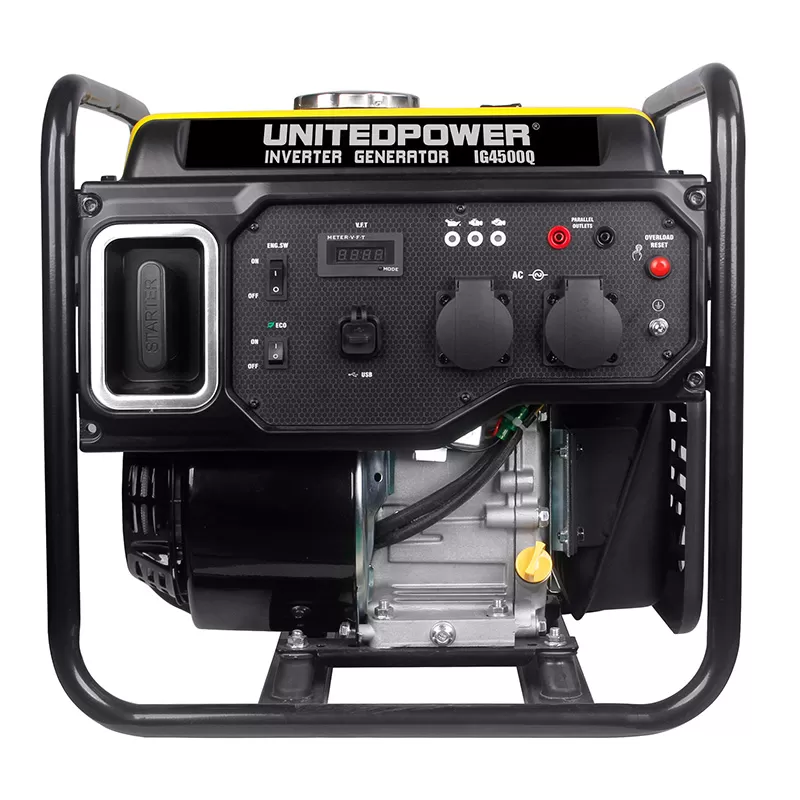
The 3200 watt inverter generator sits in the sweet spot. Weighing between 68 and 82 pounds dry, these units feature integrated telescoping luggage handles and flat-free transport wheels. A single operator can load, position, and start a 3200W machine, while enjoying enough wattage to run air conditioning units, power tools, and household refrigeration circuits simultaneously.
Essential Features for Commercial & Retail Buyers in 2026
When building inventory specifications or reviewing product spec sheets for commercial distribution, prioritize models that incorporate the latest global safety benchmarks:
- Automated Carbon Monoxide (CO) Mitigation: Regulated by safety initiatives including the Portable Generator Manufacturers' Association (PGMA) ANSI/PGMA G300 standards, integrated electro-chemical sensors monitor ambient CO levels. The system automatically cuts ignition if gas concentrations exceed safety limits.
- Electric and Wireless Remote Starting: Reliable push-button electric ignition backed by lithium-ion starting batteries simplifies everyday use. Wireless fobs give users the convenience of cold-starting equipment from up to 80 feet away.
- Factory-Direct RV Receptacles (TT-30R): Models that include a built-in 120V 30-amp travel trailer outlet eliminate the need for fragile external plastic adapters. Users simply plug their RV power cord directly into the control panel.
- Digital Diagnostic Instrumentation: Digital LED and LCD panels show accumulated running hours, real-time voltage, cycle frequency, and fuel levels at a glance. Operators can schedule oil changes and preventive filter service accurately.
- Smart Telemetry Integration: Modern power platforms increasingly feature low-energy Bluetooth and Wi-Fi data transmitters. Maintenance managers can track load parameters and service intervals directly through mobile applications.
Frequently Asked Questions
Q1: Can a 3200-watt inverter generator run a 15,000 BTU RV air
conditioner?
A1: Yes, under proper conditions. A standard 15,000 BTU
rooftop AC unit requires between 3,300 and 3,500 starting watts, which can push
a 3200W machine past its overload threshold. Installing an aftermarket soft
starter on the AC unit reduces compressor inrush current by up to 65%. This
reduction allows a 3200-watt inverter generator to start and run a 15,000 BTU
cooling system without tripping circuit protection.
Q2: How long will a 3200-watt generator run on a single tank of
fuel?
A2: Runtimes depend directly on the connected electrical load
and tank volume. Most models house a fuel tank measuring approximately 1.9 to
2.3 gallons. When powering loads at 25% capacity (around 750 to 800 watts) in
Eco-Mode, you can expect between 8 and 11 hours of runtime. Running the unit
under heavy continuous loads near 50% capacity lowers that operational window to
roughly 5 to 7 hours.
Q3: Is an inverter 3200 watt generator quiet enough for residential
camping areas?
A3: Yes. State and national park campgrounds
typically enforce a maximum noise ceiling of 60 dBA measured at 50 feet. Fully
enclosed 3200-watt inverter units run between 52 and 58 dBA at 23 feet under
moderate load. This puts them well within public regulatory thresholds, keeping
operations unobtrusive to neighboring campsites.
Q4: Can I operate an inverter generator inside an enclosed workspace
or garage?
A4: No. Under no circumstances should an internal
combustion generator run inside a home, garage, basement, crawl space, or shed.
Carbon monoxide is a colorless, odorless, and lethal gas. Always position
portable generators outdoors on a flat surface at least 20 feet away from
windows, doors, and exterior HVAC fresh-air intakes.
Q5: What regular maintenance keeps an inverter 3200 watt generator
running at peak performance?
A5: Perform an initial break-in engine
oil change after the first 20 to 30 operating hours. Following break-in, replace
the engine oil every 100 operating hours or at the start of each season. Inspect
the foam air filter element every 50 hours, clean the spark arrestor screen
periodically, and treat gasoline with a quality fuel stabilizer if you plan to
store the unit for more than 30 days.
Secure Your Equipment Fleet with United Power
The 3200-watt inverter segment offers an ideal combination of portability, fuel efficiency, clean electrical output, and high-margin retail potential. Whether you operate an equipment rental fleet, manage an outdoor retail supply chain, or supply regional disaster-relief organizations, this power class consistently delivers dependable field performance.
United Power manufactures reliable, certified power generation equipment designed for competitive global markets. We support commercial distributors, municipal agencies, and brand partners with end-to-end manufacturing capabilities, customizable control panels, and complete component traceability.
Contact the United Power team today to discuss your technical specifications, request detailed wholesale pricing, and submit an OEM manufacturing inquiry. Our international distribution specialists are ready to help streamline your power equipment supply line.


.webp "10 kVA Single Phase Generator Price Guide: Costs, Sizing & Best Picks [2026]")