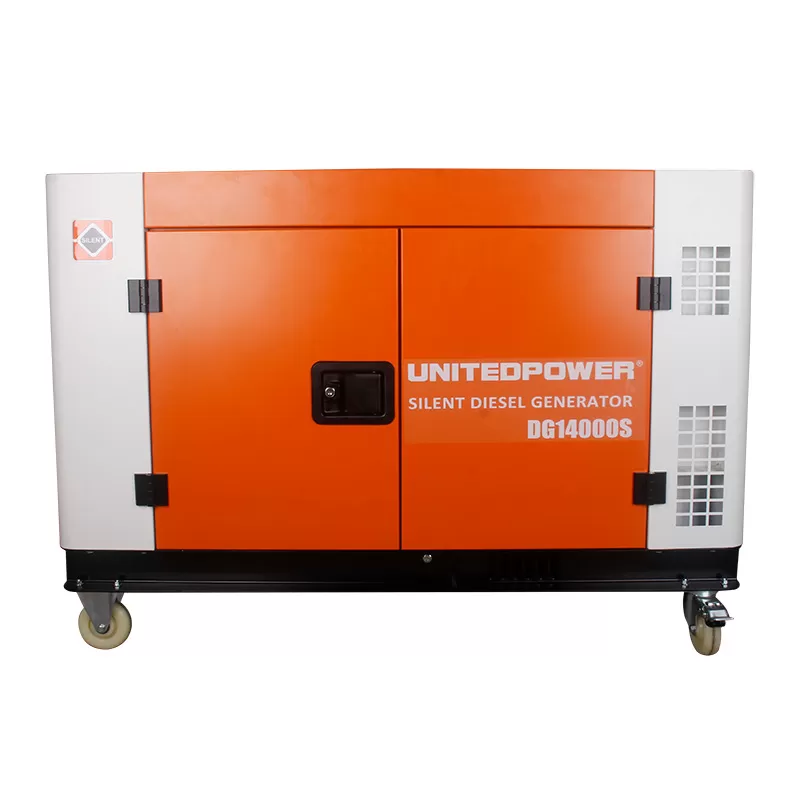
How to Select the Right 10kW Gasoline Generator for Commercial & Home Backup Power
Severe weather events and strained electrical grids continue to drive blackouts across residential neighborhoods and industrial parks. When the utility grid fails, operations grind to a halt, food spoils, and productivity flatlines. For small businesses, contractors, and property owners, finding a dependable alternate power source is not an afterthought—it is a operational requirement.
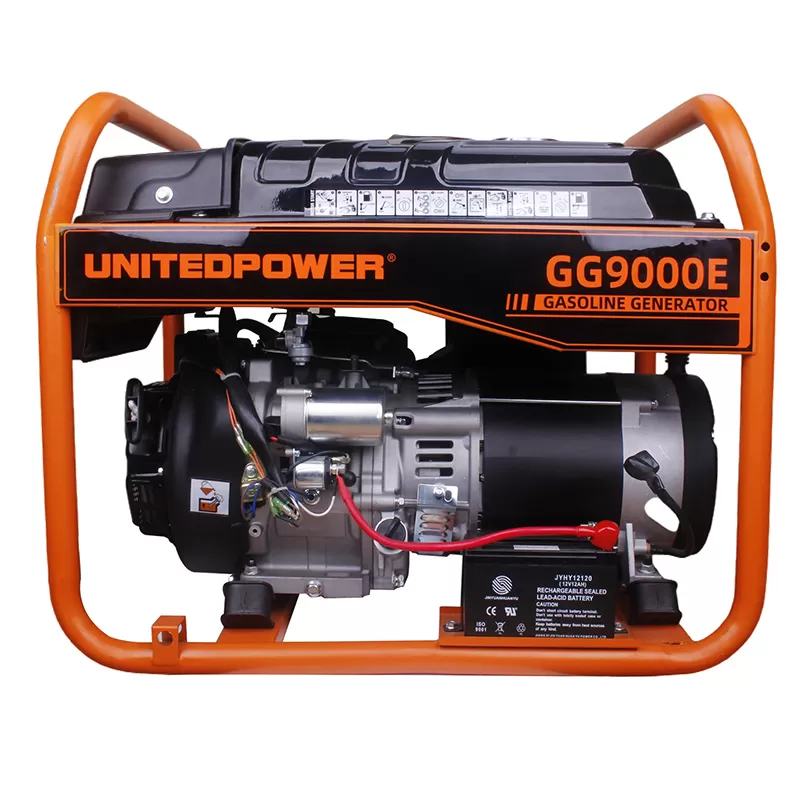
A 10kW gasoline generator sits squarely in the sweet spot of power generation. It provides substantially more power than entry-level 3,000-watt recreational units while avoiding the massive footprint, complex installation, and high capital cost of 20kW+ permanently installed standby units. At United Power, we manufacture and engineer power systems built to bridge this precise gap, providing heavy-duty output without sacrificing portability.
Selecting the right machine requires looking beyond just the advertised wattage on the box. You must evaluate engine build, transient load response, total harmonic distortion (THD), fuel economy, and compliance with workplace safety rules. This guide walks you through every engineering and operational factor needed to pick the right unit for your specific use case.
Power Math: What Can a 10kW Gasoline Generator Actually Run?
Before purchasing equipment, you need to understand the difference between running (rated) watts and starting (surge) watts. A machine marketed as a 10,000 watt gas generator typically provides 10,000 starting watts and roughly 8,000 to 8,500 continuous running watts. Some heavy-duty models deliver a full 10,000 continuous running watts with 12,000 to 12,500 surge watts.
Running watts represent the continuous electrical load required to keep appliances and motors operating. Starting watts represent the short burst of extra power—often lasting only two or three seconds—needed to kick-start inductive loads such as compressors, pumps, and electric motors against resting inertia.
Home Backup Capability
In a residential emergency, an 8,000 to 10,000-watt continuous power envelope handles most high-draw appliances simultaneously. You can comfortably power:
- A 3-ton to 4-ton central air conditioner (equipped with a soft-start kit) or a standard 5,000 BTU window unit
- A full-sized residential refrigerator and a standalone deep freezer
- A 1/2 HP subterranean sump pump
- A well pump (typically 240V, 1 HP to 1.5 HP)
- LED lighting circuits throughout the entire structure
- Home office gear, routers, televisions, and kitchen countertop electronics
Commercial and Job Site Capability
On construction sites or mobile service vehicles, tools present heavy reactive loads. A commercial 10000 watt portable generator handles demanding tool combinations that trip smaller job-site units. It easily runs:
- Two 15-amp table saws or miter saws operating concurrently
- A 2-stage portable electric air compressor (up to 3 HP)
- Small inverter-based MIG/stick welders (drawing up to 230V at 30 amps)
- Industrial dust extractors and HEPA air scrubbers
- High-intensity metal halide or LED job site lighting banks
Typical Power Consumption Matrix
Use this reference table to evaluate how common devices stack up against a 10kW load limit:
| Appliance / Equipment | Average Running Watts | Average Starting (Surge) Watts | Voltage Required |
|---|---|---|---|
| Central A/C (3 Ton, Standard) | 3,500 W | 9,000 W (Without Soft Starter) | 240V |
| Deep Well Water Pump (1 HP) | 1,200 W | 3,500 W | 240V |
| Domestic Refrigerator / Freezer | 700 W | 2,200 W | 120V |
| Submersible Sump Pump (1/2 HP) | 1,050 W | 2,150 W | 120V |
| Portable Air Compressor (2 HP) | 1,800 W | 4,500 W | 120V / 240V |
| 10-inch Portable Job Site Table Saw | 1,800 W | 4,000 W | 120V |
| Electric Water Heater (40 Gallon) | 4,500 W | 4,500 W | 240V |
When sizing your generator, total your continuous watts for all critical equipment, then add the single highest starting surge wattage. If that sum falls under 10,000 watts, your machine will run the load without tripping internal breakers.
Key Features to Look For in a 10kW Gasoline Generator
Every generator relies on the same core physics, but mechanical execution separates disposable units from long-lasting equipment. Look closely at the following core assemblies before placing a purchase order.
1. Engine Build Quality and Displacement
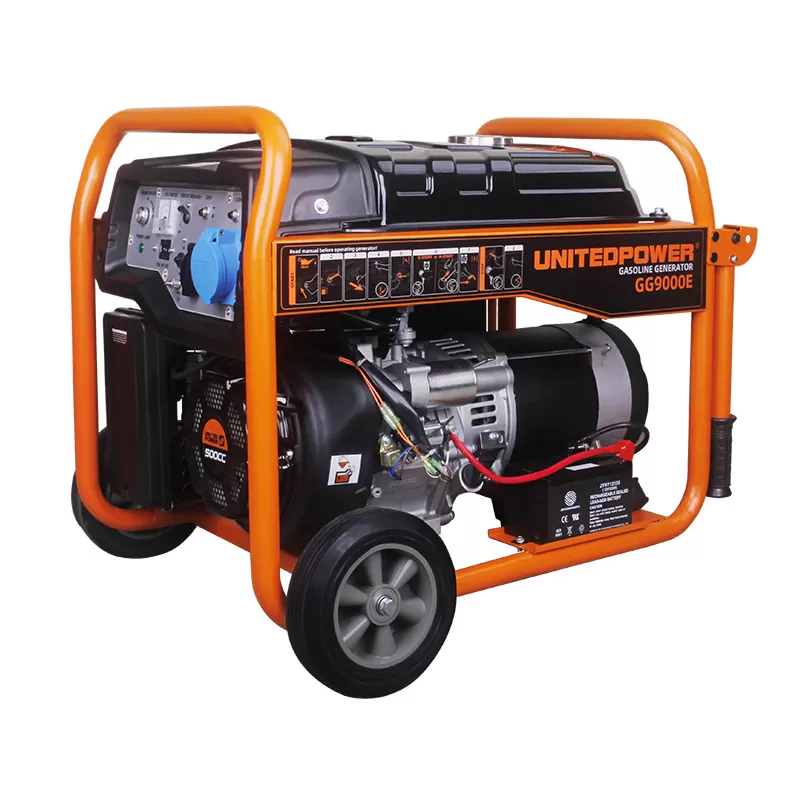
The engine acts as the structural foundation of the machine. For a genuine 10kW continuous rating, avoid undersized engines working near their mechanical limits. Look for overhead valve (OHV) engines with a displacement of at least 420cc, with 459cc to 500cc engines preferred for commercial durability.
Look for cast-iron cylinder sleeves, forged crankshafts, and dual-element air cleaners. Cast iron resists cylinder wear far better than raw aluminum bores, extending engine service life to thousands of hours under routine oil change schedules.
2. Power Quality: Total Harmonic Distortion (THD) and Voltage Regulation
Standard open-frame generators use automatic voltage regulators (AVR). Basic AVRs control macro voltage swings, but they often produce dirty utility waveforms with Total Harmonic Distortion (THD) levels between 10% and 20%.
High THD creates electrical noise. This noise overheats high-efficiency variable-speed HVAC motors, disrupts battery charging circuitry, and can brick sensitive digital controller boards in modern appliances. If you plan to power modern furnaces, computers, or high-end diagnostic tools, look for a 10kw gasoline generator engineered for low THD—ideally under 5%. Learn more about clean power regulations and standard power safety via the U.S. Department of Energy Guidelines.
3. Fuel Efficiency and Operating Run Time
A 10kw generator fuel consumption per hour depends directly on its applied load. Under typical conditions, a 450cc to 500cc engine burns:
- 0.6 to 0.75 gallons of fuel per hour at a 25% electrical load
- 0.9 to 1.1 gallons of fuel per hour at a 50% electrical load
- 1.4 to 1.7 gallons of fuel per hour at a 100% full electrical load
Because overnight utility outages last at least 8 hours, aim for a generator equipped with an 8 to 10-gallon steel fuel tank. A tank of this capacity ensures the unit runs through an entire 8 to 10-hour shift at 50% load without refueling at 3:00 AM. In commercial operations, high fuel burn eats directly into field margins, so engines with calibrated pulse-width carburetors or electronic fuel injection (EFI) yield fast payback.
4. Noise Attenuation
High displacement engines spinning at a fixed 3,600 RPM are naturally loud. Traditional open-frame models emit sound levels between 74 dBA and 82 dBA measured at 23 feet (7 meters). That volume level will draw complaints in dense suburban neighborhoods.
If neighborhood noise compliance matters, look for a quiet 10kw gasoline generator. These designs incorporate oversized multi-chamber exhaust mufflers, fully isolated motor mounts, thick steel tubular framing, and sometimes sound-dampening wrap-around panels that pull sound levels down to 68 to 72 dBA.
5. Starting Mechanisms and Interface Design
Pulling a recoil starter on a high-compression 460cc single-cylinder engine requires noticeable physical effort. A commercial-grade unit must include a dependable 12-volt electric push-button start backed by a sealed AGM or lithium-ion starter battery. Remote key-fob starting adds convenience for residential users looking to initiate power from inside their home during heavy downpours.
6. Safety and Site Compliance
Workplace sites and homeowner insurance policies demand strict adherence to safety standards. Critical features to check include:
- CO Auto-Shutoff: Carbon monoxide sensors that cut ignition if exhaust gas gathers around the chassis.
- GFCI Outlets: Ground Fault Circuit Interrupter duplex receptacles. Ground fault protection is mandatory for compliance under OSHA Generator Safety Regulations on commercial work sites.
- Circuit Breaker Architecture: Individual push-to-reset branch circuit breakers alongside a master 2-pole magnetic thermal breaker.
Commercial vs Home Backup: Tailoring Your Choice
Operating demands differ sharply between industrial yards and suburban backyards. Identifying your operating environment prevents overspending on unnecessary trim or underbuying on structural protection.
At United Power, our product development teams design specific feature sets for commercial fleets and home backup installations. Here is how requirements compare between the two environments:
The Best 10kW Generator for Home Backup
Homeowners need seamless integration with residential electrical panels and minimal maintenance headaches. If your machine sits in a garage or storage shed for months waiting for an ice storm, prioritize the following:
- Pre-Wired Transfer Switch Ports: A standard NEMA L14-30R (30-amp) or, preferably, a high-capacity NEMA 14-50R (50-amp) twist-lock outlet capable of routing a full 10,000 watts into a manual transfer switch.
- Electric & Remote Starting: Critical for family members who cannot pull high-resistance engine cords.
- Fuel Shutoff Valve: Allows operators to run the carburetor completely dry before seasonal storage, preventing modern ethanol fuels from gumming up jets.
- Lower Noise Ratings: Keeps the unit within municipal decibel thresholds during overnight operation.
The Commercial Job Site Specification
Contractors treat equipment aggressively. Generators bounce in utility trailers, face windblown silica dust, and run continuously in high ambient temperatures. A job-site machine must prioritize:
- Rigid Roll-Cage Frame: Minimum 32mm heavy-gauge steel tubing with integrated lift-hook points for crane hoisting onto scaffolding or truck beds.
- Full-Panel GFCI Protection: Meets OSHA standards without requiring external inline ground-fault boxes.
- All-Terrain Solid Wheels: Flat-free PU foam wheels that roll over construction debris, rebar, and loose mud without deflating.
- Accessible Maintenance Points: Quick-drain oil tubes, tool-free access to air filters, and visible fuel sight gauges for fast shift handoffs.
Installation, Accessories, and Maintenance Protocols
A generator is only as reliable as the electrical connection linking it to your loads. Operating an engine-driven generator requires proper safety practices to prevent carbon monoxide poisoning and line backfeeding.
Safe Electrical Connection
Never connect a 10kW generator directly into a standard household wall outlet using a male-to-male "suicide cord." Doing so bypasses your home's circuit protection and sends high voltage backward into utility lines, creating an electrocution hazard for utility line workers. Always adhere to National Electrical Code standards established by the National Fire Protection Association (NFPA).
To power home circuits safely, install one of the following systems:
- Manual Transfer Switch: A dedicated subpanel isolating chosen critical circuits from the main grid feed.
- Mechanical Interlock Kit: A metal bracket installed over your main panel that physically stops the main breaker and the generator backfeed breaker from being turned on at the same time.
Recommended Cable Sizes
Carrying 10,000 watts at 240 volts means handling roughly 41.6 amps of current. Standard 10-gauge extension cords are insufficient for this load level. To avoid hazardous voltage drops and fire hazards, use a 4-prong heavy-duty 6-gauge or 8-gauge copper cord assembly terminated with NEMA 14-50 connections.
Preventative Maintenance Schedule
Gasoline engines running near full load run hot. Follow this routine to keep your 10kW generator ready to run:
- First Break-in Service (20-30 Hours): Drain the factory mineral oil to clear out metal shavings from production. Replace with high-grade 10W-30 or 5W-30 synthetic oil.
- Regular Oil Service (Every 100 Hours): Change oil and clean out magnetic drain plugs. Clean environments allow 100-hour intervals; dusty construction environments cut that to 50 hours.
- Fuel Preservation: Modern gasoline degrades in 30 days. Add a concentrated fuel stabilizer to every fuel batch, or drain the tank completely when storing the machine for extended periods.
- Spark Plug & Air Filter (Every 200 Hours): Check spark
plug gap (typically 0.028 to 0.031 inches) and wash or replace the foam
pre-filter.
Frequently Asked Questions
Q1: What is the typical 10kw generator fuel consumption per hour?
A1: Under an average 50% electrical load (around 4,000 to 5,000 watts), a standard 10kW gasoline unit burns between 0.9 and 1.1 gallons of fuel per hour. Fuel burn changes based on engine displacement and continuous load. Operating the machine at full capacity pushes fuel burn to roughly 1.4 to 1.7 gallons per hour.
Q2: Can a 10kW gasoline generator run an entire house?
A2: Yes, provided high-draw loads are managed thoughtfully. A 10kW machine can comfortably run lighting, refrigeration, home electronics, water pumps, and a central A/C system. However, if your home relies on all-electric heat, an electric water heater, an electric clothes dryer, and central air, you will need to stagger their operation to avoid exceeding the generator's continuous capacity.
Q3: Should I buy a standard gasoline model or a dual-fuel model?
A3: Gasoline delivers higher energy density per gallon, which produces maximum surge wattage from the engine. Dual-fuel models let you switch to liquid propane (LPG). Propane stores indefinitely without going stale or fouling carburetors, making it an excellent fuel choice for seasonal home backup. Keep in mind that running on propane typically reduces continuous engine output by 10% to 15% compared to gasoline.
Q4: Can I safely connect a 10kW generator directly to my home electrical panel?
A4: You must never connect a generator to an electrical panel without a mechanical interlock kit or a manual transfer switch. Connecting without an isolating transfer mechanism can backfeed electricity into neighborhood utility lines, creating a fatal electrocution hazard for repair crews working down the street.
Q5: What is the difference between an inverter generator and a conventional 10kW generator?
A5: A conventional generator uses a mechanical governor to keep the engine spinning at a fixed 3,600 RPM to maintain 60Hz current, which creates higher noise and higher fuel consumption at lower electrical loads. An open-frame inverter digitally produces the AC wave, adjusts engine speed automatically to match real-time power demand, and keeps harmonic distortion (THD) under 3% for sensitive electronics. Inverter units run quieter and use less fuel, though they carry a higher purchase price.
Secure Your Commercial Power Equipment with United Power
Selecting the right power equipment requires finding the right balance of mechanical reliability, clean power delivery, and cost per kilowatt. Whether you need a fleet of durable, OSHA-compliant generators for a commercial construction team or a dependable line of residential backup machines for regional distribution, United Power manufactures high-performance equipment designed to withstand heavy field use.
Our engineering team can help review technical specifications, discuss engine design options, and prepare tailored wholesale quotes for your company. Submit your equipment inquiry today to connect with our industrial sales department and receive full spec sheets, MOQ details, and factory-direct pricing.

.webp "10 kVA Single Phase Generator Price Guide: Costs, Sizing & Best Picks [2026]")