How to Read a Generator Price 10 kVA Quotation Without Overpaying
A 10 kVA generating set occupies an unusual position in the power equipment market. It is large enough to start a small three-phase motor or carry a retail outlet through a grid outage, yet compact enough to travel on a pickup bed, a towable trailer or a rooftop platform. Buyers searching for a generator price 10 kVA are usually comparing machines in the 8 kW class, and that comparison quickly reveals a spread that feels irrational: quotations for the same nominal output can differ by a factor of two or three. Understanding what sits behind those numbers is the difference between accepting a cheap headline figure and purchasing a set that still performs in year five.
Why the 10 kVA Class Occupies Its Own Price Tier
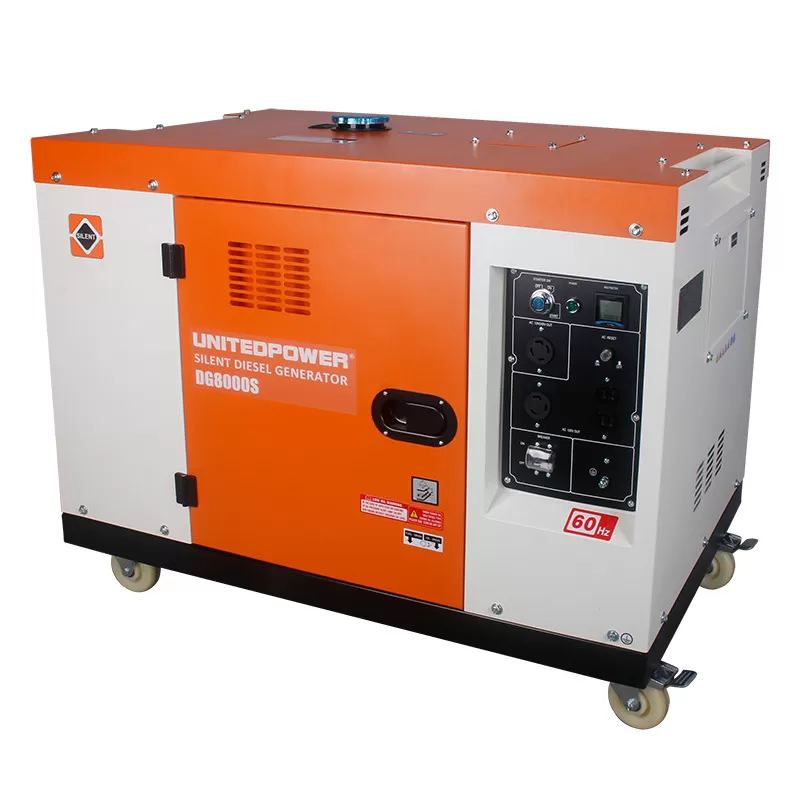
Ten kilovolt-amperes at a 0.8 power factor translates to roughly 8 kW of usable active power, with the remaining capacity held in reactive current. That single relationship shapes almost every commercial decision in this segment. A set rated at 10 kVA / 8 kW can drive inductive loads such as compressors, pumps and small HVAC units that a 10 kW resistive-only machine would struggle to start.
Typical deployments cluster around a few recognisable profiles:
Telecom and radio base stations requiring continuous backup with remote monitoring
Small manufacturing cells, workshops and agricultural pumping stations
Retail chains, clinics and restaurants needing standby power for refrigeration and lighting
Construction sites, events and rental fleets where portability and noise compliance matter
Off-grid cabins and light commercial buildings with hybrid solar-battery architecture
Each of these profiles pulls the specification in a different direction, and each pull has a measurable cost consequence.
Technical Variables That Move Generator Price 10 kVA
Engine Platform and Fuel Delivery
The engine is normally the largest single line item. Air-cooled single-cylinder and twin-cylinder diesel engines keep cost low but limit continuous duty and heat rejection. Water-cooled two- and three-cylinder platforms add a radiator, water pump and more complex castings, which raises the bill of materials while delivering better tolerance for sustained loads and higher ambient temperatures.
Governor type matters as much as cylinder count. Mechanical governing suits G1 and G2 performance classes under ISO 8528-1, where voltage and frequency excursions during load steps are tolerable. Electronic governing supports G3 class behaviour, which is demanded when the load includes sensitive electronics, variable-frequency drives or medical equipment. The price delta between the two is modest at the component level but significant once testing and calibration are included.
Rated speed also splits the market. A 1500 rpm (50 Hz) or 1800 rpm (60 Hz) four-pole arrangement couples directly to the alternator and avoids belt losses, while higher-speed alternatives reduce physical size at the cost of service life. B2B buyers comparing lifetime cost should treat rated speed as a durability indicator, not a specification footnote.
Alternator Construction and Material Content
Copper content is the quiet driver of alternator pricing. A fully copper-wound stator and rotor costs more than an aluminium substitute but dissipates heat better and holds voltage stability under surge conditions. Insulation class tells a similar story: class F insulation with class B temperature rise is common in economy builds, while class H insulation with class H rise supports higher continuous output in hot climates.
Voltage regulation hardware follows the same logic. Capacitor-regulated single-phase alternators are inexpensive and adequate for resistive loads. Digital automatic voltage regulators provide tighter regulation, better short-circuit behaviour and compatibility with nonlinear loads such as switch-mode power supplies and LED drivers.
Control Panel and Switching Architecture
A basic analogue panel with key start and mechanical gauges represents the floor of the control cost. A digital controller adds automatic start on mains failure, fault logging, engine protection, and Modbus or Ethernet connectivity for remote monitoring. Where the set must integrate with an automatic transfer switch, the ATS itself can account for a meaningful share of the total package price, particularly when it is motorised, mechanically interlocked and rated for the full fault current of the installation.
Enclosure, Acoustic Treatment and Mobility
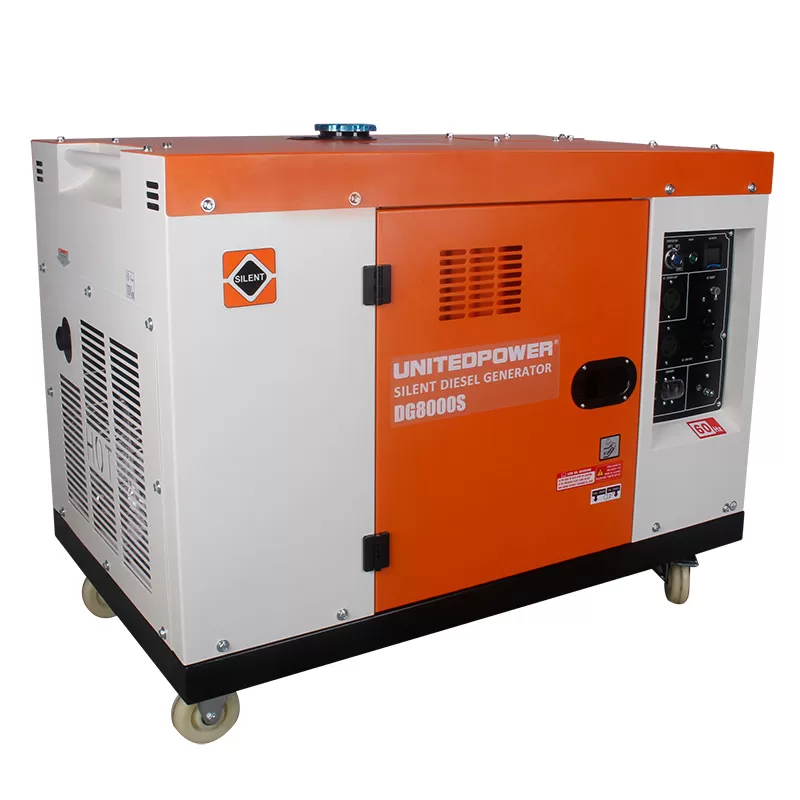
An open-frame set is the cheapest configuration and the least suitable for populated areas. A sound-attenuated canopy adds sheet metal, acoustic lining, a lockable access door and a larger cooling envelope, typically pushing the package price up by a substantial margin. Noise performance is usually expressed in dB(A) at seven metres, with residential-compliant builds targeting the 65–70 dB(A) band and standard industrial canopies sitting closer to 75 dB(A).
Protection rating, powder coating specification, base tank capacity and trailer mounting all accumulate. A skid-mounted set that never leaves a plant room and a towable unit with road lighting, brakes and a bunded fuel tank are different products that happen to share an output rating.
Duty Rating and Load Profile as Pricing Levers
ISO 8528-1 defines standby, prime and continuous power ratings, and the same physical machine may carry three different nameplate figures depending on which one the manufacturer declares. A standby rating assumes limited annual hours and no overload capacity. A prime rating assumes unlimited hours with a 10 percent overload allowance for one hour in twelve. Continuous rating removes the overload allowance entirely.
Buying a standby-rated set and running it as a prime power source compresses service intervals and shortens engine life, an expensive mistake that no discount at the point of sale can offset. Accurate load profiling before quotation prevents it. The relevant inputs include:
Running kW and starting kVA of every load, with motor starting method noted
Load step sequence and the largest single step the set must absorb
Harmonic content from nonlinear loads and any derating that follows
Site altitude and maximum ambient temperature, since output falls roughly 3–4 percent per additional 500 metres above 1000 metres and further at elevated temperatures
Annual running hours, which determine whether maintenance or fuel dominates the lifetime cost
Certification, Factory Testing and Documentation
Compliance work is invisible on a specification sheet but visible on an invoice. Type testing to ISO 8528, CE marking for European markets, EPA emissions compliance for the United States, and third-party inspection reports each require engineering time and laboratory capacity. Routine factory tests — insulation resistance, high-voltage withstand, load bank runs at 25, 50, 75 and 100 percent — add hours of shop time per unit.
Documentation packages for export projects frequently include operation and maintenance manuals in multiple languages, wiring schematics, test certificates, packing lists and customs documentation. For a distributor building a private-label programme, nameplate customisation, branded control panels and bespoke packaging introduce tooling and minimum order quantity thresholds that influence unit economics.
Total Cost of Ownership Beyond the Purchase Invoice
The acquisition figure is only the first entry in the cost ledger. A 10 kVA diesel set operating at 75 percent load consumes roughly 2.0 to 2.5 litres per hour, which over 500 annual running hours becomes a recurring expense larger than the original purchase within a few years. Consumables — engine oil, fuel, air and oil filters, coolant — follow a schedule tied to running hours rather than calendar time.
Major overhaul intervals for well-maintained industrial diesel engines in this class commonly fall between 8,000 and 12,000 hours. Parts availability, distributor presence and technical support in the buyer's region determine how disruptive that event becomes. A lower purchase price from a supplier with no regional spare parts network can convert into extended downtime, which is the most expensive outcome in backup power applications.
Indicative Price Bands in the Global Market
Ranges below are indicative only and move with engine brand, order quantity, freight, duties and local market conditions. They are expressed as ex-works equipment values to give buyers a calibration point rather than a quotation.
Air-cooled single-phase open-frame diesel: entry band, minimal control, no enclosure
Water-cooled single-phase with basic canopy: mid-entry band, improved duty cycle
Water-cooled three-phase silent canopy with ATS: mid band, the most common commercial configuration
Premium engine platform, digital controller, remote monitoring, class H alternator: upper band, aimed at telecom, healthcare and rental fleets
A quotation that lands well below the prevailing band for a given configuration usually reflects a lower-rated alternator, aluminium windings, a mechanical governor, a shorter warranty or a standby-only rating. None of these are inherently wrong choices, but they must be matched to the application.
How United Power Structures a Generator Price 10 kVA Quotation
Transparency at the line-item level is the fastest way to compare offers across suppliers. United Power issues quotations that separate engine, alternator, control panel, enclosure, fuel tank, ATS, test reports, packaging and freight, so procurement teams can see exactly where a specification has been adjusted to reach a target figure.
The configuration matrix approach also lets buyers run scenarios before committing. A customer can request two variants of the same 10 kVA platform — one standby-rated with an analogue panel, one prime-rated with a digital controller and sound-attenuated canopy — and compare delivered cost against expected running hours. That comparison usually settles the specification debate faster than any technical argument.
Frequently Asked Questions
What is a realistic generator price 10 kVA range in today's market?
For a water-cooled three-phase diesel set in a sound-attenuated canopy with an automatic transfer switch, ex-works pricing generally falls in the mid four-figure US dollar range. Open-frame single-phase machines sit substantially below that, while premium engine platforms with remote monitoring and extended warranty sit above it. Freight, import duties and local installation add further layers.
Why do two 10 kVA generators differ so much in price?
Nameplate output is the least variable part of the specification. The differences sit in alternator winding material and insulation class, governor type, control panel capability, enclosure acoustic performance, protection rating, duty classification and warranty terms. Two sets can share the same kVA figure while serving entirely different operating conditions.
Is a 10 kVA generator sufficient for a small business?
It depends on starting currents rather than running watts. Lighting, point-of-sale terminals, computers and small refrigeration units are well within reach. Equipment with large induction motors, such as three-phase compressors or chillers, may require a larger frame or a soft-start arrangement. A load list with starting kVA for each motor gives a definitive answer.
How much fuel does a 10 kVA diesel generator consume?
At 75 percent load, expect approximately 2.0 to 2.5 litres per hour for a water-cooled diesel platform. Consumption at 50 percent load is disproportionately lower, which is why oversizing a set for occasional peak demand raises lifetime fuel cost without improving reliability.
Does a 10 kVA generator include an automatic transfer switch?
Not by default. Many suppliers quote the generating set alone, with the ATS as a separate line item. Integrated packages that include a matched ATS, control wiring and commissioning instructions simplify installation and usually reduce site labour.
What warranty and after-sales support should buyers expect?
Standard coverage for this class is typically twelve months or 1,000 to 1,200 running hours, whichever comes first, covering manufacturing defects rather than consumable wear. Distributors operating in regions with active rental or telecom fleets often negotiate extended coverage tied to documented maintenance intervals.
Can the set be customised for a specific market?
Voltage and frequency configuration, control panel language, nameplate branding, socket outlets, trailer design and emissions compliance are all adjustable at the factory. Customisation typically introduces a minimum order quantity and a modest engineering charge, both of which should appear explicitly in the quotation.
Requesting a Tailored Quotation
Procurement decisions in this segment improve markedly when the supplier receives complete information at the first contact. A load schedule with running and starting figures, the intended duty classification, site altitude and ambient temperature, enclosure and noise requirements, voltage and frequency, and the destination port are enough to build a precise configuration and a line-item price. Buyers who forward those details to United Power receive a documented quotation with the specification broken down by subsystem, along with lead time, packing dimensions and shipping weight for logistics planning.
.webp "Evaluating the 4 kW Generator Price: Wholesale Sourcing & Manufacturing Specs")
.webp "2026 5 kW Silent Generator Price Guide: Costs, Features & Best Value Picks")