How Much Does the Best Diesel Generator for Home Cost? (Full 2026 Price Breakdown)
Grid instability and extreme weather events continue to push residential backup power up the priority list. If you are an electrical contractor, property developer, or equipment distributor, you already see this shift. Homeowners no longer want portable gasoline units that sputter out after eight hours. They want continuous, reliable power that protects their estates.
However, when end-users search for the true diesel generator for home price, they often encounter scattered retail listings. They miss the supply-chain realities, factory-gate pricing, shipping fees, and installation overheads. At United Power, we manufacture and supply residential and commercial power systems worldwide. This guide breaks down factory procurement costs, retail margins, and operational realities for the 2026 market.
Planning an upcoming residential build or stocking your distribution warehouse? Contact our commercial engineering team today to review your project bill of materials (BOM) and access wholesale container pricing.
.webp?t=1790239182043 "diesel generator for home price")
The 2026 Price Benchmark: Factory FOB vs. Turnkey Installed Cost
Residential diesel systems carry different price tags depending on where you stand in the supply chain. A distributor purchasing full containers at factory-gate (FOB) rates pays a fraction of what an estate owner pays for a completed installation.
Steel and copper prices stabilized late last year, but emissions control components continue to add upward pressure on baseline engine costs. The table below outlines realistic price ranges across the primary residential capacity brackets for 2026.
| Capacity Bracket | Primary Use Case | Wholesale / FOB (USD) | MSRP / Retail (USD) | Turnkey Installed (USD) |
|---|---|---|---|---|
| 5kW – 8kW (Air-Cooled) | Essential circuits, small homes | $750 – $1,400 | $1,800 – $2,800 | $3,200 – $5,000 |
| 10kW – 15kW (Liquid-Cooled) | Average modern home, basic HVAC | $2,800 – $4,500 | $5,200 – $7,500 | $8,000 – $12,000 |
| 18kW – 25kW (Liquid-Cooled) | Large homes, multi-zone HVAC | $4,200 – $6,800 | $7,800 – $11,500 | $12,500 – $17,500 |
| 30kW – 50kW (Heavy Residential) | Luxury estates, off-grid microgrids | $6,500 – $11,500 | $12,000 – $18,500 | $19,000 – $28,000+ |
Classifying Residential Diesel Systems: Capabilities and Costs
1. Air-Cooled Compact Units (5kW to 8kW)
These smaller systems bridge portable equipment and permanent installations. Running at 3,000 or 3,600 RPM, they provide temporary relief during short blackouts. They cost substantially less to produce and ship.
However, their service life is limited compared to larger units. Contractors rarely recommend them for off-grid homes because high operating speeds create noise and wear out components faster under continuous loads.
2. Stationary Enclosed Units (10kW to 25kW)
This range forms the core of the residential standby market. Running at a quiet 1,500 or 1,800 RPM, these liquid-cooled units handle continuous duty cycles during multi-day outages without strain.
Systems in this tier usually feature soundproof, weather-resistant canopies. Factory production costs for this category depend heavily on acoustic insulation quality, cooling radiator capacity, and the grade of the alternator wire.
3. High-Capacity Estate Generators (30kW to 50kW+)
Modern luxury homes often feature central climate systems, electric vehicle chargers, pool pumps, and dedicated outbuildings. Standard residential units fail when these motors start up simultaneously.
These large sets utilize commercial-grade four-cylinder engines. They handle substantial inrush currents without voltage drops. For developers of gated communities or rural microgrids, installing a single central 50kW unit often proves more cost-effective than running multiple smaller engines.
Key Variables Driving the Diesel Generator for Home Price
Two generator sets with identical kilowatt ratings can display wildly different price tags. What causes this gap? Understanding these structural cost drivers allows procurement managers to negotiate better deals and avoid low-quality machinery.
Engine Sourcing and Tier 1 Branding
The power plant represents roughly 45% to 60% of the entire equipment cost. Global brands like Cummins, Perkins, or Yanmar command high price premiums. Their name brings widespread global parts availability and proven resale value.
Meanwhile, high-tier licensed Chinese engines or dedicated OEM powertrain platforms deliver identical torque, fuel burn rates, and service life at 30% to 40% lower initial acquisition costs. Factory-direct partnerships through manufacturers like United Power allow regional distributors to preserve healthy margins while offering competitive end-user prices.
Emissions Standards (EPA Tier 4 Final & EU Stage V)
Regional environmental regulations directly affect manufacturing expenses. In unregulated regions, simpler mechanical engines dominate the market, keeping system prices low.
In contrast, selling into the United States, Canada, or the European Union requires compliance with strict emissions rules. Incorporating common-rail fuel injection, Diesel Particulate Filters (DPF), and Selective Catalytic Reduction (SCR) systems increases base engine manufacturing costs by 25% to 35%. Importers must align unit specifications with their regional environmental requirements.
Acoustics and Canopy Construction
Homeowners expect quiet operation. An open-frame generator is unacceptable in a residential neighborhood. Achieving sound ratings below 65 dBA at 7 meters requires engineering investments:
Heavy-gauge galvanized or marine-grade aluminum housing.
Fire-retardant sound-absorbing foam lining.
Internal residential-grade baffle silencers.
Vibration-dampening engine mounts.
Switchgear and Intelligent Automation
A dependable residential generator must start instantly when the grid drops. An Automatic Transfer Switch (ATS) handles this transfer. Basic mechanical switches cost very little, but intelligent ATS panels with programmable load management cost significantly more.
Modern builds also increasingly require IoT communication gateways. These units allow homeowners, property managers, and servicing contractors to monitor fuel levels, battery health, and run hours from a remote smartphone interface.
Installation Expenses and Turnkey Realities for Contractors
When presenting numbers to homeowners, equipment supply accounts for only a portion of the total budget. Contractors must account for physical site work, logistical fees, and utility connections.
Concrete Foundation Pads: Stationary units weighing between 600kg and 1,500kg require a reinforced 4-to-6-inch concrete slab to manage vibration and prevent settling ($500 – $1,500).
Fuel Storage and Safety: While most residential diesel sets feature an integrated sub-base tank (lasting 12 to 24 hours), extended off-grid runtimes require auxiliary tanks, fuel transfer pumps, and double-walled containment basins ($800 – $3,000).
Electrical Integration: Trenching conduit, pulling heavy-gauge copper conductors, and setting the ATS next to the main distribution panel demand certified labor ($1,500 – $4,500).
Permits and Site Inspections: Municipal building permits, emissions filings, and fire marshal sign-offs add administrative and inspection fees ($300 – $1,200).
Diesel vs. Natural Gas: Long-Term Operational Economics
Natural gas and propane models compete heavily in the residential standby sector. Yet experienced contractors consistently steer critical projects toward diesel. The structural advantages explain why:
Fuel Reliability in Disasters: Severe earthquakes, sub-zero freezes, and soil erosion routinely disrupt pipeline gas supply. Diesel provides true on-site energy independence. You control your fuel reserve directly.
Engine Longevity and Wear: Natural gas engines run significantly hotter than diesel units. A typical 1,800 RPM water-cooled diesel engine operating under standard maintenance will run for 15,000 to 20,000 hours before a major overhaul. High-revving gasoline or gas-fueled sets often require major rebuilds within 3,000 to 5,000 hours.
Storage Safety: Diesel fuel does not produce volatile explosive vapors at ambient temperatures like gasoline or propane do. This safety factor makes on-site bulk storage easier to permit in dense residential neighborhoods.
.webp?t=1790239182043 "diesel generator for home price")
Supply-Chain Strategy: How Importers and Distributors Protect Margins
If you run a distribution or installation business, competing against retail big-box stores on baseline prices is a losing battle. Growth requires optimizing your landed cost structure and tailoring your packages.
First, evaluate completely knocked down (CKD) or semi-knocked down (SKD) shipping strategies. Importing fully assembled units in soundproof enclosures consumes container space quickly. Sourcing bare gen-sets and contracting local canopy assembly or electrical wiring can lower both freight volumes and import customs duties.
Second, guard against misleading power ratings. The market contains manufacturers who label peak or standby ratings as continuous prime ratings. If a residential unit runs continuously at its peak limit, it will overheat and fail. Supplying genuine prime-rated machinery preserves your company's reputation and eliminates warranty drain.
Frequently Asked Questions
Q1: Why is the diesel generator for home price higher than a
comparable gasoline or propane unit?
A1: Diesel
engines require much heavier engine blocks, forged crankshafts, high-pressure
fuel injection systems, and liquid cooling to withstand higher compression
ratios. While the initial capital expense is higher, diesel units offer three to
four times the operating lifespan and burn significantly less fuel per kilowatt
produced.
Q2: How many kilowatts does an average home need to maintain basic
comfort during an outage?
A2: Most modern homes
require between 12kW and 18kW of continuous prime power. This load supports
critical lighting, kitchen refrigeration, internet hardware, water wells, and a
mid-sized central air conditioning or heat pump system managed by an intelligent
transfer switch.
Q3: How much fuel does a residential diesel generator consume during
a typical day of operation?
A3: A standard 15kW
diesel unit running at 75% capacity consumes roughly 3.0 to 3.8 liters (0.8 to
1.0 gallon) of fuel per hour. Over a 24-hour continuous cycle, expect the
machine to consume between 72 and 90 liters of diesel fuel.
Q4: Can a home backup diesel generator integrate with an existing
residential solar and battery storage system?
A4: Yes. Modern diesel power systems integrate directly into hybrid inverters. The
inverter monitors battery state-of-charge (SOC) and automatically signals the
generator via two-wire remote start only when battery levels drop below a
pre-set threshold.
Q5: What standard maintenance schedule does a residential standby
diesel generator require?
A5: New units require an
initial break-in service after 50 operating hours. Following that, standard
preventative maintenance occurs every 200 to 250 running hours, or once every 12
months. Routine service involves replacing the lube oil, oil filter, fuel
filter, and inspecting coolant levels and battery health.
Secure Factory-Direct Supply for Your Project Pipelines
Evaluating the true diesel generator for home price requires looking past the base equipment sticker. Profitability depends on solid engine design, acoustic engineering, straightforward installation, and dependable factory support.
At United Power, we build high-performance silent diesel generator sets engineered for demanding residential and commercial installations. We back our international distribution partners with strict quality assurance, comprehensive certification documents, flexible OEM design options, and accessible spare parts inventories.
Do not let supply chain delays disrupt your project timelines. Speak directly with our commercial export sales team today to request technical data sheets, MOQ options, and container freight estimates.
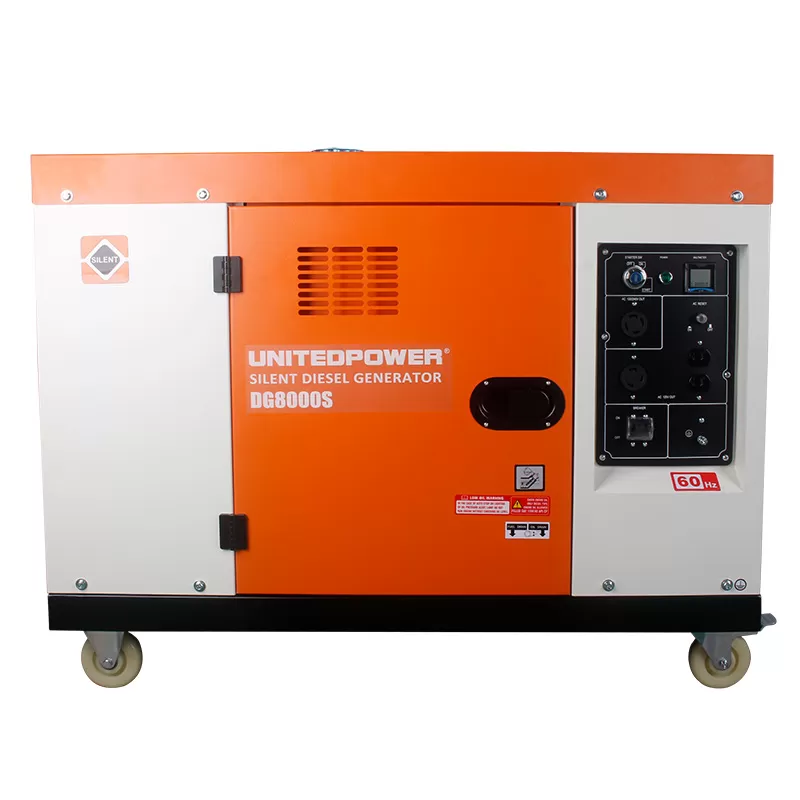
.webp "How Much Does the Best Diesel Generator for Home Cost? (Full 2026 Price Breakdown)")
.webp "Evaluating the 4 kW Generator Price: Wholesale Sourcing & Manufacturing Specs")