Heavy-Duty 1kw Diesel Generator Solutions for Industrial Micro-Power Applications
Micro-capacity power generation represents one of the most mechanically demanding segments within the internal combustion equipment sector. While utility grids and heavy industrial complexes rely on multi-megawatt prime movers, decentralized infrastructure projects frequently require localized, autonomous, and continuous low-wattage electricity. The deployment of a 1kw diesel generator addresses a specialized niche where standard gasoline engines fail to meet operational lifespan requirements, and solar-plus-storage platforms face spatial or meteorological constraints.
Engineering a compression-ignition engine of sub-2kVA output presents distinct thermodynamic and mechanical design challenges. Downsizing cylinder displacement while maintaining sufficient compression ratios to auto-ignite low-grade distillate fuels requires precision tolerances, robust thermal management, and dynamic governor control. For procurement directors, system integrators, and fleet operators, specifying micro-diesel powerplants demands an understanding of mechanical parasitic losses, structural vibration dampening, electrical output topology, and lifecycle economics.
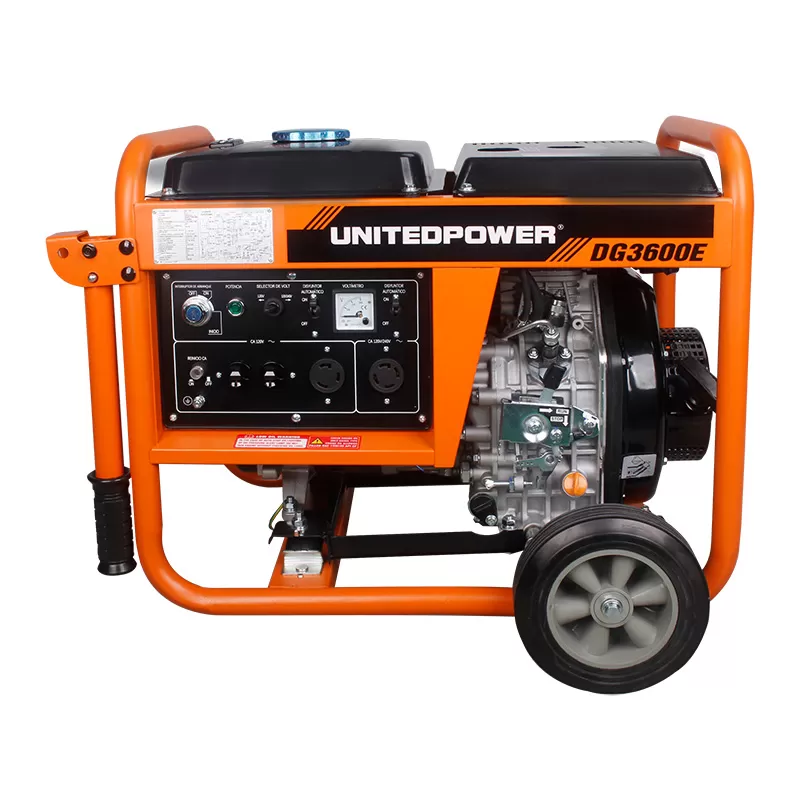
Thermodynamic Profile and Structural Anatomy of Sub-2kVA Diesel Engines
The core operating dynamic of a compression-ignition engine changes considerably when scaled down to fractional kilowatt capacities. Standard industrial diesel engines rely on substantial cylinder volume to stabilize internal combustion temperatures, mitigate wall-wetting, and establish efficient air-fuel mixing. A 1kw diesel generator typically utilizes a single-cylinder, four-stroke architecture with a displacement ranging between 190cc and 230cc, operating at nominal speeds of 3,000 RPM (50 Hz) or 3,600 RPM (60 Hz).
To initiate auto-ignition without electrical spark assistance, small-displacement units necessitate high compression ratios, typically between 19:1 and 22:1. This thermal demand requires heavy-duty cast components capable of withstanding peak firing pressures exceeding 120 bar, even at low wattage outputs.
- Cylinder Block and Liner Construction: Industrial-grade units utilize high-tensile nodular cast iron or die-cast aluminum alloys fitted with centrifugally cast gray iron liners. This structural design isolates the crankcase from high-temperature expansion and preserves piston-to-bore clearances during extended duty cycles.
- Combustion Chamber Geometry: Direct injection (DI) configurations with toroidal or omega-shaped piston bowl geometries maximize in-cylinder air swirl. This aerodynamic mixing offsets the limited fuel penetration typical of low-flow, high-pressure pintle or multi-hole fuel nozzles.
- Cooling Systems: Given the physical footprint constraints, forced-air cooling via an integrated flywheel fan and directional cowls is the standard configuration. High-performance models incorporate supplementary external finning and specialized heat-deflecting baffling around the exhaust valve guide to prevent thermal valve-seat distortion.
- Crankshaft and Counterbalance Assemblies: Single-cylinder architectures experience substantial primary unbalance forces. Dynamic balance shafts geared directly to the nitrided forged steel crankshaft cancel first-order reciprocating masses, protecting the generator rotor and connected instrumentation from high-frequency structural fatigue.
Mechanical design integrity at this scale determines how effectively the engine manages parasitic loads. Mechanical fuel lift pumps, lubricating oil pumps, and mechanical governing linkages account for a larger percentage of gross indicated horsepower in a single-cylinder platform than in multi-cylinder commercial engines. Advanced manufacturers, including United Powe, optimize crankpin dimensions and bearing journal micro-finishes to lower internal frictional losses, ensuring the engine converts chemical energy into shaft power with maximum efficiency.
Alternator Architecture, Total Harmonic Distortion, and Power Quality
Generating stable alternating current from a single-cylinder diesel prime mover requires dedicated electromagnetic engineering. Power strokes in a single-piston engine occur once every 720 degrees of crankshaft rotation, producing cyclical variations in angular velocity. Left unchecked, this velocity fluctuation translates directly into frequency hunting and voltage ripple at the electrical output terminals.
To stabilize electrical frequency, the alternator rotor assembly must act as a secondary flywheel mass. Heavy rotor laminations engineered from high-grade silicon electrical steel store rotational kinetic energy during the power stroke, releasing it during the compression stroke to maintain steady angular momentum across varying inductive and resistive loads.
- Excitation Systems: Modern micro-capacity alternators abandon baseline capacitor-regulated configurations in favor of solid-state Automatic Voltage Regulators (AVR) or brushless digital inverter conversion modules. AVR systems regulate excitation current to the main field windings, holding terminal voltage variations within +/- 1.5% under dynamic step-loading.
- Winding Construction: Continuous duty industrial operations demand Class H insulation copper windings capable of enduring internal temperature rises up to 180 degrees Celsius. Vacuum pressure impregnation (VPI) prevents internal winding movement caused by low-frequency engine vibrations.
- Total Harmonic Distortion (THD): Uncontrolled THD degrades electronic power supplies and causes overheating in connected telecommunication relays. Precision skewed stator slots and dampened damper windings (amortisseur circuits) ensure waveform fidelity, keeping total harmonic distortion below 5% under linear loads.
Engineering standards adopted by United Powe focus on optimizing alternator cooling airflow independently from engine thermal rejects, preventing inductive thermal de-rating during ambient field deployments exceeding 40 degrees Celsius.
Industrial Use-Cases and Strategic Integration Pathways
Deploying a 1kw diesel generator serves scenarios requiring continuous autonomous uptime, long shelf-life fuel stability, and fuel interchangeability with heavy equipment fleets. Standard light-commercial gasoline generators pose fuel volatility challenges, experience fuel degradation within 60 to 90 days, and introduce volatile organic compounds unacceptable in certain technical environments.
Remote Telecom Base Transceiver Stations (BTS)
Telecommunications backhaul sites and edge routing nodes deployed across remote geography operate on continuous direct current bus architectures, typically 48V DC. A 1kw diesel generator coupled with a heavy-duty industrial switch-mode rectifier operates as an autonomous battery float-charger. The system executes micro-cycles: running for two to three hours at optimal Brake Specific Fuel Consumption (BSFC) to replenish lithium-iron-phosphate (LiFePO4) or lead-carbon battery arrays, subsequently shutting down while the load runs silently off storage.
Cathodic Pipeline Protection
Impressed current cathodic protection (ICCP) systems require unwavering electrical continuity across thousands of kilometers of crude, gas, and water distribution trunklines. In geographic zones where solar irradiance fails during winter months or where vegetation cover obstructs photovoltaic capture, micro-diesel units deliver uninterrupted direct current output, ensuring structural pipeline steel maintains proper negative electrochemical polarization relative to the soil environment.
Off-Grid Telemetry, SCADA, and Environmental Sensing
Automated hydrologic monitoring stations, remote meteorological sensory arrays, and agricultural seismic monitoring stations depend on continuous electrical feeds. The reliability of fuel supply makes diesel standard practice; technical operators can transport distillate fuel to sites without the stringent explosive transport restrictions governing gasoline and liquefied petroleum gases.
Total Cost of Ownership Analysis: Micro-Diesel versus Alternative Technologies
Procurement teams evaluate power systems based on lifecycle expenditure rather than initial capital investment. Evaluating micro-power platforms requires cross-referencing fuel consumption trajectories, preventative maintenance cycles, and asset lifespan against competing platform types.
| Operational Metric | 1kW Industrial Diesel | 1kW Commercial Gasoline | 1kW Solar/Hybrid Storage |
|---|---|---|---|
| Operating Life (B10 Engine Life) | 4,000 – 8,000 Hours | 1,000 – 1,800 Hours | 10,000+ Hours (Inverter Limited) |
| Fuel Consumption (75% Load) | 0.28 – 0.35 L/hr | 0.55 – 0.70 L/hr | Zero Fuel Consumption |
| Fuel Storage Stability | 12 – 24 Months (Treated) | 2 – 3 Months (Standard) | Not Applicable |
| CapEx per Kilowatt | Moderate to High | Low | High to Very High |
| Operating Temperature Envelope | -15°C to +50°C (with preheat) | -10°C to +40°C | -20°C to +45°C (Battery Limited) |
| Routine Maintenance Interval | 250 – 500 Hours | 50 – 100 Hours | 1,000+ Hours (Cleaning/Inspection) |
Over a continuous five-year deployment profile, the lower Brake Specific Fuel Consumption of compression-ignition engines offsets the higher initial capital expense. A commercial gasoline unit running continuously at equivalent output consumes more than double the volumetric fuel quantity while requiring engine head replacements, spark plug changes, and carburetor overhauls at brief operational intervals. Solar hybrids reduce fuel consumption to zero, but require large battery reserves and mechanical structural frames, which multiplies capital outlay and leaves installations exposed to environmental contamination or physical theft in unsecured corridors.
Mechanical Governing, Load Acceptance, and Transient Response
One of the primary engineering challenges encountered in applying a 1kw diesel generator to dynamic loads is instantaneous transient recovery. When a step-load—such as a small inductive motor, deep-well water sampling pump, or high-draw telemetry transmission amplifier—is applied across the terminals, the sudden electrical resistance places high opposing torque on the alternator rotor.
Due to the small displacement of the engine, internal rotational inertia is lower than that of heavy utility sets. Industrial grade platforms solve this issue through integrated governing mechanics.
- Centrifugal Mechanical Governors: Utilizing flyweights mounted to the camshaft gear assembly, these systems mechanically alter the fuel rack position in response to rotational deceleration. High-quality systems operate within an ISO 8528 G2 performance class, holding frequency droop within 5% from zero to 100% load variations.
- Electronic Actuation (Isochronous Governing): For technical loads that cannot tolerate steady-state frequency droop, electronic actuators combined with magnetic pickup sensors (MPU) on the flywheel ring gear deliver true isochronous governing. The system adjusts the high-pressure fuel metering valve within milliseconds, restoring engine speed to 3000/3600 RPM before downstream rectifiers drop out on under-frequency protections.
- Load Step Acceptance Strategy: Single-cylinder diesel
platforms handle step-loads best when initialized in block stages. Connecting
inductive loads sequentially limits initial voltage dips, ensuring the engine
combustion chamber maintains the thermal density required to digest the sudden
influx of fuel commanded by the governor.
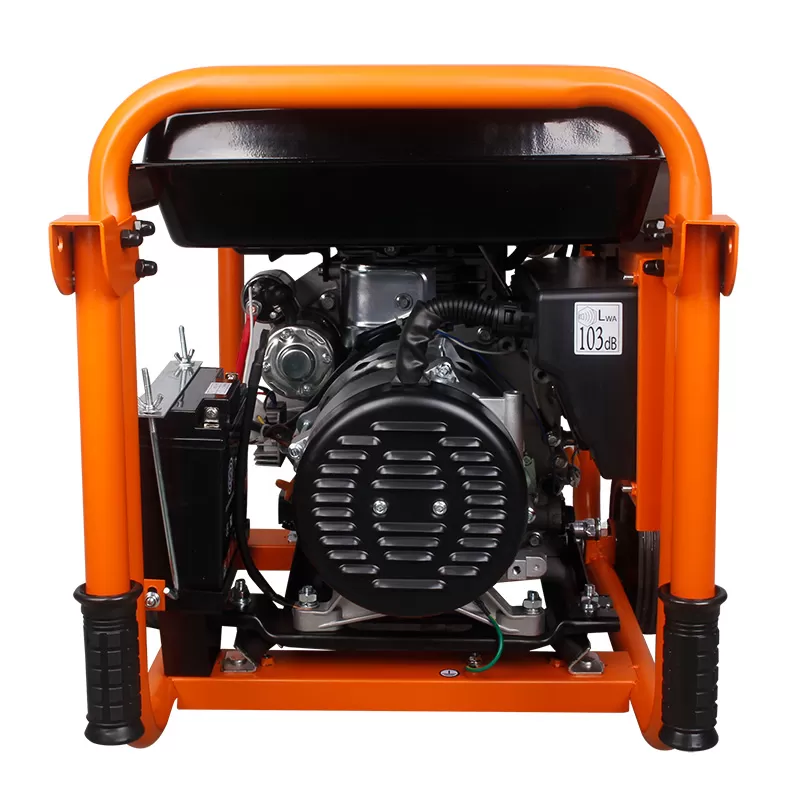
Manufacturing Tolerances, QC Protocols, and Sourcing Considerations
Procuring micro-diesel hardware for B2B supply chains requires strict technical validation of Tier-1 and Tier-2 component suppliers. In the sub-2kVA diesel segment, manufacturing variances lead directly to oil consumption, blow-by, and field starting failures.
Quality verification must focus on three non-negotiable manufacturing stages:
First, cylinder bore plateau honing must achieve a cross-hatch pattern with precise surface roughness parameters (Rk, Rpk, and Rvk). This micro-texture maintains an optimal hydrodynamic lubricating film during cold startup while ensuring fast piston-ring seating without scuffing the liner walls.
Second, the high-pressure fuel injection pump and delivery nozzle must be sourced from precision-machined alloys capable of maintaining tight tolerances at injection pressures between 180 and 220 bar. Inconsistent fuel atomization results in fuel droplet agglomeration, incomplete combustion, accelerated carbon deposition on the exhaust valve seat, and excessive crankcase oil dilution.
Third, testing protocols require factory load-bank verification under varied ambient conditions. Suppliers like United Powe execute extended pre-shipment run-in protocols, evaluating cold-cranking performance, low-idle oil pressures, dynamic vibration frequencies via three-axis accelerometers, and harmonic distortion under non-linear inductive loading. Engineering buyers should review complete factory acceptance test (FAT) documentation, verify CE and ISO8528 conformity, and request material mill test reports for critical stress-bearing components, including connecting rods and crankshaft forgings.
Frequently Asked Questions
What is the typical fuel consumption rate of a 1kw diesel generator operating under load?
An industrial-grade 1kw diesel generator operating at 75% rated continuous output consumes approximately 0.28 to 0.35 liters of standard EN 590 or ASTM D975 diesel per hour. Fuel consumption varies based on the engine operating speed (3,000 RPM versus 3,600 RPM), the ambient air density, and the efficiency rating of the alternator assembly.
Can a micro-capacity diesel generator support inductive motor loads with high starting currents?
Yes, provided the inrush current does not exceed the surge rating of the generator system. Electric motors typically pull three to five times their continuous running current during inductive startup. When running motor loads with a 1kW continuous rating, the starting peak should not exceed the short-term peak mechanical capability of the engine (typically 1.1kW to 1.2kW mechanical limit) and the alternator's saturation ceiling. Power Factor correction and motor soft-starters are recommended for high-starting-torque equipment.
How does ambient operating temperature influence the cold-cranking ability of sub-2kVA diesels?
Compression-ignition engines depend entirely on the heat generated during the compression stroke to ignite the air-fuel charge. In ambient environments below 0 degrees Celsius, parasitic oil drag increases, while heat transfer into cold cylinder walls lowers the compressed air temperature below the auto-ignition threshold. Cold-climate specifications should incorporate high-torque reduction starter motors, pre-heating glow plugs in the intake tract, and multigrade synthetic lubricants like 5W-40 or 0W-40 meeting API CJ-4/CK-4 specifications.
What prevents wet stacking in low-capacity diesel generators?
Wet stacking occurs when an engine operates for extended durations below its minimum exhaust gas design temperature, preventing complete fuel combustion and allowing unburned fuel and carbon to accumulate in the exhaust manifold. Operating the generator at a minimum of 60% to 75% of continuous rated capacity ensures cylinder pressures and core exhaust temperatures remain high enough to burn away deposits. Sizing the unit properly to match baseline electrical loads avoids chronic underloading.
What are the primary preventative maintenance requirements for single-cylinder industrial engines?
Standard industrial maintenance schedules require the first break-in oil change at 50 hours of operation, followed by oil and filter changes every 200 to 250 operating hours. Valve lash clearance adjustments must be checked every 500 operating hours to compensate for valve-seat wear. Clean fuel management is paramount; installing high-efficiency water-separating fuel filters prevents catastrophic abrasive wear across the high-pressure injection pump barrel and plunger assembly.
Is it possible to convert a 1kw diesel generator for continuous prime power operation?
Yes, provided the continuous load rating applied to the generator does not exceed 70% to 80% of its nominal standby rating, and an expanded auxiliary oil reservoir or dynamic oil makeup system is integrated. Standard single-cylinder crankcases carry small oil volumes (typically 0.8 to 1.1 liters); continuous multi-week prime power runtime requires managed oil replenishment to compensate for normal operational oil consumption.
Industrial Inquiries and Engineering Specifications
Establishing dependable, micro-capacity auxiliary power infrastructure demands equipment engineered to precise industrial criteria. OEM procurement teams, international contractors, and system engineers requiring customized electrical architectures, specialized chassis configurations, extreme-climate adaptations, or volume factory pricing are invited to submit comprehensive project specifications to the technical engineering department for detailed technical review and commercial proposals.

.webp "How to Choose the Right 10 HP Gasoline Engine for Your Machinery")