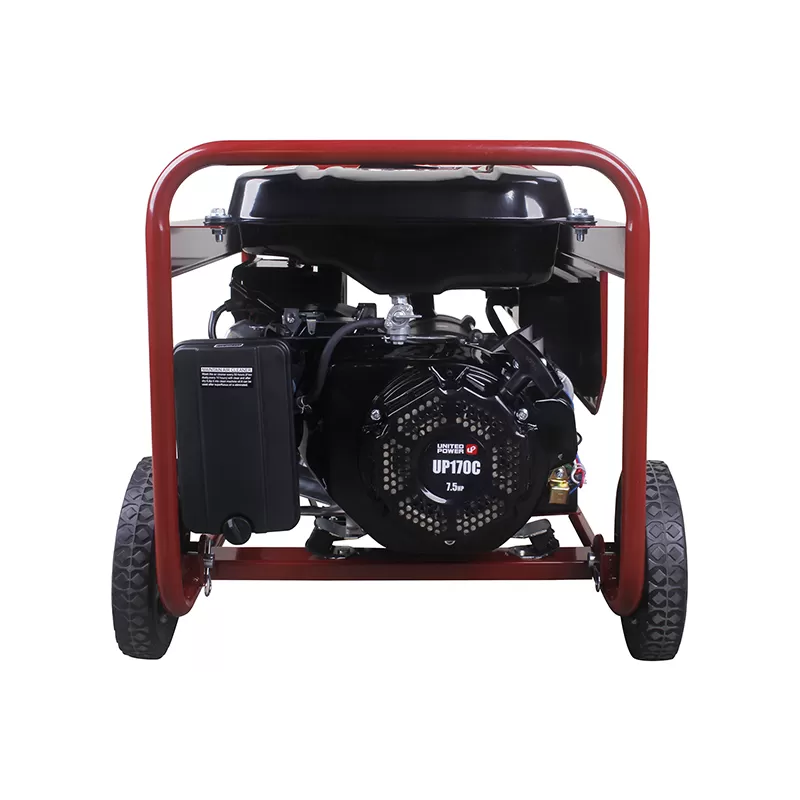
Evaluating the 4 kW Generator Price: Wholesale Sourcing & Manufacturing Specs
Commercial buyers, equipment rental fleets, and regional distributors evaluating the global power generation market frequently treat the 4,000-watt (4 kW) segment as a foundational inventory asset. This capacity class bridges portable job site utility and light stationary commercial backup. Navigating the commercial variables behind the 4 kw generator price requires a methodical assessment that looks far beyond top-line wholesale listings. Unit economics are dictated by core mechanical choices, alternator engineering, regulatory emissions integration, and acoustic engineering.
For international supply chain directors, securing reliable inventory involves balancing upfront capital allocation against downstream warranty rates and field service life. Manufacturers like United Power engineer multiple iterations of this power band to address distinct price-to-performance tiers. Determining the correct investment level demands an understanding of how internal components, engine displacements, and material treatments directly correlate with long-term commercial yields.
.webp?t=1789883121868 "4 kw generator price")
Baseline Market Valuations and Capital Outlay Parameters
Wholesale acquisition costs for 4 kW generating sets fluctuate within a clearly defined global range. Baseline open-frame utility models powered by standard single-cylinder, air-cooled four-stroke gasoline engines typically anchor the entry level, commanding factory-gate rates between $180 and $320 per unit under full container load (FCL) agreements. These configurations serve intermittent, non-critical applications where bare-minimum run hours and utilitarian voltage tolerances are acceptable.
Mid-tier commercial units incorporate improved electrical regulation and structural enhancements, raising wholesale thresholds to the $350 to $650 range. Such units feature digital automatic voltage regulators, enhanced air filtration systems, and heavy-duty tubular steel transport chassis designed for severe construction environments.
Advanced digital inverter platforms and enclosed acoustic units occupy the upper tier, commanding price points from $700 to upwards of $1,400 per unit. These systems run variable-speed prime movers modulated by microprocessor-controlled inverter modules, producing pure sine wave power suitable for precision instruments, telemetry arrays, and sensitive electronic payloads. The higher manufacturing complexity, paired with compact acoustic tooling, directly drives this elevated baseline.
内容来源:United Power,原文地址 https://www.unitedpower.cn/evaluating-the-4-kw-generator-price-wholesale-sourcing-manufacturing-specs.html
Engineering Architectures That Define the 4 kW Generator Price
Mechanical specifications establish the foundational cost of every generating set. The engine block, combustion design, and electrical alternator account for over 65% of direct bill-of-materials expenditures.
Combustion Platforms and Thermal Management
The displacement of standard 4 kW prime movers generally spans 208cc to 270cc in gasoline platforms. High-durability platforms utilize cast-iron cylinder liners pressed into aluminum alloy blocks, offering substantial wear resistance over thousands of thermal cycles compared to budget-grade, bare aluminum bores. Overhead valve (OHV) valvetrain configurations remain the industry benchmark for thermodynamic efficiency, delivering predictable fuel consumption rates under varying load conditions.
Thermal management plays a direct role in procurement pricing. High-capacity stamped steel cooling fan cowlings, forged crankshafts, and case-hardened alloy camshafts elevate manufacturing overhead while drastically improving Mean Time Between Failures (MTBF). Budget-tier assemblies substitute cast components, reducing purchase price at the expense of accelerated mechanical wear when run near peak capacity for extended run cycles.
Alternator Construction: Metallurgy and Windings
Electrical generation efficiency centers entirely on alternator engineering. The metallurgical choice between copper and aluminum magnet wire defines longevity and thermal resilience:
All-Copper Windings: Industrial-grade models feature 100% electrolytic copper wire with Class H or Class F insulation. Copper offers superior thermal conductivity, lower internal resistance, and superior tolerance to sustained thermal shock during heavy motor startup surges. This construction increases baseline build costs by 15% to 25%.
Copper-Clad Aluminum (CCA) or Pure Aluminum: Lower-tier assemblies integrate aluminum winding configurations to suppress manufacturing expenses. Aluminum displays higher electrical resistance, runs substantially hotter under steady-state resistive loads, and increases overall core loss, ultimately capping generator longevity in warm operating environments.
Lamination Steel Quality: High-permeability, cold-rolled silicon steel rotor and stator laminations reduce eddy current losses. Premium laminations stabilize the magnetic flux path, suppressing operating temperatures and maintaining structural stability under heavy inductive loads.
Voltage Regulation Systems and Waveform Quality
Total Harmonic Distortion (THD) characteristics alter the commercial value proposition significantly. Standard brushless or brush-type alternators stabilized via basic analog Automatic Voltage Regulators (AVR) deliver THD levels between 8% and 15%. This output is robust enough for resistive elements, standard electric motors, and general job site power tools.
—— 本文首发于 United Power,原文:https://www.unitedpower.cn/evaluating-the-4-kw-generator-price-wholesale-sourcing-manufacturing-specs.html
Lowering THD beneath the critical 3% threshold—safe for microprocessors, high-efficiency variable speed tools, and switching power supplies—requires multi-stage digital inverter technology or premium alternators equipped with advanced harmonic damping windings. The digital inverter architecture converts raw multi-phase high-frequency alternating current into direct current before regenerating a clean, single-phase 50Hz or 60Hz pure sine wave via an Insulated Gate Bipolar Transistor (IGBT) bridge. The integration of high-grade semiconductors, encapsulated against moisture and vibration, directly increases the overall 4 kw generator price.
Fuel System Engineering: Gasoline, Diesel, and Dual-Fuel Configurations
Fuel platform selection dictates not only the factory invoice rate but also field logistics and operational support requirements for fleet managers.
| Fuel Infrastructure | Capital Cost Profile | Thermal Efficiency | Primary Application Profile |
|---|---|---|---|
| Standard Gasoline (Petrol) | Baseline (Lowest) | Moderate (approx. 25-30%) | Intermittent light commercial, emergency backup |
| Air-Cooled Diesel | 40% - 70% Premium | High (approx. 35-40%) | Continuous job site use, telecommunications, mining |
| Dual-Fuel (LPG / Gasoline) | 10% - 20% Premium | Variable based on gas energy density | Municipal reserves, long-term non-operational storage |
Diesel platforms operating within the 4 kW bracket demand robust mechanical designs. Higher compression ratios necessitate heavier, reinforced crankcases, structural forged connecting rods, and high-pressure mechanical or common-rail fuel injection systems. These structural upgrades explain the noticeable price gulf between light gasoline units and industrial diesel sets of identical watt output. However, the extended service life—often double or triple that of an equivalent displacement gasoline block—justifies the higher capital expenditure for commercial fleets operating on strict runtime metrics.
Acoustic Attenuation and Enclosure Engineering
Sound pressure standards established by international industrial bodies and municipal jurisdictions increasingly govern job site access. Standard open-frame 4 kW units produce ambient noise levels ranging between 72 dBA and 82 dBA at a 7-meter measuring radius. Mitigating this acoustic footprint introduces significant chassis fabrication costs.
Sound-attenuated enclosures involve deep-drawn steel or impact-resistant ABS/polycarbonate composite shells lined with closed-cell, fire-retardant sound-deadening foam. Internal baffles must maintain directional cooling airflow while interrupting direct noise transmission paths. Specialized dual-chamber expansion mufflers equipped with internal spark arrestors complete the attenuation package, dropping sound pressure levels down into the 58 dBA to 65 dBA range. Achieving this level of acoustic suppression involves comprehensive tooling, dynamic heat modeling, and robotic assembly, adding a predictable premium to the unit price.
Emissions Compliance and Regulatory Overhead
The operational legality of industrial machinery in major markets hinges on emissions compliance. Certifications are not mere administrative fees; they drive internal engine design changes:
North American Standards (EPA Phase III / CARB Tier 4): Compliance mandates low-permeation fuel lines, catalytic converters embedded in exhaust systems, sealed carbon-canister evaporative systems, and precisely mapped lean-burn carburetors or electronic fuel injection (EFI) systems.
European Standards (Euro Stage V): Strict carbon monoxide (CO), non-methane hydrocarbons (NMHC), and particulate matter thresholds necessitate tighter engine production tolerances, verified quality control batches, and continuous conformity-of-production audits.
Noise Regulations (CE Acoustic Directive 2000/14/EC): Units bound for the European Union require verified sound power labeling, backed by certified acoustic testing protocols conducted in specialized hemi-anechoic chambers.
Procuring non-certified equipment limits inventory deployment exclusively to unregulated developing territories. Selecting fully compliant machinery guarantees access to premium markets while shifting the unit baseline upward to cover advanced componentry and third-party lab accreditations.
Total Cost of Ownership: Analyzing Operational Economics
When purchasing at volume, a lower 4 kw generator price on the commercial invoice can mask expensive downstream operating costs. Evaluating total cost of ownership (TCO) shifts the perspective from simple transactional procurement to lifecycle asset utility.
Duty cycle categorization governs maintenance schedules. Prime-rated equipment requires engineered intervals accommodating continuous loading at 70% to 80% of nameplate capacity, with scheduled oil, filter, and valve clearance adjustments occurring at 100- to 200-hour operational milestones. Standby-rated equipment incorporates components engineered for transient usage profiles, where run cycles rarely exceed 50 continuous hours per year. Deploying standby-engineered equipment into prime continuous utility accelerates mechanical degradation, leading to premature valve recession, piston ring blow-by, and winding insulation breakdown.
Consolidated service access dramatically lowers maintenance labor hours. Designs incorporating grouped filtration access, external oil drain valves, tool-free access panels, and centralized multi-meter displays reduce field diagnostic times. Standardized electronic control units (ECUs) and uniform AVR modules across an entire fleet streamline replacement part inventories, offsetting marginally higher initial unit purchase prices.
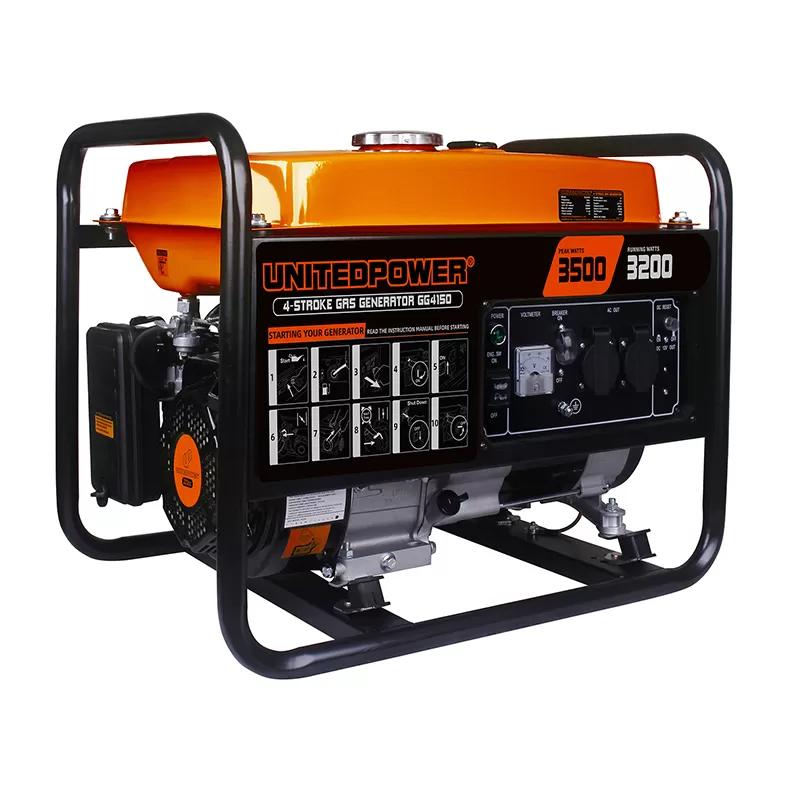
Commercial Sourcing Strategies for B2B Importers and Distributors
Volume acquisition from large-scale manufacturing facilities requires structured planning around supply chain dependencies, minimum order quantities (MOQs), and engineering customizations. Tier-1 manufacturers like United Power utilize automated assembly lines, progressive stamping dies, and automated dynamic load banks to deliver predictable quality metrics across volume runs.
Container consolidation profoundly influences landed per-unit pricing. Standard 4 kW open-frame generators feature physical footprints allowing optimized nesting within standard 40-foot high-cube (40HQ) shipping containers, typically packing between 200 and 340 units depending on chassis and wheel kit design. Sound-attenuated inverter cases feature more uniform exterior geometries, maximizing internal container volume and lowering the freight cost per kilowatt.
Strategic purchasing contracts leverage staged production releases aligned with seasonal demand spikes, such as peak storm seasons or major regional agricultural cycles. Integrating customized wiring harnesses, application-specific control panels, and regional receptacle interfaces at the assembly line stage prevents costly aftermarket retrofits by the distributor, protecting margins across the distribution network.
本文由 United Power 原创发布,转载请注明来源:https://www.unitedpower.cn/evaluating-the-4-kw-generator-price-wholesale-sourcing-manufacturing-specs.html
Technical Frequently Asked Questions
Why does an inverter-type 4 kW generator command a significant price premium over an open-frame unit?
Inverter generators utilize multi-pole alternators that produce raw, multi-phase AC power, which is rectified to DC and then synthesized into an ultra-low distortion pure sine wave by high-grade electronics. This micro-controlled process operates independently of engine rotational speed, enabling the prime mover to throttle down based on actual load demand. The added expenditure covers microprocessors, solid-state switches, advanced composite sound enclosures, and specialized cooling pathways absent in fixed-speed, conventional open-frame units.
How does copper versus aluminum alternator wiring influence long-term commercial returns?
While aluminum-wound alternators decrease initial unit costs, they exhibit lower tensile strength, higher coefficients of thermal expansion, and higher electrical resistance. Under heavy or continuous inductive loads, aluminum windings experience accelerated thermal stress, leading to early micro-fractures and insulation breakdown. All-copper windings operate substantially cooler, tolerate frequent overload spikes, and deliver longer run lifespans, translating into lower warranty claims and extended operational service.
What structural factors distinguish prime-rated 4 kW generators from standby-rated models?
Prime-rated machines feature heavy-duty commercial engine components, including forged steel crankshafts, cast-iron cylinder sleeves, dual-element air cleaners, and expanded-capacity oil sumps. Their alternators utilize higher-class insulation systems (Class H) designed to withstand elevated ambient temperatures under constant operation. Standby models utilize lighter materials, splash lubrication instead of pressurized systems, and smaller thermal dissipation matrices intended solely for brief utility outage support.
How do global emissions standards impact international unit availability and import costs?
Emissions frameworks such as EPA Phase III and Euro Stage V require precision-metered fuel systems, altered ignition timing, specialized catalytic exhaust treatments, and evaporative emission controls. These mechanical additions, combined with mandatory factory production audits and certification filings, elevate unit baseline costs. Non-compliant units remain physically cheaper to manufacture but cannot clear customs or operate legally within strictly regulated territories.
What parameters define an ideal B2B purchasing specification for 4 kW power equipment?
A comprehensive procurement specification details the prime versus standby power rating, maximum permissible THD thresholds, alternator winding metallurgy, AVR response time under step-load changes, starting load surge capacity (kVA), operating decibel limits at a standardized distance, full-load continuous runtime per tank of fuel, and the exact regulatory certifications required for the target distribution territory.
Procurement Consultation and Technical Specifications Review
Executing an optimized fleet purchase or retail inventory rollout requires a clear alignment between operational requirements and equipment design. The 4 kw generator price is ultimately an expression of mechanical engineering, component durability, and regional compliance standards. Commercial buyers seeking technical spec sheets, full-container load schedules, or factory testing metrics are encouraged to initiate a detailed inquiry with the technical team at United Power to review project-specific manufacturing capabilities and baseline supply agreements.
.webp "Evaluating the 4 kW Generator Price: Wholesale Sourcing & Manufacturing Specs")
.webp "2026 5 kW Silent Generator Price Guide: Costs, Features & Best Value Picks")