1000 Watt Portable Generator: What It Can Run, How Long It Lasts & How to Choose
A 1000 watt portable generator is the point where portability and usefulness finally meet: small enough to carry with one hand, powerful enough to keep lights, fans, laptops, CPAP machines and small fridges running through a camping trip or an outage. Most buyers fail on wattage math, not on the machine - they connect a microwave on top of everything else and wonder why the generator overloads.
This guide walks through what a 1000W generator can actually run, how long it lasts on a tank, why surge watts matter more than the sticker number, and the exact spec sheet you should send a manufacturer before buying. Product data is based on the United Power IG1000, a factory-direct 1000W portable generator built in Fuzhou, China.
Quick Specs
| Best fit | Camping, fishing, outdoor vending, tailgating, home outage essentials, field photography |
| Common names | 1000W portable generator, 1kW generator, 1000 watt inverter generator, mini gas generator |
| Power output | 900W rated / 1000W max (AC), 1.5A / 5V DC |
| Fuel | Gasoline, 2.2L tank |
| Runtime | 4.5 hours at 25% load (manufacturer spec) |
| Weight | 11.5 kg net (25.4 lb) - one-hand carry |
| United Power handoff | IG1000 1000W portable generator selection, plus inverter generators for cleaner power |
What Is a 1000 Watt Portable Generator?
A 1000 watt portable generator is a small, fuel-powered machine that supplies up to 1,000 watts of electrical power from a compact gasoline engine. Because the term covers everything from inverter generators to conventional units and battery power stations, the first buying question is never the watt number - it is what will be connected at the same time, and where the machine will run.
If the answer is "sensitive electronics indoors-adjacent with neighbors close by," you are usually shopping for a quiet inverter model. If the answer is "tailgating, fishing trips, or a job site where noise rules are loose and price matters," a value-engineered unit like the IG1000 often wins. The generator itself is only half the decision; the other half is matching rated watts, surge capability, fuel type, weight and noise to the specific loads.
The Three Types of 1000 Watt Generators
Every 1000W-class generator falls into one of three families. Each is called a "1000 watt generator," but the setup, noise, power quality and price are different.
| Type | Where it fits | Buyer watchpoint |
|---|---|---|
| Gasoline inverter generator | Camping, RV tailgating, electronics, quiet residential use | Check THD and noise rating; cleaner power for laptops and TVs |
| Conventional gasoline generator | Job sites, outdoor vending, heavy non-sensitive tools | Lower cost per watt, but noisier and power quality varies with engine speed |
| Dual-fuel / LPG generator | Fuel-flexibility buyers, longer storage, off-grid | Confirm propane runtimes and regulator compatibility at 1000W output |
| Battery power station (1kWh class) | Indoor, silent, zero-emission use | Check real AC output vs peak marketing watts; runtime is battery-limited, not fuel-limited |
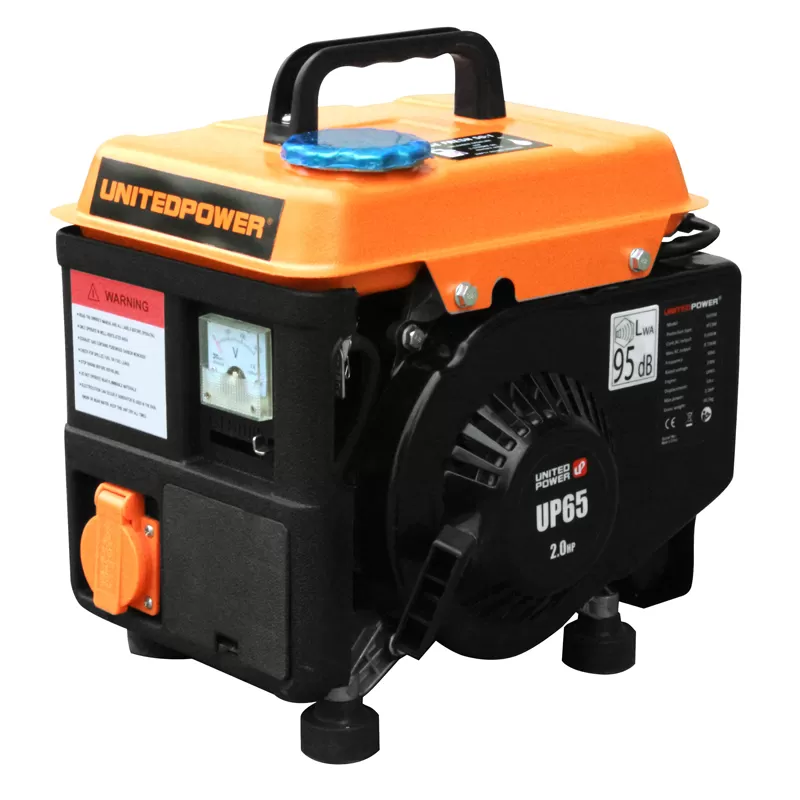
For this article, the product reference is a compact gasoline unit: the IG1000. Its 2-stroke engine, 11.5 kg weight and recoil start make it a "pull and go" machine for occasional, mobile use - the classic profile of the 1000 watt portable generator market.
What Can a 1000 Watt Generator Run?
The rule is simple: add up the running watts of everything plugged in at once and keep the total under the generator's rated output. Then check the single biggest surge (startup) demand, because compressors and motors briefly draw 2-3x their running wattage.
| Appliance | Running watts | Startup surge | On a 1000W gen? |
|---|---|---|---|
| LED light string / bulb | 8-15W | - | Yes, several at once |
| Phone / tablet charger | 5-15W | - | Yes |
| Box fan | 50-60W | ~80W | Yes |
| Laptop | 60-90W | - | Yes |
| CPAP machine | 60-90W | ~110W | Yes |
| 32" LED TV | 80-120W | - | Yes |
| Mini fridge (running) | 60-120W | 400-600W | Yes, as the main load |
| Chest freezer | 150-200W | 500W+ | Marginal - check surge |
| Small water pump | 250-350W | up to 900W | Marginal - start pump alone |
| Microwave | 700-800W | can exceed 1000W | Only alone, and not with a fridge |
| Electric heater / kettle | 1000-1500W | - | No - over capacity |
A practical camping mix for a 1000W machine: 3 LED light strings (30W) + box fan (55W) + laptop (70W) + phone charging (15W) + small TV (110W) = 280W total - well under rated output, with huge headroom for charging pauses. Add a mini fridge and you must plan around its compressor surge, not its running watts.
How Long Does a 1000 Watt Generator Run?
Runtime comes from one number: fuel, divided by how hard the engine is working. The IG1000 carries 2.2L of gasoline and is rated for 4.5 hours at 25% load. That is the official figure to plan around - heavier loads drain the tank faster, lighter loads stretch it.
Planning formula: estimate your average load, then expect roughly 4.5h × (25% ÷ your average load %). For example, a 50% average load points to about 2.2-2.5 hours. Always carry spare fuel in an approved can, and carry twice the fuel you think you need for overnight uses like CPAP.
Rated Watts vs Surge Watts: What the Spec Sheet Really Means
Every generator has two numbers, and most confusion starts there:
Rated (running) watts - the continuous output the machine holds hour after hour. On the IG1000 this is 900W.
Max (surge) watts - the short burst a generator can deliver for a few seconds when a motor or compressor starts. On the IG1000 this is 1000W.
The buyer's rule: steady loads add up to under rated watts; one motor may briefly use surge headroom, but not two at the same time. If a mini fridge (120W running) and a water pump (250W running) both try to start together, their combined surge can exceed 1000W and trip the overload protection. Sequence big loads manually.
1000W vs 2000W vs 3000W: Right-Sizing Your Generator
| Generator class | Rough weight | What it handles | Best for |
|---|---|---|---|
| 1000W (IG1000) | ~11.5 kg / 25 lb | Lights, fan, phone/laptop, CPAP, mini fridge, small TV | One-hand portability, camping, fishing, outage essentials |
| 2000W (IG2200s) | ~20 kg / 44 lb | Adds small microwave, electric kettle, heater (alternately), RV loads | RV and camper use, bigger outages |
| 3000W+ (LH4300i) | 35 kg+ / 77 lb | Adds sump pumps, window AC, power tools, freezer | Home backup, job sites, heavier appliances |
If your list of essentials stays under ~800W of steady load and one-hand portability is the priority, a 1000 watt portable generator is the honest right answer. The moment a microwave or electric heat source enters the list, step up to a 2000W inverter model - the weight difference is the price of the extra headroom.
The 5-Input Selection Matrix
Use this matrix before asking a supplier for a quote. It turns "how much is a 1000 watt generator?" into a request a factory engineer can answer without five rounds of clarification.
| Input | What to send | Why it matters | Machine effect |
|---|---|---|---|
| 1. Load list | Every device with its running watts | Sets rated-watt target and surge headroom | 1000W vs 2000W class decision |
| 2. Electronics? | Laptops, TVs, medical devices (CPAP) | Sensitive gear prefers clean sine power | Inverter vs conventional alternator choice |
| 3. Runtime need | Hours per day / night | Sets tank size and fuel planning | 2.2L tank vs larger tank models |
| 4. Site & noise | Campground, RV park, job site, hospital-adjacent | Noise rules can decide the model | Silent/super-quiet vs open-frame rating |
| 5. Market & voltage | Destination country, 110/120V or 220/230V, certs (EPA, CE, EuV) | Specs are region-locked | 60Hz/EPA build vs 50Hz/EuV build |
| Voltage & freq. | 110V/60Hz vs 220-240V/50Hz | Match appliances and local grid | IG1000 offers both 50Hz and 60Hz builds |
| Quantity | Sample, 1x40' container, or 20' container | Changes pricing, tooling and lead time | OEM/ODM private label options |
Product Spotlight: United Power IG1000
IG1000 - 1000 Watt Portable Generator (900W rated / 1000W max)
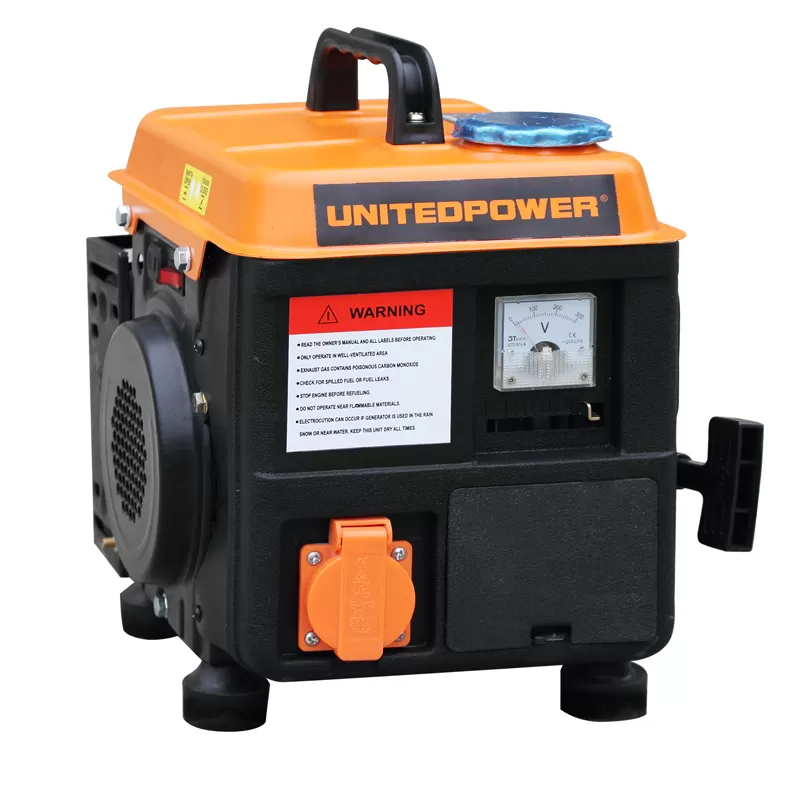
Built around a compact single-cylinder 2-stroke engine, the IG1000 is the answer to "lightweight power, minimum cost." Its selling points are the four most-asked questions in this category:
Go light, go far - a true one-hand carry design for loading into a trunk, boat or pickup.
1kW of trust - stable output for LED lights, fans, phone chargers, CPAP and small water pumps.
Pull & go - classic recoil start with no battery to drain between trips.
Value engineered - the budget-friendly entry point to a manufacturer-direct supply chain.
It suits occasional users, outdoor vendors, fishing trips, field photography, and anyone who needs a reliable fallback during short outages without paying for a bigger machine than they carry.
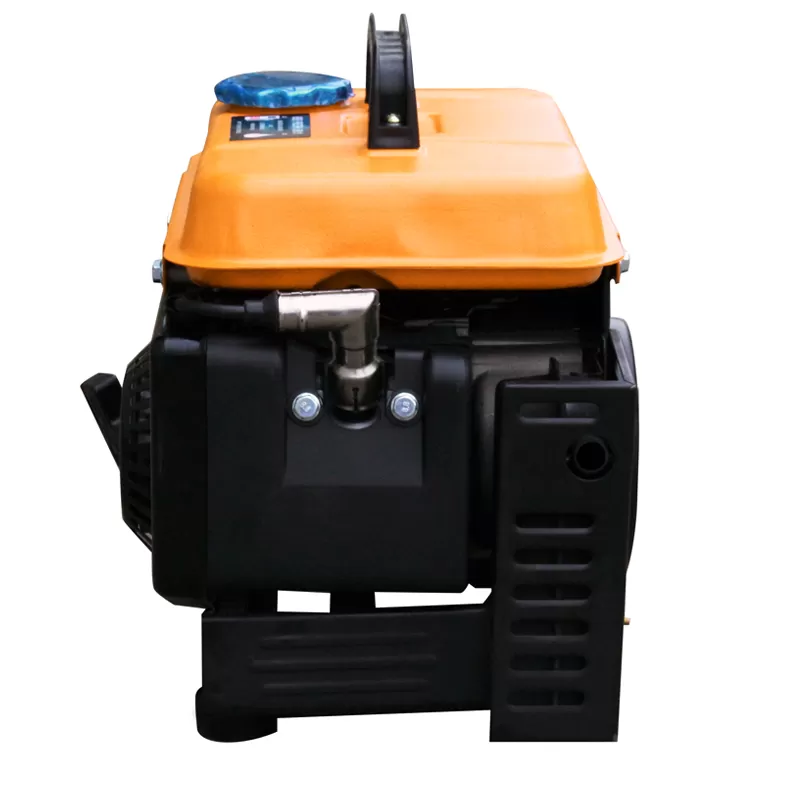
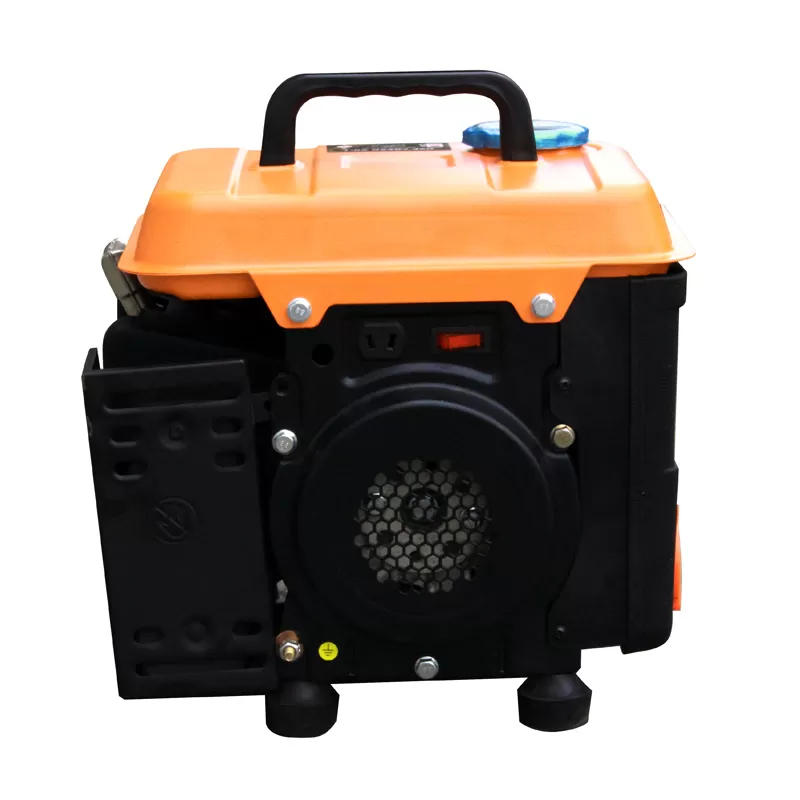
IG1000 full specifications
| Model | IG1000 |
| Frequency | 50 Hz / 60 Hz |
| AC voltage | 220/230/240V (50Hz) · 110/120V (60Hz) |
| AC rated / max | 900W / 1000W |
| AC current | 4.0A (50Hz) · 7.5A (60Hz) |
| DC output | 1.5A / 5V |
| Certification | EuV (50Hz) · EPA (60Hz) |
| Noise | 95 dB(A) @ 7m |
| Fuel / tank | Gasoline · 2.2L |
| Runtime @ 25% load | 4.5 h |
| Net / gross weight | 11.5 kg / 12.5 kg |
| Unit dimensions | 334 × 264 × 330 mm |
| Engine | Single-cylinder 2-stroke, UP65/UP71, variable 3600-3800 rpm |
| Starting system | Recoil |
| Spark plug | F6RTC |
| Alternator | Permanent magnet |
| In the box | Spark plug wrench · Owner's manual |
Specs are manufacturer-visible data from the IG1000 product page; confirm the exact build (voltage, certification) for your market before ordering.
Why Buy a 1000 Watt Generator Direct from a Manufacturer
Most 1000W generators sold under brand names are built by factories like United Power and rebranded. Buying factory-direct changes the equation in four ways that matter for distributors, importers and bulk buyers:
OEM / ODM service - your logo, your packaging, your spec tweaks (voltage, color, label), from tooling to final assembly.
One-stop pricing - no middleman margin; 7 precision production lines keep unit costs and lead times predictable.
Full QC before shipping - incoming, in-process and final inspection; every unit is production-line tested.
Warranty and support - 1-year warranty plus e-document support: catalogs, technical data and user manuals.
United Power Equipment Co., Ltd was founded in 2003 in Fuzhou, Fujian, with a 1.5-million-square-foot manufacturing base and long-term partnerships with dealers and wholesalers in Europe and North America. The IG1000 ships with EuV certification for 50Hz markets and EPA certification for the 60Hz US market - meeting the EPA Phase 3 emission standards for small spark-ignition engines that apply to portable generators under 19 kW.
Safety: What "Portable" Does Not Remove
Overload protection - keep combined running watts under 900W; respect the 1000W max for brief starts only.
CO alarms - CPSC recommends battery-operated CO alarms (or battery backup) on every level of the home and outside sleeping areas; test them monthly.
Fuel handling - cool the engine before refueling; store gasoline in approved containers away from living areas.
Grounding & cords - use outdoor-rated extension cords of adequate gauge; keep connections dry.
Noise and ears - 95 dB(A) @ 7m is loud; use hearing protection and respect local noise rules and quiet hours.
Maintenance - 2-stroke engines need the correct fuel-oil mix; follow the owner's manual for spark plug and air filter care.
Frequently Asked Questions
Can a 1000 watt generator run a refrigerator?
A small mini fridge or compact refrigerator drawing roughly 60-120 running watts can run on a 1000W generator, but its compressor surge can reach 400-600W. Keep the fridge the only large load and never pair it with a microwave or heater. A full-size refrigerator may exceed both rated and surge capacity - check the nameplate first.
How long will a 1000 watt generator run on a full tank?
The IG1000 runs about 4.5 hours at 25% load on its 2.2L tank. Runtime drops as load rises - as a rough rule, expect roughly half the runtime when you double the electrical load.
Is a 1000 watt generator enough for camping?
Yes, for most lightweight camping setups: LED lights, phone and laptop charging, a box fan and a CPAP machine are all comfortable. If you plan a microwave, electric kettle or large fridge while camping, size up to a 2000W unit like the IG2200s.
Can I run a 1000 watt generator indoors?
No - never. Carbon monoxide is odorless and deadly. Run it outdoors, 20 feet (6 m) from doors, windows and vents. Never run it in a garage, shed, tent or RV, even with the door open.
What can a 1000 watt generator power at the same time?
Keep the total running watts under the rated output. A typical mix: 3 LED light strings (30W) + box fan (55W) + laptop (70W) + phone charging (15W) + small TV (110W) = 280W - comfortable headroom. Add a mini fridge and plan around its compressor surge.
Related Generators
LH1600i · 1400W Inverter Generator - stepping up from 1kW with cleaner inverter power and quieter running for camping and home backup.
IG2200s · 2000W Super Quiet Generator - the classic upgrade when a microwave, kettle or RV appliances enter the load list.
All Inverter Generators - compare the full inverter lineup from 1kW to 5.5kW for homes, RVs and job sites.
Sources & References
Safety and regulatory guidance in this guide follows official U.S. federal publications, consulted August 2026. Wattage figures in the load tables are typical values; always confirm against the nameplate on your own appliance.
U.S. Consumer Product Safety Commission - Carbon Monoxide Information Center
U.S. Consumer Product Safety Commission - Generators and Engine-Driven Tools
Occupational Safety and Health Administration - Preventing Carbon Monoxide Poisoning While Working with Portable Generators (OSHA Alert 4105)
Occupational Safety and Health Administration - Using Portable Generators Safely (OSHA Publication 3286)
U.S. Environmental Protection Agency - Regulations for Emissions from Small Equipment & Tools
U.S. Environmental Protection Agency - Carbon Monoxide's Impact on Indoor Air Quality
Read more generator buying guides on the United Power blog, or ask a factory engineer about the IG1000 for your market at unitedpower.cn/contact.
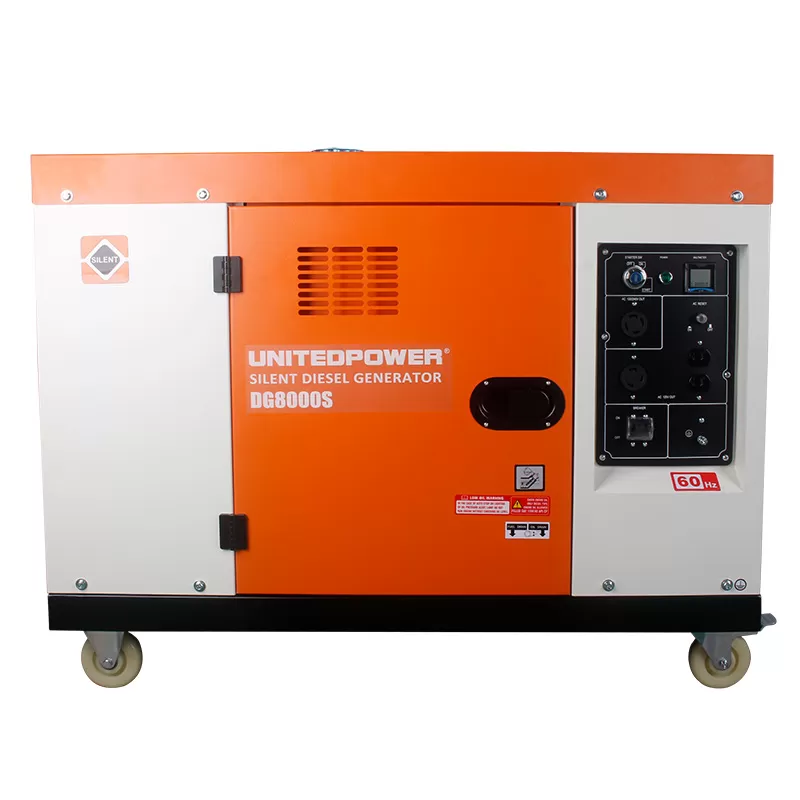
.webp "Evaluating the 4 kW Generator Price: Wholesale Sourcing & Manufacturing Specs")
.webp "2026 5 kW Silent Generator Price Guide: Costs, Features & Best Value Picks")