How Does a Manual Pressure Pump Maintain System Integrity in Off-Grid Environments?
In municipal utility maintenance, off-grid agricultural management, and remote industrial processing, the movement and pressurization of fluid demand robust equipment. While motorized and pneumatic pumps dominate high-capacity manufacturing lines, certain operations require independent, spark-free, and highly controllable pressure generation. The manual pressure pump serves as a primary tool in these scenarios, acting as both an indispensable standby unit and a primary device for precision hydrostatic testing and localized chemical dosing.
United Power manufactures fluid handling machinery built to withstand rigorous deployment. Understanding the mechanical architecture and performance envelopes of these manual systems allows procurement officers and field engineers to make informed decisions that match operational realities with hardware capabilities.
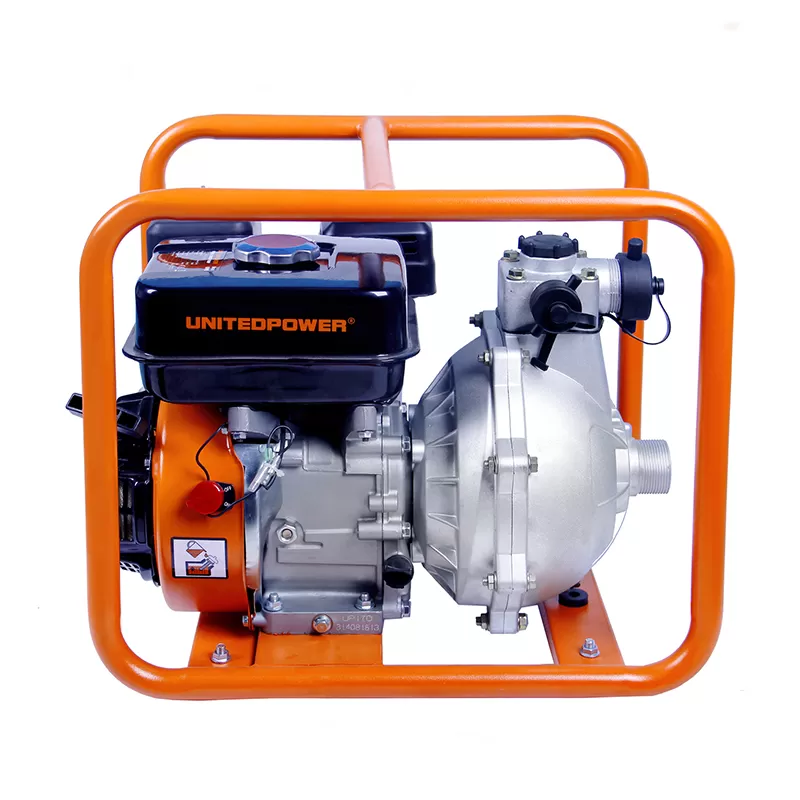
Mechanical Architecture of a Manual Pressure Pump
To understand the performance of a manual pressure pump, one must analyze its internal mechanics. Unlike motorized systems that rely on continuous rotational force converted to linear motion, a manual pressure pump depends entirely on human-applied force transmitted through a leverage handle to a reciprocating piston or plunger. This design belongs to the positive displacement pump family, specifically falling under reciprocating piston mechanics.
The stroke begins when the operator lifts or pushes the handle, which moves the internal piston backward within the cylinder. This movement creates a low-pressure zone—a partial vacuum—inside the pump chamber. The atmospheric pressure acting on the fluid source forces the liquid through the inlet pipe, lifting the inlet check valve off its seat and allowing fluid to fill the cylinder chamber. During this intake phase, the outlet check valve remains firmly closed due to the system pressure downstream, preventing any backflow.
As the operator reverses the handle stroke, the piston advances into the cylinder chamber. This physical reduction in volume immediately increases the pressure of the fluid. The rising pressure forces the inlet check valve to seal shut, preventing the fluid from escaping back to the source. Simultaneously, the pressure overcomes the resistance of the outlet check valve spring, opening the pathway and discharging the fluid into the high-pressure line. This alternating cycle of suction and discharge allows the manual pressure pump to generate substantial hydrostatic pressure with minimal mechanical complexity.
Valves and Sealing Technology
The efficiency of a manual pressure pump depends largely on its valve and seal configurations. Because these pumps are often used in static pressure testing where pressure must be held for extended periods without drop-off, even micro-leakage is unacceptable.
Check Valves: Ball check valves or cone check valves are commonly used. Ball valves made from stainless steel or ceramic provide clean seating and high wear resistance, making them suitable for clear water and light oils. Cone valves offer a wider contact surface, which can handle higher pressures and prevent leakage more reliably when dealing with fluids containing minor particulates.
Piston Seals: The seal surrounding the reciprocating piston must withstand constant friction and high pressure-to-atmosphere differentials. Materials such as Nitrile (NBR), Viton (FKM), and Polytetrafluoroethylene (PTFE) are chosen based on the fluid's chemical composition and temperature. For heavy-duty industrial applications, leather cup seals are sometimes used due to their ability to swell slightly in water, creating a tight seal under high pressure.
Gland Packings: In larger industrial pump models, adjustable gland packings allow maintenance teams to tighten the seal around the operating rod manually, extending the service life of the pump before a complete seal replacement is required.
Metallurgy and Material Construction
The environment where the pump is deployed dictates its material composition. Carbon steel and cast iron are suitable for standard freshwater transfer and general industrial use where corrosion risks are low. However, in maritime, chemical processing, or agricultural environments containing corrosive fertilizers, alternative metallurgies are required.
Grade 304 and Grade 316 stainless steels offer high resistance to oxidation and acid attack. For extreme environments, such as offshore oil platforms or high-salinity marine vessels, bronze pump bodies are preferred because they resist saltwater corrosion and do not spark, reducing safety risks in explosive atmospheres.
Addressing Industrial Fluid Handling Challenges
Industrial operations often face specific challenges related to remote fluid transfer, system testing, and emergency safety. Analyzing these challenges helps clarify where manual fluid systems offer the most practical solutions.
Power Independence and Off-Grid Deployment
In remote construction sites, agricultural fields, and pipeline installations, electrical infrastructure is often absent or unstable. Running long generator lines to power a small water transfer pump is both expensive and inefficient. A manual pressure pump operates completely independently of electrical grids, fuel supplies, or compressed air systems. It provides field technicians with a dependable tool for priming larger centrifugal systems, emptying sumps, or transferring fuel from storage drums to heavy machinery.
Spark-Free Operation in Explosive Atmospheres
Chemical processing facilities, refinery zones, and mining operations often contain volatile gases and dust mixtures. Using electrical equipment in these areas requires explosion-proof enclosures, which significantly increases capital costs. Because a manual pressure pump is powered by human energy and can be constructed from non-sparking materials like bronze or brass, it operates safely in hazardous environments without risking combustion.
Precision Pressure Control for Hydrostatic Testing
Before commissioning any piping network, pressure vessel, or boiler, engineers must perform hydrostatic testing to verify structural integrity and identify leaks. Using a motorized pump for this task can make it difficult to control the exact rate of pressure increase, which can lead to over-pressurization and permanent damage to the testing system. A manual pressure pump allows the operator to increase the pressure incrementally, stroke by stroke, up to the precise target pressure. This level of control is necessary for accurate diagnostics and regulatory compliance.
Performance Specifications and Technical Selection Criteria
To choose the correct manual pressure pump for an industrial application, procurement teams must evaluate several key performance indicators. Selecting a pump based solely on connection size often leads to operational failures or rapid component wear.
Displacement per Stroke
Displacement, typically measured in cubic centimeters (cc) or milliliters (ml) per full stroke, determines the volume of fluid moved with each movement of the handle. A larger piston diameter increases displacement but requires significantly more physical effort from the operator to achieve high pressures. Manufacturers balance this relationship by offering dual-stage pumps. These units utilize a larger piston to quickly fill a system at low pressure, then automatically or manually switch to a smaller piston to build the final high pressure with reasonable physical effort.
Maximum Pressure Rating
The pressure rating of a manual pressure pump must exceed the maximum operating pressure of the target system. Standard transfer pumps usually operate below 10 Bar (approx. 145 PSI), while dedicated hydrostatic test pumps can easily reach pressures between 100 Bar and 700 Bar. Operating a pump close to its structural limit for extended periods accelerates seal degradation and body fatigue. A safety margin of at least 20% above the maximum testing pressure is recommended for industrial applications.
Fluid Compatibility
The chemical and physical properties of the fluid being pumped will dictate the pump's construction materials. Viscous fluids require larger valve ports and heavier return springs to prevent cavitation and ensure the chamber fills completely during the suction stroke. Acidic or alkaline fluids require synthetic seals and corrosion-resistant alloys. Standard water-delivery pumps should not be used for volatile fuels or solvents unless the manufacturer has explicitly rated the pump, seals, and hose assemblies for flammable hydrocarbon transfer.
Installation, Operation, and Field Maintenance
To ensure a manual pressure pump operates reliably throughout its service life, operators must follow correct installation and maintenance procedures. Misalignment, improper priming, or neglected seals are the primary causes of premature pump failure.
Ensuring Proper Suction Lift and Priming
While positive displacement pumps are technically self-priming, air pockets in the pump chamber can significantly reduce suction capacity. Installing the pump as close to the fluid source as possible minimizes suction lift requirements. If the suction line is long, installing a foot valve at the end of the suction pipe keeps the fluid column intact, preventing dry strokes when starting the pump after periods of inactivity.
Straining and Filtration
Manual pumps are highly sensitive to solid particulates. Sand, scale, and rust particles can lodge in the check valve seats, preventing them from closing fully and causing immediate pressure loss. Installing a fine mesh strainer (typically 50 to 80 mesh) on the suction inlet protects the internal valves without restricting fluid flow.
Routine Maintenance Schedules
A simple maintenance routine helps prevent unexpected equipment downtime in the field:
Seal Inspection: Inspect the piston rod and gland area weekly for fluid leakage. Tighten the packing nut slightly if weeping is detected, or replace the packing set if wear is advanced.
Valve Cleaning: Periodically disassemble the check valve caps to inspect the internal balls, springs, and seats. Remove any debris, clean the metal surfaces, and check for pitting or corrosion.
Lubrication: Apply grease to the linkage pins and handle pivot points regularly. This reduces friction, lowers the required operating effort, and prevents premature wear on the joints.
B2B Procurement and Engineering Consultation
Selecting the correct manual pressure pump configuration requires matching operational needs with specific mechanical capabilities. For large-scale projects, municipal contracts, or specialized agricultural systems, customized pump configurations are often necessary to meet strict environmental and performance standards.
The engineering team at United Power is available to assist your technical departments. We provide tailored material selections, custom port configurations, and high-pressure hose integrations designed to work seamlessly with your existing infrastructure. Please reach out to our industrial sales division to request a detailed technical consultation, obtain material test reports, or receive a formal commercial proposal for your bulk procurement requirements.
Frequently Asked Questions
Q1: Can a manual pressure pump be used to pump petroleum-based fuels?
A1: Yes, provided the pump is built with compatible materials. Standard water pumps often use Nitrile or natural rubber seals that swell and degrade when exposed to fuels. For petroleum transfer, you must select a pump with Viton or PTFE seals, a spark-free bronze or aluminum body, and an integrated static grounding lead to prevent electrostatic discharge.
Q2: Why is my manual pressure pump failing to hold pressure after the handle is released?
A2: This issue is typically caused by debris or wear in the outlet check valve. If the check valve ball or cone does not seat correctly, pressurized fluid will flow backward into the pump cylinder instead of remaining in the high-pressure line. Disassembling, cleaning, and reseating the valve components usually resolves this problem.
Q3: What is the maximum practical suction lift for a manual pressure pump?
A3: Under ideal atmospheric conditions, the theoretical maximum suction lift for water is approximately 10 meters. However, in real-world applications, friction losses, atmospheric variations, and minor air leaks reduce this limit. For reliable operation, keep the vertical suction lift under 6 meters.
Q4: How does fluid viscosity affect the manual operation of the pump?
A4: Higher fluid viscosity increases resistance during both the suction and discharge strokes. This makes the handle more difficult to operate and slows down the piston's return speed. To pump viscous fluids like heavy oils or syrups, you should reduce the stroke speed, increase the diameter of the suction lines, and select a pump with larger internal valve ports.
Q5: Is it possible to rebuild a manual pressure pump, or must the entire unit be replaced when worn?
A5: Industrial-grade manual pressure pump units, such as those supplied by United Power, are designed to be fully serviceable. Replacement seal kits, check valve components, handle linkages, and cylinder sleeves are readily available. This design allows maintenance teams to rebuild the pump quickly on-site, which lowers the overall cost of ownership compared to disposable consumer-grade pumps.
.webp "Evaluating the 4 kW Generator Price: Wholesale Sourcing & Manufacturing Specs")
.webp "2026 5 kW Silent Generator Price Guide: Costs, Features & Best Value Picks")