Is a 2200W Pressure Washer Tough Enough for Industrial Cleaning?
In the industrial and commercial cleaning sectors, procurement managers often face a difficult compromise. Choosing an underpowered unit leads to frequent motor burnouts and extended cleaning times. Conversely, investing in an oversized, heavy-duty industrial system can strain capital budgets and complicate mobility on-site.
This challenge highlight why the 2200w pressure washer has emerged as an essential tool for fleet managers, facility operators, and equipment rental businesses. It represents a highly practical mid-range option, bridging the gap between residential-grade equipment and massive, stationary industrial systems.
Engineering analysis shows that this power rating provides a very specific mechanical balance. In this article, we will examine the technical dynamics, return-on-investment (ROI) factors, and selection criteria that define the commercial value of a premium 2200w pressure washer.
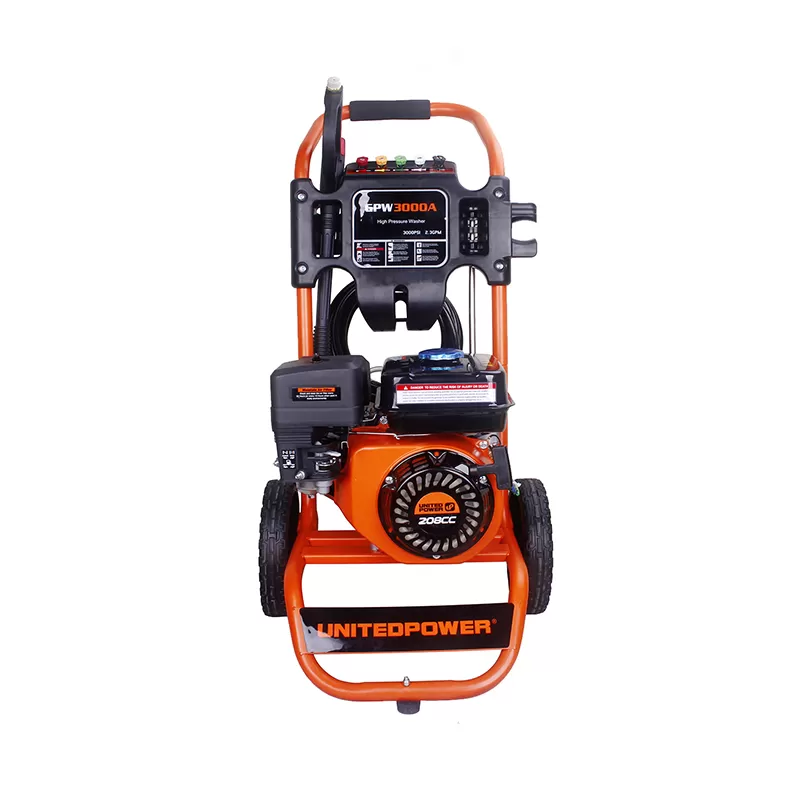
The PSI Trap: Why Flow Velocity and Wattage Rule Efficiency
A common misstep in professional equipment sourcing is focusing solely on maximum pressure, measured in PSI or bar. While high pressure is effective for breaking surface bonds, it is the water flow rate—measured in liters per minute (L/min) or gallons per minute (GPM)—that actually flushes debris away. This relationship is critical for professional operations.
A high-quality 2200w pressure washer typically produces between 110 and 150 bar of continuous working pressure, paired with a flow rate of 7.5 to 10 L/min. To achieve this output reliably, a motor must draw approximately 2.2 kilowatts of electrical power. Attempting to force high pressure through an underpowered motor leads to voltage drops, overheating, and rapid tool degradation.
At United Power, engineering tests indicate that when a motor operates consistently at its designed limit without overloading, the overall cleaning cycle time is reduced by up to 35% compared to standard 1800W units. This efficiency stems directly from the mechanical synergy between the electrical input and the hydraulic pump displacement.
Understanding the Flow-to-Pressure Ratio
To evaluate these machines accurately, consider how pressure and flow interact. High pressure with low flow merely mists the surface. Low pressure with high flow lacks the force to dislodge hardened grease. The 2200W threshold provides the exact electrical energy needed to maintain both adequate impact force and high volume simultaneously.
The Tri-Factor Duty Matrix (TDM) Framework
To assist procurement teams in evaluating equipment, we utilize a model called the Tri-Factor Duty Matrix (TDM). This framework analyzes three interconnected variables: Electrical Load, Hydraulic Performance, and Thermal Dissipation. Balance among these three elements is essential for equipment longevity.
If any single factor is compromised, the overall reliability of the system drops sharply. The TDM framework helps illustrate how a 2200w pressure washer achieves this operational balance:
| Matrix Component | Technical Specification | Operational Impact on B2B Use |
|---|---|---|
| Electrical Load | 2200W Input / 230V Single-Phase | Compatible with standard commercial circuits without upgrading infrastructure. |
| Hydraulic Performance | Anodized Aluminum or Brass Pump Head | Resists cavitation and maintains consistent pressure over long shifts. |
| Thermal Dissipation | Air-Cooled or Liquid-Cooled Induction | Prevents winding degradation and maintains stable operating temperatures. |
By balancing these three elements, a 2200w pressure washer avoids the rapid thermal decline common in lighter, consumer-focused models. It allows operators to run the equipment continuously for extended periods without encountering thermal shutdown.
Anatomy of a Commercial-Grade Pump
The performance of any 2200w pressure washer depends heavily on its internal pump construction. While light-duty units often use plastic or cheap composite pump heads, professional applications demand durable metallurgy. Specifically, either anodized aluminum or forged brass is required.
Brass pump heads offer superior resistance to chemical corrosion from detergents and are far less susceptible to cracking under thermal shock. When water enters a pump at 15°C and the pump head warms to 45°C during continuous operation, the expansion coefficient of brass ensures that tight tolerances are maintained.
Additionally, the plunger design is critical. Triple ceramic-coated pistons reduce friction and wear compared to bare steel alternatives. By incorporating ceramic sleeves, the heat generated by reciprocating motion is minimized, which protects the high-pressure seals from hardening and failing prematurely.
Induction Motors vs. Universal Motors
Another key distinction lies in the motor type. Cheap universal motors rely on carbon brushes that wear down, generating high heat and noise. A professional-grade 2200w pressure washer utilizes a brushless induction motor. These motors run at lower RPMs (typically 1450 or 2800 RPM), which greatly extends their operating life and reduces the acoustic profile on worksites.
B2B Procurement Checklist: 2200W Pressure Washers
When sourcing a fleet of cleaning units, procurement managers should evaluate specific technical features rather than relying on marketing claims. Use this checklist during your evaluation process:
Motor Construction: Ensure the unit features a copper-wound induction motor rather than copper-clad aluminum (CCA) wiring.
Total Stop System (TSS): Verify that the pump shuts off automatically when the trigger is released, which protects the pump from overheating in bypass mode.
Unloader Valve Adjustability: Check if the pressure can be adjusted at the pump to accommodate sensitive surfaces.
Inlet Water Filtration: Ensure a dual-stage filtration system is present to protect internal valves from sediment damage.
Serviceability Index: Confirm that seals, valves, and oil chambers are easily accessible for routine maintenance.
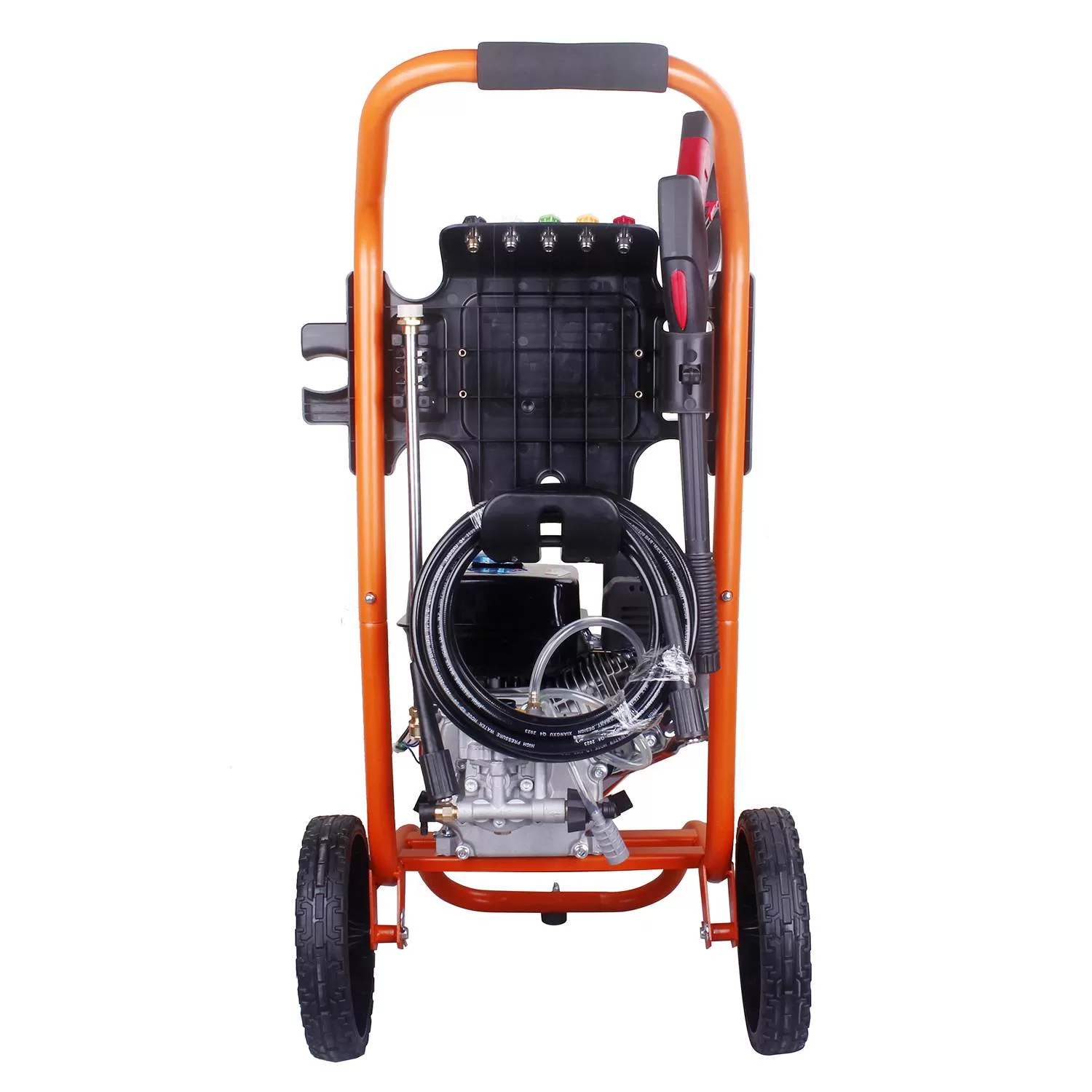
Addressing Common Field Concerns
In our work with industry operators, several technical questions regularly arise regarding the deployment of 2200W equipment. Here we address three of the most common concerns.
Can a 2200W unit run safely on a standard 10A or 13A circuit?
Yes. A 2200W motor operating at 230V draws approximately 9.5 Amperes of current. This falls safely within the limits of standard 10A (AU/NZ) and 13A (UK) electrical systems, making it highly versatile for field use without requiring specialized three-phase power hookups.
How does bypass mode affect pump longevity?
When the spray trigger is released, water recirculates inside the pump head (bypass mode). If left in bypass for more than a few minutes, the water temperature rises rapidly due to friction, which can ruin the pump seals. Choosing a 2200w pressure washer equipped with a reliable Total Stop System (TSS) mitigates this risk by shutting off the motor immediately when the trigger is released.
What is the practical lifetime difference between aluminum and brass pumps?
Under daily commercial use, an aluminum pump head typically has an operational lifespan of 150 to 300 hours. A precision-engineered forged brass pump head, such as those utilized in premium United Power units, routinely exceeds 800 to 1,000 operational hours, provided basic oil maintenance is performed.
Maximizing Equipment ROI
To secure a strong return on investment, focus on preventative maintenance rather than reactive repairs. Even the most durable 2200w pressure washer requires regular attention to ensure it performs optimally over its lifespan.
First, always check the pump oil after the first 50 hours of operation, and every 100 hours thereafter. Clean, unfoamed oil is essential to protect the crankcase bearings. Second, never run the machine without checking that the water supply matches or exceeds the pump’s rated L/min output. Starving the pump of water causes immediate cavitation, which can destroy ceramic pistons within minutes.
By implementing these basic maintenance protocols and sourcing durable, well-engineered equipment from reliable manufacturers like United Power, operations can lower their total cost of ownership, minimize downtime, and keep projects moving forward efficiently.
![10 kVA Single Phase Generator Price Guide: Costs, Sizing & Best Picks [2026]](https://www.unitedpower.cn/storage/group_1773856485320/202604/DG9000E (5).webp "10 kVA Single Phase Generator Price Guide: Costs, Sizing & Best Picks [2026]")
.webp "Top 5 Factors to Consider When Specifying a Generator Motor 220V for Heavy Equipment")