Why a 9000-Watt Inverter Generator is the Standard for Mobile Power
Modern commercial operations demand a reliable, clean, and highly portable source of electrical energy. As industries move toward computerized equipment, digital control panels, and sensitive field instruments, traditional open-frame portable generators often fall short. Standard mechanical governors cannot react quickly enough to load fluctuations, resulting in voltage spikes and frequency variations that can compromise sophisticated circuitry. This operational challenge has driven the demand for high-capacity, clean-power solutions. Among the choices available to fleet managers and procurement specialists, the inverter 9000 watt generator represents a significant milestone in mobile power generation.
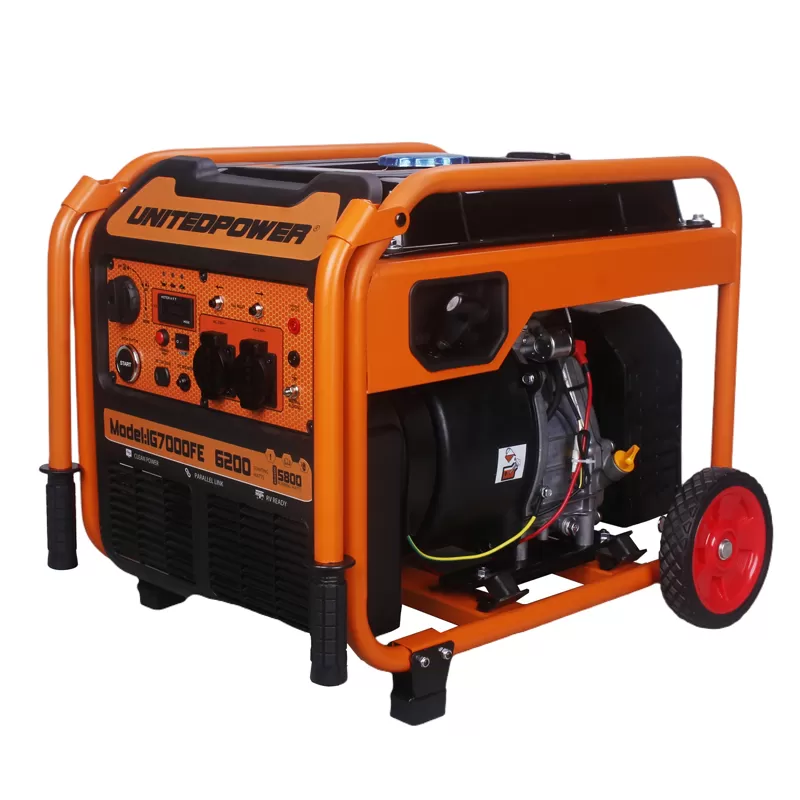
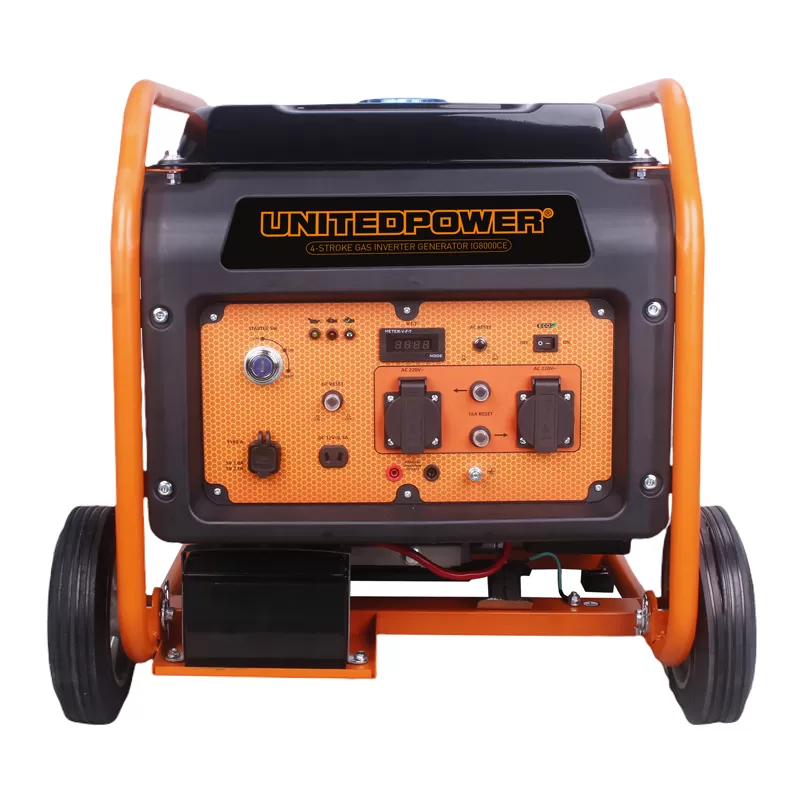
For organizations operating in remote construction sites, emergency response zones, or mobile commercial installations, power quality is just as vital as power quantity. United Power has engineered high-capacity power solutions to address these rigorous field requirements, ensuring that crews have access to utility-grade electricity wherever their projects lead them. By integrating advanced combustion engines with solid-state frequency conversion components, these systems supply stable power to both heavy inductive motors and delicate microprocessors simultaneously.
The Physics of High-Capacity Inverter Power Generation
To understand why an inverter 9000 watt system is preferred over standard synchronous models, it is necessary to examine the underlying power electronics. A conventional generator runs at a fixed speed, typically 3600 RPM in North America, to maintain a 60Hz frequency. Any change in engine speed directly alters the frequency and voltage of the output, which can lead to unstable performance under fluctuating loads. In contrast, an inverter generator operates through a multi-step electrical conversion process that decouples engine speed from electrical frequency.
The process begins with a multi-phase alternator that produces high-frequency Alternating Current (AC). This raw AC power is immediately directed to an internal rectifier circuit, which converts it into Direct Current (DC). A sophisticated microprocessor then manages a bridge of insulated-gate bipolar transistors (IGBTs) to invert the DC power back into clean AC power. This output is delivered as a pure sine wave with a Total Harmonic Distortion (THD) of less than 3%.
This conversion mechanism offers several key operational benefits:
Minimal Total Harmonic Distortion: Keeping THD below 3% ensures that sensitive instrumentation, servers, and variable-speed tools operate without overheating or experiencing program errors.
Dynamic Engine Speed Regulation: Instead of running at a constant maximum speed, the engine adjusts its RPM to match the real-time load requirements, saving fuel and reducing mechanical wear.
Lightweight Alternator Design: The use of a multi-phase, high-frequency alternator reduces the overall weight of the copper windings and rotor assembly compared to traditional iron-core alternators of equivalent capacity.
Analyzing Load Capacity and Equipment Compatibility
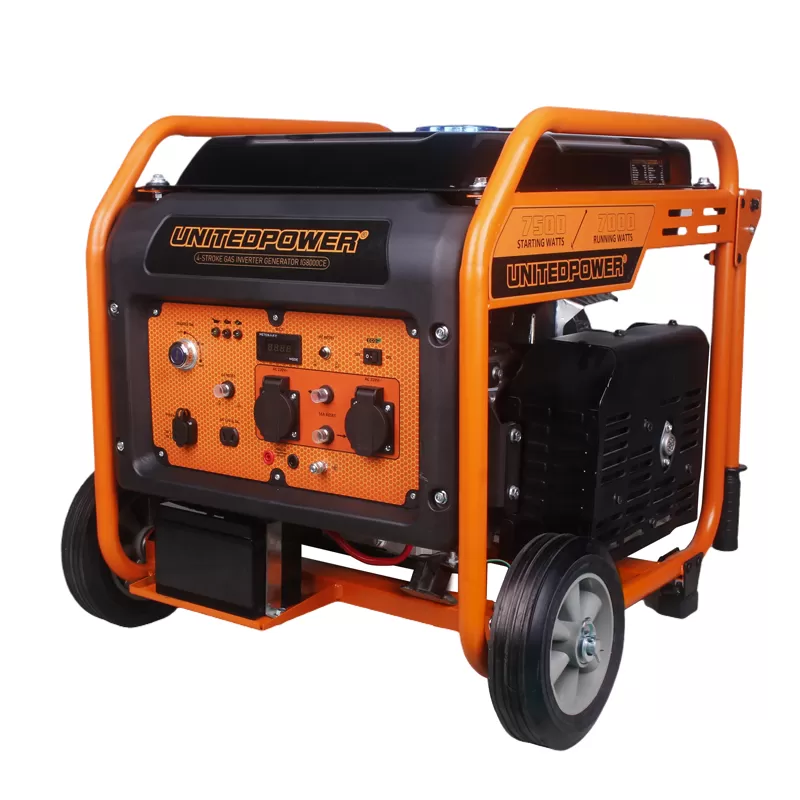
When specifying a power solution for a commercial fleet, understanding the distinction between starting watts and running watts is fundamental. An inverter 9000 watt unit is typically rated for 9000 starting (surge) watts and a slightly lower continuous running wattage, often ranging between 7000 and 7600 watts. This surge capacity is designed to handle the brief, intense power draw required to initiate electric motors, which can be up to three times their operational running load.
To put this capacity into perspective, consider the simultaneous power draw of typical field equipment on a commercial job site:
Submersible Sump Pump (1 HP): Requires approximately 2000 starting watts and 1000 running watts.
Commercial Table Saw (15 Amp): Demands around 3000 starting watts and 1800 running watts.
Inverter-Driven MIG Welder: Draws a stable 2500 to 3000 running watts under typical load.
Quartz Halogen Work Lights: Consumes a constant 1000 watts of resistive load.
An inverter 9000 watt generator managed by United Power control systems can support these tools concurrently without risking overload shut-offs or voltage sags. Because the inverter system maintains a stable voltage level during surge demands, tools run cooler, achieve their operating speeds faster, and suffer fewer insulation breakdowns over their service lives.
Addressing Key Operational Pain Points in the Field
Procurement teams and fleet managers must look beyond basic electrical specifications when evaluating equipment. Field performance is measured by reliability, fuel consumption, sound levels, and maintenance frequency. Standard industrial generators are notoriously loud and inefficient, often leading to operator fatigue and compliance issues in noise-restricted municipal zones.
Fuel efficiency represents a major operating expense for remote projects. In traditional setups, a generator running at a continuous 3600 RPM consumes a standard rate of fuel regardless of whether it is powering a single battery charger or a heavy-duty air compressor. Inverter units address this inefficiency with smart throttle systems. When the power demand decreases, the engine throttles down, reducing fuel consumption by up to 30% under partial load conditions. This directly translates to longer runtimes on a single tank of fuel, reducing the frequency of refueling stops and the logistical overhead of transporting fuel to remote locations.
Sound mitigation is another area where modern inverter engineering provides a clear advantage. Municipal noise ordinances and occupational safety regulations require lower decibel levels on modern work sites. High-capacity inverter models are built with sound-dampening double-walled enclosures, acoustic foam insulation, and specially tuned mufflers. Because the engine speed is modulated based on the actual load, the noise signature is significantly lower than that of conventional open-frame units under typical working conditions.
Structural Durability and Mechanical Design
A B2B-grade power generator must endure harsh handling, dusty environments, and extreme temperatures. The structural design of the frame and enclosure is vital for protecting the internal inverter module, which contains sensitive solid-state electronic components. Epoxy potting and heavy-duty vibration mounts are standard features designed to shield these electronics from physical shocks and moisture intrusion.
United Power utilizes robust, commercial-grade overhead valve (OHV) engines equipped with cast iron cylinder sleeves and low-oil shutdown sensors. These features help prevent catastrophic engine damage during long shifts when operators might miss routine oil checks. The structural chassis is built with high-tensile steel tubing, heavy-duty run-flat wheels, and folding handles to simplify transport across unpaved surfaces.
Furthermore, cooling efficiency is optimized through directed airflow ducts. High-capacity inverters generate significant thermal energy within their compact housings. Dual-fan cooling systems draw cool air across the inverter control board first, before routing it to the engine block and exhaust manifold. This thermal management strategy ensures reliable operation even when ambient temperatures exceed 40 degrees Celsius.
B2B Fleet Integration and Parallel Functionality
For organizations managing multiple field teams, standardization of equipment simplifies maintenance, training, and parts inventory. Implementing a fleet of high-capacity inverter units allows for greater flexibility. Some models feature parallel capability, allowing two units to be connected with a dedicated parallel kit. This configuration combines the power output of two separate machines to deliver up to 15,000 running watts when temporary heavy loads, such as large drying fans or temporary site offices, require more energy.
This modular approach to power planning offers several advantages over deploying a single, extremely large diesel generator:
Redundancy: If one unit requires routine maintenance, the second unit remains operational, avoiding total power loss at the job site.
Scalability: Teams can deploy a single unit for smaller projects, reducing transport costs and fuel usage, and only bring in a second unit for larger operations.
Handling Ease: Two smaller units are far easier to load, unload, and position manually than a single heavy diesel generator.
Frequently Asked Questions
Q1: What makes an inverter 9000 watt generator safer for electronics compared to a standard generator?
A1: The safety of sensitive electronics relies on a low Total Harmonic Distortion (THD) and stable frequency. Standard generators can experience voltage spikes and frequency variations of up to 10% under load changes. Inverter systems convert AC to DC and then back to AC through a microprocessor-controlled inverter module, keeping the THD under 3% and the voltage within a tight 1% tolerance, matching the quality of utility grid power.
Q2: Can this power capacity run a commercial HVAC system during an emergency?
A2: Yes, provided the system parameters match the generator's output. A 9000-watt capacity is generally sufficient to run most residential or light commercial HVAC systems, as long as the initial compressor starting current does not exceed the surge rating of the generator. It is advisable to verify the locked rotor amps (LRA) of your HVAC compressor before installation.
Q3: What are the fuel options available for these high-capacity units?
A3: These units are primarily designed with high-efficiency gasoline OHV engines. However, dual-fuel configurations that support both gasoline and liquid propane gas (LPG) are increasingly common for fleet applications, offering greater supply chain flexibility and cleaner emissions profiles depending on site requirements.
Q4: How does the smart throttle system handle sudden changes in load?
A4: The microprocessor continuously monitors electrical demand. When a high-draw tool is activated, the control unit instantly signals the engine to ramp up RPMs to meet the demand. While there is a fractional-second response time, the internal capacitor bank inside the inverter helps bridge this short window, preventing significant voltage drops.
Q5: What routine maintenance is required to ensure long-term reliability?
A5: Regular maintenance is straightforward but vital. It includes changing the engine oil after the initial break-in period and then every 100 operating hours thereafter, cleaning or replacing the air filter, inspecting the spark plug, and clearing the spark arrestor. Storing the unit with clean fuel or running the carburetor dry before long-term storage is also necessary to prevent fuel system clogging.
Strategic Procurement and Partnership
Selecting the right power partner is a long-term business decision. Beyond initial equipment procurement, factors such as spare parts availability, manufacturing standards, and engineering support are key to minimizing operational downtime. United Power focuses on engineering excellence, reliable distribution, and robust customer service to ensure your fleet remains productive in the field.
To discuss your specific fleet requirements, request technical datasheets, or obtain a comprehensive quotation for volume purchases, please contact our commercial sales team directly. Let us assist you in choosing the precise power configuration for your operational needs.
For more information or to request a direct quotation, please submit an Inquiry through our B2B portal today.