Is a 0.5 kVA Generator Enough for Home Emergencies? Real-World Load Breakdown
Every storm season brings a predictable rush of anxious homeowners looking for quick backup power. Budget-conscious buyers often spot a compact 0.5 kVA generator online and assume it will save them during a blackout. At first glance, the small footprint and rock-bottom retail price look attractive.
For hardware distributors, importers, and retail business owners, stocking these ultra-low-capacity units often seems like an easy entry point. At United Power, our engineering teams watch market data closely, and the reality tells a very different story. Retailers frequently face record return rates and frustrated reviews when these tiny machines fail to meet basic survival needs.
Can a 500 VA engine really handle a modern residential emergency? Let us break down the electrical math, evaluate actual appliance surge demands, and examine why shifting customer focus toward a commercial-grade 10 kVA generator protects both your reputation and your profit margins.
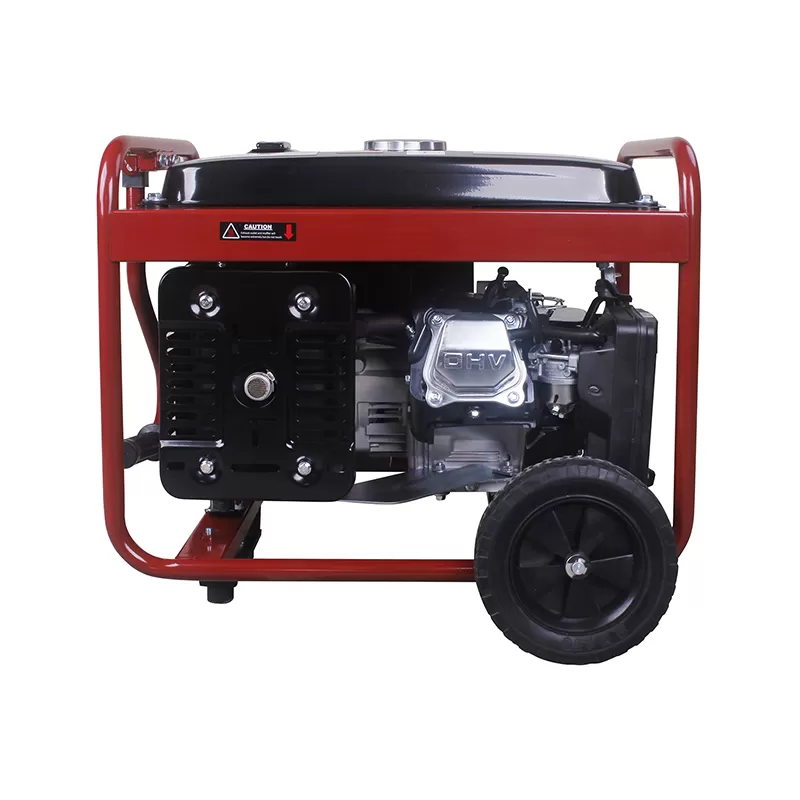
The 0.5 kVA Generator: Factoring the Hard Electrical Math
To understand why these ultra-compact units struggle, we must clear up common rating confusions. Manufacturers rate small generators in apparent power (volt-amperes, or kVA). However, household appliances consume real power (watts).
In standard small petrol engines, the power factor usually sits around 0.8. When you run the conversion, a 0.5 kVA generator supplies only about 400 watts of continuous running power. Peak surge capacity rarely exceeds 450 to 500 watts for more than a split second.
Consider what 400 watts actually runs in real life:
Four or five LED light bulbs (40–60W total)
A Wi-Fi router (15–20W)
One laptop charger (65–90W)
Two smartphone wall chargers (30W total)
This load consumes around 200 watts. On paper, the unit handles this basic setup. The homeowner can charge their phone, browse the web, and keep a lamp lit. However, emergency situations require far more than desk accessories. They require food preservation, climate control, and running water.
Resistive vs. Inductive Loads: Why 500 Watts Collapses in Minutes
The fatal flaw of relying on a 0.5 kVA generator during an emergency boils down to the physics of inductive loads. Household appliances fall into two core categories: resistive loads and inductive loads.
Resistive loads convert current directly into heat or pure light. Electric lamps, phone chargers, and curling irons draw consistent wattage from startup to shutdown. A 60-watt bulb demands 60 watts to start and 60 watts to run.
Inductive loads rely on electric motors, compressors, or transformers. These include refrigerators, sump pumps, well pumps, freezers, and air conditioners. Inductive devices require massive startup current—often called inrush or surge wattage—to break mechanical inertia. This surge typically demands three to five times the normal running wattage.
| Appliance | Running Watts | Startup / Surge Watts | Can a 0.5 kVA Generator Run It? |
|---|---|---|---|
| Smartphones & LED Lamps | 60W | 60W | Yes |
| Starlink / Wi-Fi Router | 50W – 75W | 75W | Yes |
| Standard Kitchen Refrigerator | 150W – 200W | 1,200W – 1,500W | No (Trips Breaker Instantly) |
| 1/2 HP Sump Pump | 800W | 2,100W – 2,500W | No (Immediate Stall) |
| Microwave Oven | 1,000W | 1,200W | No (Exceeds Output) |
| Inverter Window AC (8,000 BTU) | 700W | 1,800W | No (Severe Overload) |
Look at the kitchen refrigerator row. While running, a modern fridge draws only 150 to 200 watts. A consumer might check that running label and think their 0.5 kVA generator can support it easily. But the second the compressor kicks on, the motor demands up to 1,500 surge watts.
The small 0.5 kVA generator cannot absorb that transient spike. Its rotor speed drops immediately, voltage collapses, and the thermal circuit breaker trips. In worse scenarios, the sudden rotor stall scorches the generator windings or damages the refrigerator control board.
A 0.5 kVA generator serves well as a lightweight power source for weekend fishing or car camping. Calling it a home emergency generator, however, sets up retail customers for failure.
The True Baseline for Whole-House Backup: The 10 kVA Generator
If small sub-1-kVA units fall short, where does reliable residential protection actually begin? For modern households, regional wholesalers and electrical contractors consider the 10 kVA generator the undisputed standard.
A 10 kVA unit delivers roughly 8,000 continuous watts (8 kW) with surge capability reaching 8,500 to 10,000 watts, depending on engine specifications. This performance profile shifts users from rationing light bulbs to maintaining an undisturbed lifestyle during prolonged power outages.
With an 8 kW continuous baseline, a homeowner can run multiple heavy-draw appliances simultaneously:
Central or multi-split inverter air conditioning systems
Double-door refrigerator and separate deep chest freezer
Submersible deep-well pump or basement drainage pump
Microwave, electric kettle, and induction cooktop
Home office workstations, security networks, and smart lighting
At United Power, our engineering runs test cycles simulating simultaneous loads over 48-hour continuous spans. A robust 10 kVA generator absorbs the startup surge of a deep-well water pump even while central air compressors run. That stable frequency and clean voltage output protect sensitive microprocessors across contemporary home appliances.
Prime vs. Standby Power: Understanding Operational Limits
When sourcing power equipment for resale, procurement teams must distinguish between Standby (ESP) and Prime (PRP) ratings. Misunderstanding these designations leads to premature engine wear and warranty disputes.
A 0.5 kVA generator usually carries only a peak standby rating. These tiny high-RPM engines cannot run continuously under sustained maximum load. After 3 to 4 hours of operation, their small fuel tanks run dry, and small air-cooled engine blocks run dangerously hot.
In contrast, an industrial 10 kVA generator provides generous prime power. These engines feature cast-iron cylinder sleeves, large-capacity oil sumps, and advanced forced-air or liquid cooling packages. They handle variable loads 24 hours a day during extended storm outages without thermal breakdown.
When you supply customers with equipment engineered around genuine prime power parameters, your post-sale technical inquiries plummet. The machine performs consistently under harsh seasonal extremes.
B2B Strategy: Why Distributors Make Higher Margins on 10 kVA Inventory
Focusing your sales pipeline on 0.5 kVA models creates an operational trap. The retail pricing on mini generators is aggressive, the gross margins are slim, and customer dissatisfaction burns through your customer support budget.
Experienced power equipment distributors build their business models around 10 kVA generators for three direct commercial reasons:
1. Drastically Lower Warranty and Return Overhead
End-users do not burn out 10 kVA generators by plugging in a coffee maker or a space heater. Because the capacity ceiling is high, the unit operates well within its design tolerances. This reduces warranty claims, shipping costs on returns, and negative marketplace ratings.
2. High-Value Accessory Upselling
A customer buying a 0.5 kVA unit takes it home in a cardboard box, plugs in an extension cord, and buys nothing else. Selling a 10 kVA generator unlocks comprehensive emergency power system sales. This includes Automatic Transfer Switches (ATS), exterior power inlet boxes, surge protectors, and heavy-duty cabling.
Bundling an ATS unit with a 10 kVA generator increases transaction values by 25% to 35%, generating high gross profit on electrical accessories that carry minimal freight overhead.
3. Versatile Market Crossover
A 0.5 kVA generator appeals almost entirely to casual campers and budget retail shoppers. A 10 kVA generator crosses commercial sectors effortlessly. You can market the exact same basic platform to:
Residential homeowners demanding whole-house standby power
Outpatient medical and dental clinics keeping cold-chain vaccines safe
Convenience stores and butcher shops protecting perishable cold stock
Remote telecommunications towers and IT server rooms
Construction crews running heavy concrete mixers and table saws
Engine Configurations: Diesel, Gasoline, or Dual-Fuel?
Selecting the right 10 kVA generator stock depends heavily on your local market conditions, fuel access, and regional environmental standards.
Diesel 10 kVA Generators: These remain the dominant workhorse across commercial and agricultural regions. Diesel engines offer high thermal efficiency, low fuel consumption per kilowatt-hour, and extreme durability. Industrial clients favor diesel because off-road fuel stores safely for long periods without gumming up carburetors.
Gasoline 10 kVA Generators: Gasoline models provide a lower initial capital cost, making them the leading option for residential backup consumers. They run quietly, start smoothly in freezing conditions, and allow simple maintenance by local power equipment mechanics.
Dual-Fuel (LPG / Gasoline) Units: Demand for dual-fuel systems is growing rapidly across North America and Europe. Liquefied Petroleum Gas (propane) stores indefinitely without degrading, making it ideal for homeowners who might leave their emergency generator dormant for months at a time.
United Power manufactures generator platforms across all three fuel systems, ensuring our distribution partners meet their specific local fuel, noise, and emissions requirements without custom field alterations.
Noise Mitigation and Global Emission Standards
Urban and suburban noise regulations have made open-frame generators hard to sell in many modern residential zones. A loud, vibrating generator brings immediate complaints from neighbors during power outages.
Forward-thinking importers focus their purchase orders on soundproof canopy configurations. Silent-type 10 kVA generators utilize heavy-gauge steel enclosures, interior acoustic insulation, vibration-dampening engine mounts, and tuned industrial mufflers. These enclosures drop operating noise down to 68–72 dB(A) at 7 meters—comparable to the sound of normal street traffic.
Additionally, keeping inventory clean requires direct adherence to regional exhaust standards. Depending on your destination market, your stock must comply with EPA Tier 4 standards in the United States, or CE and Stage V non-road emissions regulations across the European Union. Sourcing verified, certified machinery at the factory gate prevents costly customs seizures at terminal ports.
Frequently Asked Questions (FAQ)
Q1: Can a 0.5 kVA generator run an emergency sump pump during a storm?
A1: No. A standard 1/2 horsepower residential sump pump demands roughly 800 to 1,000 running watts and requires over 2,100 starting watts to overcome water head pressure. A 0.5 kVA generator maxes out around 400 to 500 watts, causing the engine to stall or its breaker to trip instantly.
Q2: Why do manufacturers make 0.5 kVA generators if they cannot back up a house?
A2: These mini generators target recreational outdoor uses like camping, roadside illumination, charging hobby batteries, and running basic hand tools. They provide excellent portability for leisure activities, but suppliers should not market them as residential blackout solutions.
Q3: What makes a 10 kVA generator the preferred sweet spot for homeowners?
A3: A 10 kVA generator strikes the ideal balance between capital cost, physical size, and electrical output. It provides enough capacity (around 8,000 continuous watts) to power high-draw comfort systems like heating, air conditioning, refrigeration, and well pumps simultaneously without complex load shedding.
Q4: How does pairing an ATS switch improve distributor revenue on generator sales?
A4: An Automatic Transfer Switch monitors utility lines and starts the generator instantly when the grid drops out. Offering ATS capability positions your inventory as a professional, permanent backup asset rather than a temporary emergency unit. This adds higher-margin electrical components to your purchase orders and elevates average retail sales values.
Q5: Is a diesel or gasoline 10 kVA generator more cost-effective for my inventory?
A5: Gasoline models sell faster to suburban homeowners prioritizing a lower retail purchase price and quieter running profile. Diesel units carry higher profit margins and sell better to commercial clients, farms, and areas prone to extended multi-day outages where engine lifespan and low fuel burn are critical.
Upgrade Your Generator Catalog for the Coming Storm Season
Continuing to push underpowered 0.5 kVA units for household standby power leads directly to customer frustration, high operational costs, and lost wholesale revenue. Real-world emergency preparedness demands heavy-duty output, motor-starting capacity, and unyielding continuous reliability.
United Power manufactures professional-grade generator platforms designed to satisfy strict international standards and commercial workloads. Whether you require silent-canopy diesel generators or dual-fuel whole-house units, we deliver the engineering, volume scale, and certification support your distribution network demands.
Stop risking your bottom line on low-output models. Connect with our international commercial sales team today to request current wholesale catalog pricing and discuss custom OEM production runs for your market.