How Does a 12v Welder Perform in Off-Grid Industrial Maintenance?
Remote industrial sites, agricultural operations, and distant construction yards frequently require immediate metal repair services. When heavy-duty machinery or structural steel components experience structural failure away from centralized workshops, the mobilization of standard mains-powered welding equipment is often impractical. While large, trailer-mounted diesel generator welders represent the traditional solution for these remote tasks, they present logistical challenges due to their weight, fuel requirements, and overall footprints. This has led to an increased interest in highly mobile, low-voltage direct current alternatives. Implementing a 12v welder in field operations has emerged as a viable approach for quick repairs where standard utility power is absent.
United Power, as a manufacturer of power generation and industrial engine equipment, recognizes that successful field service relies on selecting the appropriate tool for the specific duty cycle and material thickness. Understanding the operational dynamics of low-voltage DC welding systems allows procurement officers and maintenance managers to make informed decisions regarding their mobile service fleets. This analysis explores the mechanical principles, operational limitations, and practical integration of low-voltage welding tools in professional environments.
.webp?t=1782468563412 "IW160T (4)")
Engineering Principles of Low-Voltage DC Welding
To evaluate how a 12v welder functions, one must examine the electrical parameters governing low-voltage arc welding. Traditional stick (SMAW) or wire-feed (FCAW) systems typically operate at higher open-circuit voltages, often between 50V and 80V, to initiate and sustain a stable electrical arc. In contrast, a low-voltage DC welding system must strike and maintain an arc using the nominal 12-volt to 24-volt electrical potential provided by automotive or deep-cycle battery banks.
When an operator utilizes a 12v welder, the system relies on high amperage rather than high voltage to generate the thermal energy required for metal fusion. The current is drawn directly from a battery source, meaning the internal resistance of the power supply plays a significant role in performance. To achieve a stable arc with a consumable electrode, the system must deliver consistent current without experiencing a catastrophic voltage drop.
The chemistry and configuration of the batteries are therefore central to the system’s effectiveness. Flooded lead-acid starter batteries are designed for short bursts of high cranking amps but suffer from rapid voltage degradation under continuous draw. Absorbed Glass Mat (AGM) or lithium iron phosphate (LiFePO4) batteries provide more stable discharge curves, which directly translates to a more consistent weld bead and reduced spatter.
Direct Current Arc Stability and Polarity
Arc stability in low-voltage systems is highly sensitive to polarity configurations. Most portable low-voltage wire-feed systems utilize Direct Current Electrode Negative (DCEN) polarity, commonly referred to as straight polarity. In DCEN, the electrode is connected to the negative terminal, and the workpiece is connected to the positive terminal. This configuration concentrates approximately 70% of the arc heat at the workpiece, facilitating faster joint penetration on thicker metals, which is highly advantageous when working with the limited voltage available from a single 12-volt battery.
Conversely, Direct Current Electrode Positive (DCEP), or reverse polarity, concentrates heat at the electrode. While DCEP is standard for gas metal arc welding (GMAW) with solid wire, it is less common for simple battery-powered operations because the reduced heat at the workpiece can lead to cold-lapping or lack of fusion when battery voltage begins to decline.
Power Source Configurations and Discharge Rates
The performance of a 12v welder is bound by the laws of thermodynamics and battery chemistry. To understand the operational limits, design engineers calculate the rate of discharge using Peukert's Law, which describes how the usable capacity of a lead-acid battery decreases as the rate of discharge increases. Welding typically requires currents ranging from 80 to 150 amperes, representing an extremely high discharge rate for standard industrial batteries.
To sustain these currents, field operators often configure battery banks in specific arrangements:
Single 12V High-CCA Battery: Suitable for brief emergency repairs on thin-gauge sheet metal. The arc duration is highly restricted, and rapid voltage drops can lead to porous welds.
Dual 12V Batteries in Parallel: This setup maintains the 12V potential while doubling the Ampere-hour (Ah) capacity and sharing the current load, which significantly reduces internal heat generation within the batteries and stabilizes the arc.
Series Configuration (24V Dual-Battery System): Many advanced portable units allow for 24V operation by connecting two batteries in series. This higher voltage makes arc initiation much easier and allows for the use of thicker electrodes, though it requires specialized control circuitry to prevent wire-feed motor damage.
Wire Feed Mechanics and Consumable Selection
A major design component of a wire-feed 12v welder is the motor drive system. Unlike industrial workshop welders that use regulated AC mains power to drive the wire feed motor, portable low-voltage units must run their internal motors directly from the fluctuating DC input. If the input voltage drops as the battery depletes, the wire feed speed can fluctuate, leading to inconsistent weld quality.
To address this, quality portable welders implement voltage-stabilizing control boards that regulate the power delivered to the drive rolls. This ensures that even if the battery bank drops from 12.6V to 11.2V under load, the wire speed remains constant. The choice of consumable wire is restricted by these electrical parameters:
Self-Shielded Flux-Cored Wire (FCAW-S): This is the standard choice for field repairs. Since it does not require an external shielding gas bottle, the entire setup remains highly portable. The flux agents inside the wire help stabilize the arc under lower voltage conditions.
Solid Wire with Shielding Gas (GMAW): While technically possible, carrying a pressurized cylinder of Argon/CO2 mixture reduces the portability advantage of the low-voltage setup. It is generally reserved for stationary service vehicle applications.
Duty Cycle and Thermal Limits in Field Conditions
In industrial welding, the duty cycle is defined as the percentage of a ten-minute period that a welding machine can operate at its rated output without overheating. For a compact 12v welder, the duty cycle is typically lower than that of larger industrial units, often ranging between 10% and 30% at a 100-amp output.
This limitation is governed by two main thermal factors:
First, the internal switching transistors and current-carrying traces within the welder housing generate significant heat when handling high currents. Without large, heavy copper transformers to dissipate this heat, the unit relies on small aluminum heat sinks and high-velocity cooling fans.
Second, the battery bank itself experiences internal heating. As current is drawn, the internal resistance of the cells generates heat, which can accelerate plate degradation in lead-acid batteries or trigger thermal shutdown mechanisms in lithium-ion packs. Consequently, while the welder itself might be capable of a 20% duty cycle, the power source may require cooling intervals to prevent permanent capacity loss.
.webp?t=1782468563412 "IW160T (4)")
Integrating Auxiliary Power Solutions
While a 12v welder offers unmatched portability, it remains limited by its energy reservoir. For continuous field maintenance, relying solely on static batteries leads to inevitable downtime during recharging cycles. To mitigate this, service crews frequently integrate auxiliary power generation systems into their field vehicles.
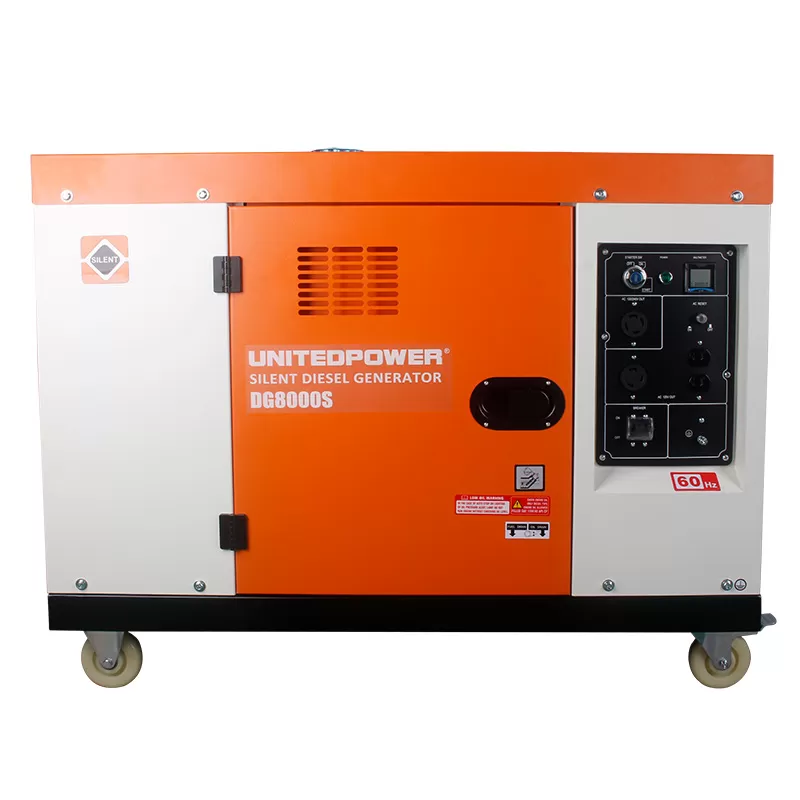
Portable gasoline or diesel generators, such as those manufactured by United Power, serve as a reliable foundation for field charging setups. By operating a compact generator alongside the welding equipment, service teams can run high-output battery chargers that replenish the welding battery bank in real-time or between welding intervals. This hybrid setup ensures that the battery voltage remains within the optimal operating range, preventing the arc instability associated with low charge states.
System Comparison: Field Welding Technologies
When designing a mobile service vehicle, fleet managers must evaluate the trade-offs between different portable welding architectures. The table below compares the primary characteristics of low-voltage systems against traditional alternatives.
| System Configuration | Portability Index | Continuous Run-Time | Equipment Capital Cost | Primary Application Area |
|---|---|---|---|---|
| Battery-Powered Low-Voltage Welder | High (Hand-carried, light weight) | Low (Bound by battery capacity) | Low | Emergency field repairs, light-gauge steel |
| Engine-Driven Welder Generator | Low (Requires vehicle or trailer mount) | High (Dependent on fuel tank capacity) | High | Continuous heavy structural fabrication |
| Inverter Welder with Portable Generator | Medium (Two-part modular setup) | High (Dependent on generator fuel) | Medium | General remote maintenance, medium-duty tasks |
Procurement Guidelines for Industrial Buyers
Selecting industrial tools for fleet deployment requires a careful review of engineering specifications rather than relying on standard retail claims. B2B procurement professionals should focus on the following design parameters when evaluating low-voltage welding equipment:
Input Cable Gauge: High-current, low-voltage systems are highly sensitive to voltage drops over the power cables. Ensure the unit is supplied with, or supports, heavy-duty copper power cables of at least 4 AWG (or 2 AWG for longer runs) to minimize resistance losses.
Enclosure Rating: Field tools are exposed to dust, moisture, and physical impact. Look for units with an Ingress Protection (IP) rating of IP21 or higher to ensure the internal control boards are shielded from environmental debris.
Wire Feed Mechanism Construction: Plastic wire drive rolls wear down quickly under field conditions, leading to slippage. Insist on cast aluminum or hardened steel drive roll assemblies for long-term reliability.
Securing Operational Efficiency with United Power
In modern industrial operations, minimizing equipment downtime is a primary operational objective. While portable low-voltage welding tools are excellent for quick, localized repairs, they are most effective when supported by a robust and reliable power infrastructure. Ensuring that your service vehicles are equipped with dependable power generation systems is key to maintaining field productivity.
United Power manufactures high-performance industrial engines, generators, and water pumps engineered to support demanding field service operations. Our equipment is built to provide stable, reliable power under harsh environmental conditions, making it the ideal partner for your mobile service fleets and auxiliary battery charging systems.
To learn more about how our power solutions can be integrated into your remote maintenance operations, or to discuss specific voltage and wattage requirements for your mobile service units, please reach out to our team. We welcome the opportunity to assist you in designing a reliable power strategy for your fleet. Contact us today to submit an inquiry and receive detailed engineering specifications for your upcoming equipment upgrades.
Frequently Asked Questions
Q1: What is a 12v welder and how does it generate sufficient heat to weld metal?
A1: A 12v welder is a portable direct current welding device designed to operate using 12-volt battery power as its primary energy source. It generates the necessary heat for metal fusion by drawing high amperage from the battery bank rather than relying on high-voltage AC mains. This high current creates an electrical arc at the point of contact between the welding wire or electrode and the workpiece, melting the metal to form a joint.
Q2: Can a 12v welder be used to weld thick structural steel plates?
A2: While these systems are highly effective for emergency repairs on mild steel, they are generally not designed for heavy structural steel fabrication. The low open-circuit voltage restricts penetration depth, and the limited duty cycle of the machine and battery bank makes continuous high-amperage welding impractical. For structural fabrication, a high-voltage engine-driven welder generator is the recommended industry standard.
Q3: How long can a 12v welder operate on a standard deep-cycle battery?
A3: The operational duration depends on the battery capacity (measured in Ampere-hours), the welding amperage, and the actual duty cycle. A high-quality 100 Ah deep-cycle AGM battery can typically support light-duty welding tasks (around 80-100 amps) for approximately 15 to 30 minutes of actual arc-on time. To extend this runtime, operators often connect multiple batteries in parallel or run a portable generator to continuously charge the batteries.
Q4: What type of welding wire is most suitable for a portable low-voltage setup?
A4: Self-shielding flux-cored wire (FCAW-S) with a diameter of 0.030 inches (0.8 mm) or 0.035 inches (0.9 mm) is the most suitable option. It eliminates the need for heavy external shielding gas cylinders, which preserves the portability of the system. Additionally, flux-cored wire is less sensitive to wind, making it ideal for outdoor field repairs.
Q5: Can a 12v welder be run directly from a vehicle's alternator while the engine is running?
A5: Yes, connecting the welder to the vehicle's battery while the engine is running is a common practice. This allows the alternator to assist in supplying current and helps prevent complete battery depletion. However, it is important to verify that the welder's current draw does not exceed the safe operating limits of the vehicle’s charging system to protect the alternator from overheating.
.webp "How Much Does the Best Diesel Generator for Home Cost? (Full 2026 Price Breakdown)")
.webp "Evaluating the 4 kW Generator Price: Wholesale Sourcing & Manufacturing Specs")