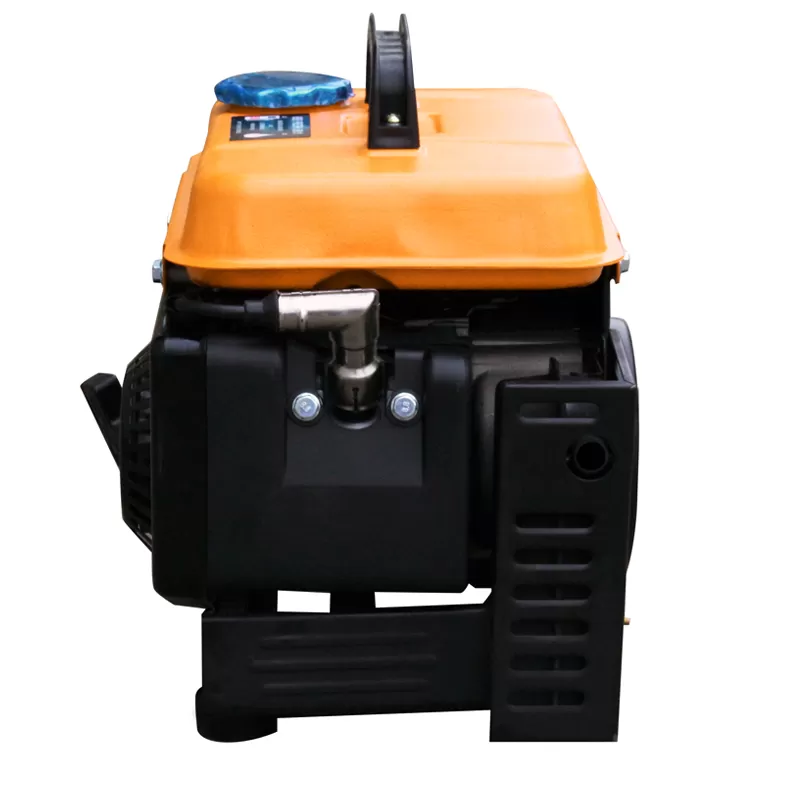
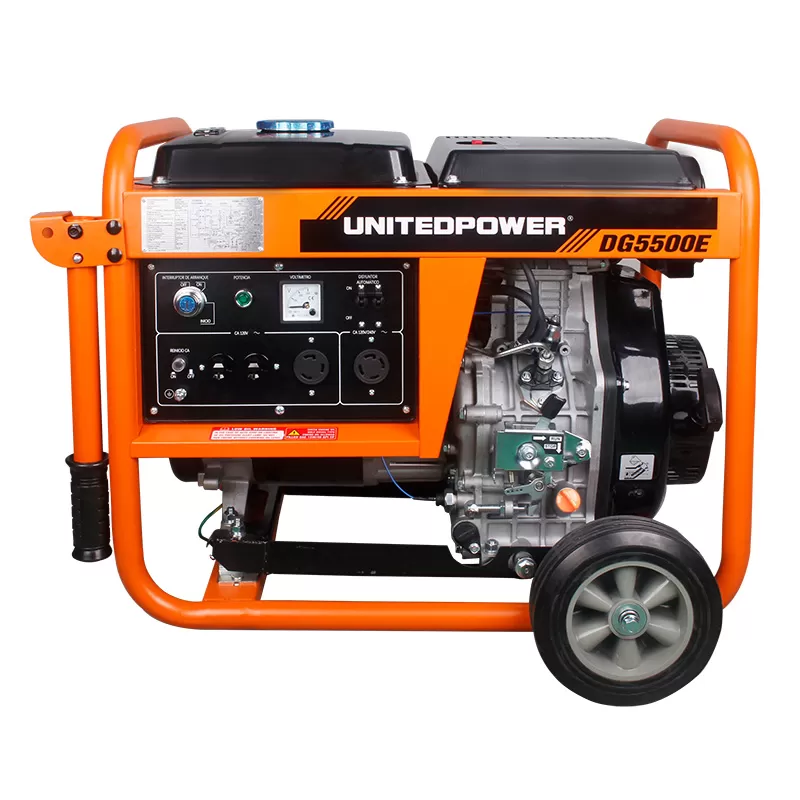
Top 5 Factors to Consider When Specifying a Generator Motor 220V for Heavy Equipment
Heavy machinery does not forgive electrical mismatches. When an excavator, crushing plant, or industrial compressor stalls due to power loss, project timelines collapse. Equipment engineers and procurement specialists know that steady off-grid generation keeps job sites productive.
Selecting an industrial generator motor 220v requires more than matching basic nameplate numbers. You must calculate mechanical stresses, dynamic electrical surges, and site conditions. At United Power, our engineering team regularly helps original equipment manufacturers (OEMs) select reliable power assemblies. If you are preparing to build or retrofit heavy industrial equipment, submit an inquiry with our technical specialists to review your project schematics.
.webp?t=1792138947316 "generator motor 220v")
1. Motor Starting Surge (Locked Rotor kVA) vs. Running Load
Electric motors driving hydraulic pumps, conveyors, and compressors demand substantial current spikes during startup. These transient spikes are referred to as inrush current or Locked Rotor Amperes (LRA). A standard running current calculation will undersize your system.
A typical induction motor requires between 300% and 600% of its rated full-load current during initial startup. If your generator motor 220v system lacks adequate transient capacity, the output voltage will plunge. This causes contactors to drop out, trips breaker units, and risks overheating motor windings.
When specifying your unit, evaluate these parameters closely:
- NEMA Code Letters: Inspect the nameplate code letter on your driven equipment. A Code G motor requires less starting kVA than a Code L or M motor.
- Starting Methods: Note whether your design uses Direct-On-Line (DOL), Star-Delta, or Variable Frequency Drive (VFD) configurations. DOL setups require substantially higher alternator headroom.
- Allowable Voltage Dip: Ensure your generator alternator limits voltage dips to no more than 15% to 20% during peak starting moments.
Calculate your load profile using continuous running watts plus peak starting surge. Oversizing by 25% to 30% over continuous load provides a safe thermal margin. It prevents premature wear on the internal excitation components of the generator motor 220v.
2. Environmental Protection and Thermal Insulation Class
Heavy equipment operates in unforgiving environments. Dust, fine aggregate, high humidity, and chemical contaminants degrade standard electrical components within months. You must choose an enclosure and insulation system built for industrial exposure.
Review the Ingress Protection (IP) rating before signing off on any procurement order. Common options include:
- IP23 Enclosures: Suitable for sheltered engine compartments with moderate airflow. They deflect light water spray but allow fine dust entry.
- IP54 and IP55 Enclosures: Fully sealed against dust and resistant to low-pressure water jets. These ratings are ideal for mining screens, rock crushers, and earthmoving rigs.
Insulation class determines thermal longevity. Electrical windings degrade quickly if internal operating temperatures exceed their thermal threshold. Standard industrial units should utilize Class H insulation materials.
Class H insulation withstands internal temperatures up to 180°C. Specifying a Class H generator motor 220v unit but running it at Class F temperature limits (155°C) yields an extra safety buffer. This thermal headroom extends service life during sustained heavy cycles.
3. Excitation Type and Automatic Voltage Regulation (AVR)
Voltage stability directly dictates the lifespan of modern industrial machinery. On-board microprocessors, programmable logic controllers (PLCs), and sensitive solenoid valves malfunction when supply lines fluctuate. The excitation architecture of your generator motor 220v governs this response.
Standard brush-type systems introduce maintenance points due to carbon brush wear, sparking, and dust buildup. Modern heavy machinery projects rely on brushless designs. Within brushless systems, two main excitation architectures dominate:
- Shunt (Self-Excited): Simple and cost-effective, but vulnerable to heavy load steps. If a short circuit occurs or a massive load starts, the field voltage collapses.
- Permanent Magnet Generator (PMG) or Auxiliary Winding: Provides an independent power source for the AVR. It sustains excitation field strength during heavy inrush surges and provides robust short-circuit current capability.
Total Harmonic Distortion (THD) also requires rigorous monitoring. Heavy equipment utilizing thyristor-controlled drives or VFDs injects harmonic pollution back into the circuit. Ensure the selected generator motor 220v delivers a clean sine wave with a THD under 5% under linear loads, and under 8% under non-linear industrial loads.
Our engineering division at United Power equips heavy-duty builds with digital AVR modules. These modules correct line voltage deviations within milliseconds, isolating downstream equipment from damaging power surges.
4. Mechanical Coupling, Bell Housing, and Vibration Resilience
Heavy machinery generates relentless physical vibration. Diesel engines, hydraulic hammer circuits, and vibratory compactors transfer mechanical stress through structural mounting points. A poorly mounted generator motor 220v will suffer bearing failure, broken brackets, and rotor rubbing.
Evaluate your mechanical connection method:
- Single-Bearing Units: Utilize flexible drive plates bolted directly to the engine flywheel, housed within an SAE bell housing. This setup simplifies alignment and works well for close-coupled industrial diesel assemblies.
- Two-Bearing Units: Feature a dedicated input shaft coupled via flexible elastomeric couplings. These suit indirect belt-driven designs or remote-mounted generator packages.
Look for balanced rotors that exceed standard ISO 1940-1 Grade G2.5 balance criteria. Rotors should include structural tie-rods and protective varnish treatments to stop wire shift during heavy g-force movements.
Bearing life ratings (L10 or B10 life) are equally crucial. Demand heavy-duty, double-shielded, or regreasable deep-groove ball bearings rated for at least 30,000 to 50,000 hours of continuous operation under normal radial load.
.webp?t=1792138947316 "generator motor 220v")
5. Cooling System Design and Derating Parameters
A power generation unit loses output efficiency when environmental conditions deteriorate. Specifying a generator motor 220v requires careful review of real-world ambient operating conditions.
Standard ratings assume sea-level operation (up to 1,000 meters) and ambient temperatures around 40°C. High-altitude operations, such as high-plateau mining, introduce thin air with lower heat dissipation capabilities.
Apply realistic derating factors when sizing your assembly:
- Altitude Derating: Derate output capacity by approximately 3% for every 300 meters above the initial 1,000-meter baseline.
- Temperature Derating: For ambient engine-bay temperatures exceeding 40°C, derate capacity by 3% for every 5°C increase up to 60°C.
- Airflow Requirements: Check cubic feet per minute (CFM) intake requirements. Enclosed canopies must supply sufficient fresh air without generating excessive vacuum inside the housing.
Make sure the internal cooling fan is made of non-sparking, high-strength cast aluminum or reinforced nylon. Plastic fans often crack under cold shock or warp under excessive engine compartment heat.
Engineering Specification Checklist
Before issuing your next request for proposal (RFP), confirm the following criteria against your machine's bill of materials:
- Nominal output: 220V single-phase or 220V three-phase configuration.
- Base frequency: 50Hz or 60Hz depending on export target regions.
- Starting surge capacity: Minimum 300% locked-rotor capacity for 10 seconds.
- Mounting format: SAE housing match (e.g., SAE 3, SAE 4 with 10-inch or 11.5-inch drive discs).
- Winding material: 100% pure electrolytic copper; avoid copper-clad aluminum alternatives.
- Duty profile: Continuous (S1) rated instead of standby (S2/S3) rated.
Taking the time to match these parameters eliminates field service interventions and preserves your equipment's field reputation.
Frequently Asked Questions
Q1: What is the primary difference between a 220V single-phase and 220V three-phase generator motor?
A1: A single-phase 220V unit carries current across two lines (live and neutral, or two out-of-phase hot legs), which works well for lighting and small single-phase tools. A three-phase 220V system distributes power across three active conductors. It delivers higher electrical efficiency, smaller wire sizes, and smooth torque delivery for heavy industrial motors and heavy equipment drives.
Q2: Can I use a standby-rated generator motor 220v for continuous manufacturing or mining equipment?
A2: No. Standby-rated units are built for emergency power during utility outages, typically capped at 200 hours of operation per year with variable loads. Heavy machinery requires a Continuous (S1) or Prime Power rated generator motor 220v capable of running 24/7 under sustained, fluctuating loads without winding breakdown.
Q3: How does power factor (PF) impact my 220V generator sizing?
A3: Power factor measures electrical efficiency. Most single-phase generators carry a 1.0 PF, while industrial three-phase systems are rated at 0.8 PF lagging. Inductive loads like electric motors produce low power factors. Sizing must account for total kVA (apparent power) rather than just kW (true power) to avoid overloading the alternator windings.
Q4: Why does my generator motor 220v stall when a large hydraulic pump kicks in?
A4: Stalling during motor startup usually points to inadequate motor starting kVA capacity or an underperforming excitation system. When the pump motor starts, it draws an immediate surge of locked-rotor current. If your generator uses a simple shunt excitation circuit without PMG assistance, the terminal voltage drops instantly, choking engine power and tripping circuits.
Q5: How often do the bearings in an industrial 220V alternator require service?
A5: Sealed-for-life bearings generally operate maintenance-free for 20,000 to 30,000 hours, depending on ambient heat and vibration levels. Open, regreasable bearings in heavy equipment should be lubricated every 1,500 to 4,000 run hours using a manufacturer-approved high-temperature lithium-complex or synthetic polyurea grease.
Optimize Your Heavy Equipment Power Train
A machine's field reliability depends on the component quality within its power chain. Specifying the right generator motor 220v safeguards your machinery against electrical failure, excessive heat, and mechanical breakdown.
United Power manufactures industrial-grade generator solutions designed for heavy-duty earthmoving, agricultural, and specialized machinery. Our application engineers work alongside your design team to ensure complete compatibility with your mechanical drives and control systems.
Need custom specifications or wholesale OEM pricing? Contact the United Power engineering team today to submit your technical requirements and receive a detailed commercial quotation.
.webp "Top 5 Factors to Consider When Specifying a Generator Motor 220V for Heavy Equipment")