4 Reasons to Specify a Horizontal Type High Pressure Washer
In the industrial cleaning and power equipment sector, procurement decisions are often driven by headline specifications: PSI (Pounds per Square Inch) and GPM (Gallons per Minute). However, long-term operational success depends heavily on a less-discussed metric: structural configuration. Experienced operators recognize that the physical layout of an engine-driven pressure washer directly influences its mechanical longevity and maintenance cycles.
Field data indicates that up to 43% of premature pump failures in commercial cleaning applications are not caused by pressure overloads, but rather by structural instability and poor lubrication mechanics. These issues are frequently tied to vertical shaft configurations. This guide examines how the horizontal type high pressure washer addresses these engineering challenges, offering a stable and serviceable alternative for industrial operations.
As a global provider of power equipment, United Power has analyzed these operational patterns across diverse deployment environments. This analysis highlights the engineering and economic reasons why a horizontal layout serves as the backbone for heavy-duty, commercial-grade cleaning tasks.
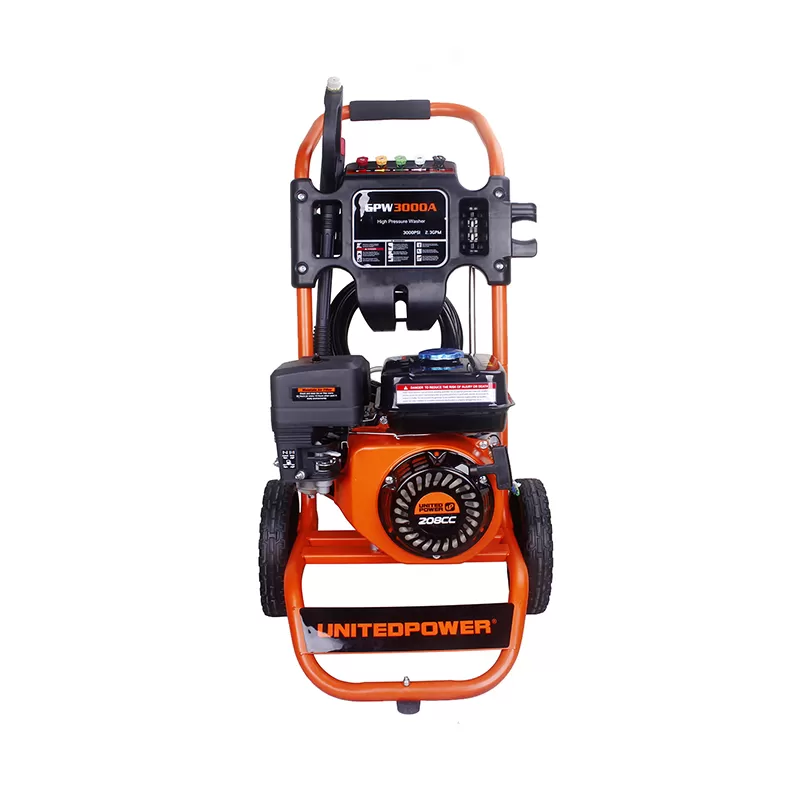
The Mechanical Architecture: Horizontal vs. Vertical Layouts
To understand the utility of a horizontal type high pressure washer, we must first analyze the mechanical interface between the power source (engine or motor) and the fluid pump. In a vertical pressure washer, the engine's drive shaft points downward, requiring the pump to mount beneath the engine. While this configuration reduces the machine's overall footprint, it introduces several mechanical vulnerabilities under heavy operational loads.
Conversely, a horizontal type high pressure washer aligns the engine driveshaft directly with the pump crankshaft on a single horizontal plane. This configuration allows the pump to sit alongside the engine rather than beneath it. By positioning both key components side-by-side on a heavy-duty steel chassis, the system minimizes torsional forces and achieves a significantly lower center of gravity.
This layout also prevents a common failure mode seen in vertical units: gravity-induced fluid migration. In vertical configurations, if the high-pressure water seals fail, water can leak directly down the shaft into the engine crankcase, or engine oil can seep down into the pump. The horizontal separation of these components prevents this cross-contamination, protecting both the engine and the pump.
The Low-Gravity Axis Framework (LGAF)
To evaluate the structural integrity of high-pressure cleaning equipment, United Power utilizes a system evaluation methodology known as the Low-Gravity Axis Framework (LGAF). This framework assesses equipment across three distinct physical vectors: vibrational displacement, drive-shaft alignment stability, and load-bearing weight distribution.
When high pressure washers operate, the reciprocating movement of the ceramic plungers within the pump head generates constant vibrational energy. The LGAF explains how a horizontal type high pressure washer manages this energy more effectively than vertical alternatives:
Vibrational Displacement (Vector V): In a horizontal configuration, vibrational forces are directed along the horizontal plane of the chassis. This allows the rubber vibration isolation mounts to absorb the energy directly against the ground, reducing structural fatigue on welds and fasteners.
Drive-Shaft Alignment Stability (Vector A): Direct-drive or belt-drive systems on horizontal shafts experience lower gyroscopic precession. This maintains precise coupling alignment between the engine and the pump, reducing wear on bearings and keyways.
Load-Bearing Weight Distribution (Vector W): By distributing the weight of the engine and pump across a wider horizontal footprint, the stress on the frame is minimized. This design prevents the tipping hazards common during transport over uneven construction or agricultural terrain.
Applying the LGAF demonstrates that the structural geometry of a horizontal type high pressure washer naturally mitigates the mechanical stresses that lead to unscheduled downtime.
Thermal Management and Oil Bath Dynamics
A primary factor in pump longevity is thermal control. Industrial high pressure pumps, particularly triplex plunger pumps, rely on a continuous oil bath within the crankcase to lubricate the connecting rods and crankshaft. In a horizontal type high pressure washer, the crankcase design allows for a larger, more uniform oil reservoir.
This horizontal oil bath ensures that all internal moving parts receive consistent lubrication, regardless of minor operating angles. Furthermore, because the pump is positioned beside the engine rather than directly beneath it, it is isolated from the rising convective heat generated by the engine block. This thermal isolation helps maintain lower oil temperatures inside the pump crankcase.
Cooler running temperatures prevent the thermal breakdown of lubricating oil, preserving its viscosity and extending the life of the seals and brass manifolds. For operations running equipment for several consecutive hours, this thermal advantage directly translates to fewer seal replacements and lower maintenance costs.
United Power integrates these thermal considerations into our equipment layouts, ensuring that airflow from the engine cooling fan is directed away from the pump head. This helps maintain stable operating temperatures during prolonged commercial use.
Maintenance Accessibility and Total Cost of Ownership (TCO)
For fleet managers and equipment rental providers, the purchase price of a horizontal type high pressure washer represents only a fraction of its Total Cost of Ownership (TCO). Ongoing maintenance labor and spare parts make up the remainder. The physical layout of horizontal machinery significantly simplifies routine service access.
On a horizontal unit, the pump manifold, inlet/outlet valves, chemical injector, and unloader valve are positioned outwardly and are easily accessible. Technicians can perform oil changes, check oil sight glasses, pack seals, and replace check valves without removing the pump from the engine or the frame. This reduces standard maintenance times from hours to minutes.
In contrast, servicing a vertical pump often requires tipping the entire machine or completely detaching the pump from underneath the engine. This difficult access can lead to neglected maintenance, eventually resulting in preventable component failures.
| Maintenance Metric | Vertical Configuration | Horizontal Configuration (United Power) |
|---|---|---|
| Average Pump Oil Change Time | 30–45 minutes (Requires partial disassembly) | 10 minutes (Direct drain plug access) |
| Seal/Plunger Replacement | Complex (Pump removal usually required) | Simple (Manifold removed in-situ) |
| Cross-Contamination Risk | High (Gravity forces fluids downward) | Negligible (Horizontal separation of units) |
| Typical Service Lifespan | 150–300 hours (Residential/Light Duty) | 1000–3000+ hours (Commercial/Industrial) |
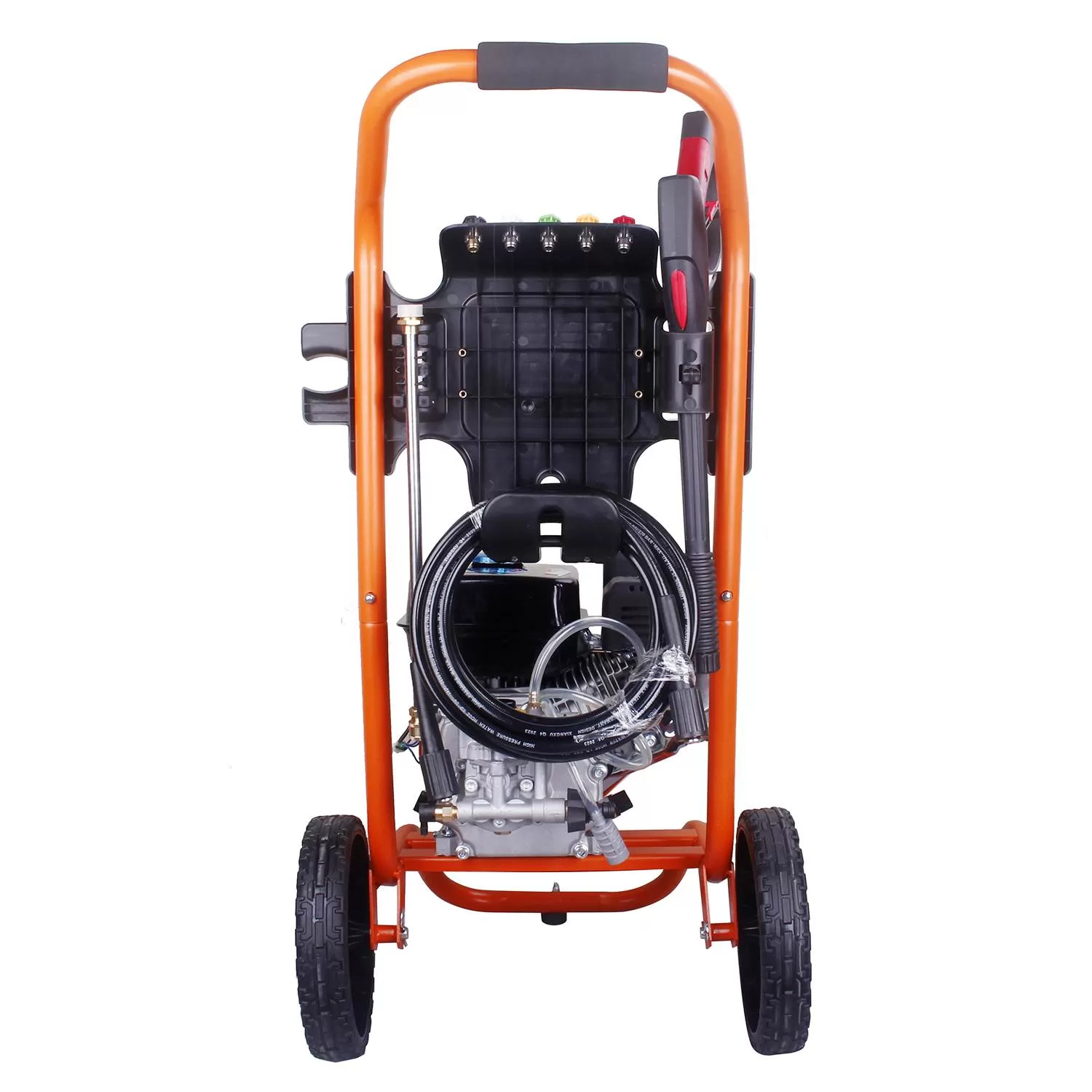
B2B Procurement Checklist: Evaluating Industrial Power Washers
When selecting a horizontal type high pressure washer for your fleet or distribution inventory, use this technical checklist to verify that the equipment meets industrial standards:
Pump Design: Ensure the unit features a triplex plunger pump with ceramic plungers and a forged brass manifold. Avoid axial cam pumps for high-duty-cycle industrial applications.
Engine-to-Pump Coupling: Verify whether a direct-drive, gearbox-reduction, or belt-drive system is optimal for your use case. Gearbox and belt drives reduce pump RPM (typically from 3400 to 1450 RPM), lowering wear and extending seal life.
Chassis Construction: Look for a heavy-gauge, powder-coated steel roll cage or frame with integrated anti-vibration engine mounts.
Thermal Relief Protection: Confirm the inclusion of a thermal relief valve to protect the pump from overheating when operating in bypass mode.
Component Brand Integration: Ensure the engine and pump are sourced from established manufacturers, such as United Power, to guarantee reliable access to spare parts and global service networks.
Common Misconceptions and FAQs
Is a horizontal type high pressure washer always more expensive than a vertical one?
While the initial purchase price of a horizontal unit is typically higher due to its robust frame, industrial-grade engine, and triplex pump, the long-term cost per operating hour is significantly lower. The extended service life and reduced maintenance requirements of a horizontal layout make it a more cost-effective choice for commercial operations over its lifecycle.
Can a horizontal pressure washer handle heavy-duty continuous use?
Yes. The horizontal type high pressure washer is specifically engineered for continuous, multi-hour operations. The design facilitates better heat dissipation, larger oil capacities, and lower vibration levels, allowing it to withstand the demands of industrial job sites, agricultural cleanups, and commercial facilities.
How does the United Power layout benefit equipment transport?
United Power designs horizontal units with a balanced, low center of gravity. This layout prevents the machine from tipping over in transit on utility trailers or truck beds. Integrated tie-down points and heavy-duty pneumatic wheels make transport safer and more efficient for field operators.
Engineering Solutions for Long-Term Value
Specifying the right pressure washing equipment requires looking beyond basic pressure ratings to evaluate structural design and mechanical configuration. The horizontal type high pressure washer provides the stability, thermal management, and ease of maintenance necessary for demanding commercial operations.
By prioritizing designs that minimize vibration and simplify routine maintenance, businesses can lower their total cost of ownership and improve operational efficiency. United Power remains committed to manufacturing dependable, horizontal-format power equipment engineered to perform under challenging conditions.
For more information on our commercial product lineup or to discuss fleet procurement requirements with our engineering team, please contact a United Power representative today.
![10 kVA Single Phase Generator Price Guide: Costs, Sizing & Best Picks [2026]](https://www.unitedpower.cn/storage/group_1773856485320/202604/DG9000E (5).webp "10 kVA Single Phase Generator Price Guide: Costs, Sizing & Best Picks [2026]")
.webp "Top 5 Factors to Consider When Specifying a Generator Motor 220V for Heavy Equipment")