5 Engineering Specifications That Define the Best Industrial Pressure Washer for Heavy Industry
Industrial sanitation and surface preparation demand machinery capable of continuous operation under rigorous site conditions. In sectors such as maritime logistics, structural concrete construction, and large-scale agricultural operations, surface contaminants—ranging from hardened mineral scale to heavy petroleum grease—require equipment designed far beyond standard consumer limits. Selecting the best industrial pressure washer involves evaluating mechanical engineering, fluid dynamics, and power transmission configurations to match specific operational requirements.
United Power manufactures heavy-duty cleaning systems engineered to withstand continuous-duty cycles. By focusing on component metallurgy, pump configuration, and thermal management, these systems minimize maintenance costs while maintaining high cleaning efficiency. This analysis examines the engineering parameters that professional buyers must consider when specifying high-pressure cleaning machinery for industrial applications.
Pump Architecture: The Core of High-Pressure Fluid Dynamics
The high-pressure pump is the primary assembly of any industrial washing system. Its design determines not only the pressure and flow output but also the overall service life of the machine. Industrial-grade applications require specific internal pump geometries and high-grade materials to manage the physical stress of constant fluid pressurization.
Triplex Plunger Pumps vs. Axial Pumps
Axial pumps, while suitable for residential or light commercial tasks, are inadequate for heavy industrial usage. Their design relies on a swash plate that spins against pistons, generating significant friction and thermal stress within the pump body. This configuration leads to rapid seal degradation under continuous use.
True industrial systems utilize triplex plunger pumps. These feature a crankshaft-driven design with connecting rods that actuate three solid ceramic plungers in a reciprocating motion. This layout distributes mechanical loads evenly, reduces pressure pulsation, and operates at significantly lower rotational speeds, which decreases wear on internal seals and bearings.
Metallurgy and Component Material Standards
The material composition of the pump manifold and internal components determines its resistance to chemical wear and cavitation damage. High-pressure manifolds are typically constructed from forged brass or nickel-plated bronze. For applications involving highly corrosive fluids, salt water, or deionized water, stainless steel manifolds are required to prevent premature pitting and structural thinning.
The plungers themselves should be solid ceramic. Ceramic-coated metal plungers are prone to cracking under thermal shock when cool inlet water enters a warm pump chamber. Solid ceramic plungers offer superior heat dissipation, exceptional hardness, and a smooth surface that minimizes friction against the high-pressure packings.
Power Transmission and Drive Configurations
How power is transferred from the engine or electric motor to the pump determines the system's thermal performance and duty cycle. There are three primary drive systems utilized in industrial cleaning equipment.
Direct Drive Systems
In a direct drive configuration, the pump shaft is coupled directly to the engine or motor output shaft, spinning at the same speed (typically 3,400 to 3,600 RPM). While compact and cost-efficient, this setup transfers engine heat directly to the pump. The high rotational speed also accelerates wear on the water seals and valves, making direct drive systems best suited for intermittent, medium-duty tasks rather than continuous daily operation.
Belt Drive Systems
The best industrial pressure washer configurations for continuous-duty cycles often utilize belt drive systems. A pulley system connects the power source to the pump, allowing the pump to rotate at a much lower speed (usually 1,000 to 1,500 RPM) while the engine runs at its optimal power band. The reduced speed lowers operating temperatures, isolates the pump from engine vibration, and significantly extends the life of the internal components. Additionally, the belts absorb sudden torque spikes, protecting the pump crankshaft from mechanical shock.
Gearbox Drive Systems
Gearbox drives offer a compact alternative to belt drives while maintaining low pump RPMs. A sealed oil-bath gearbox is mounted between the engine and the pump, reducing the rotational speed. This system provides the durability of a low-RPM pump without the footprint or maintenance requirements of external drive belts, making it highly effective for heavy-duty mobile skid units.
Evaluating Power Sources: Combustion vs. Electric
The choice of power source is dictated by the operational environment, mobility requirements, and available facility infrastructure.
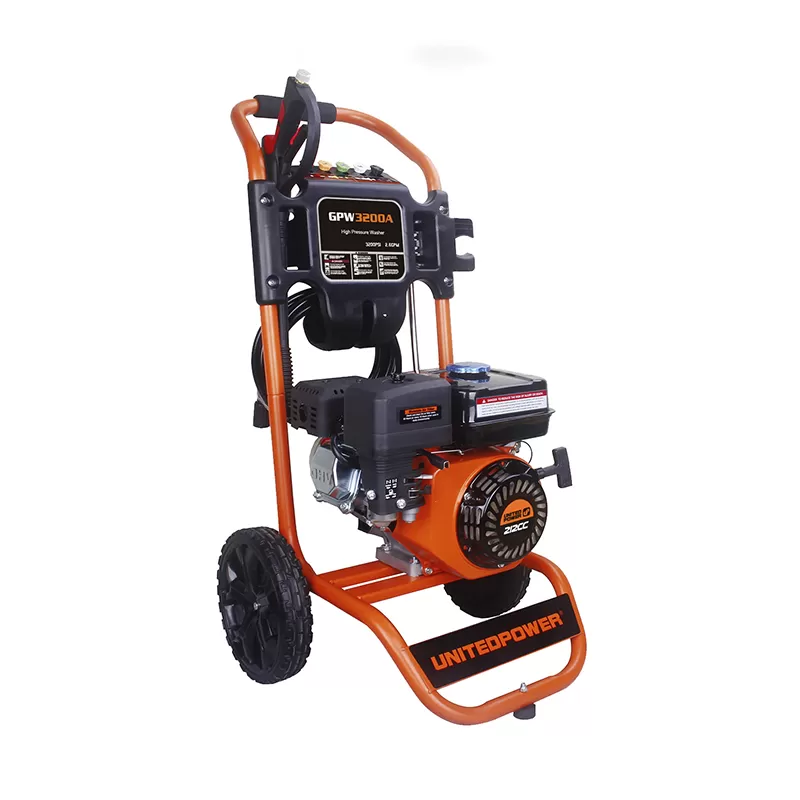
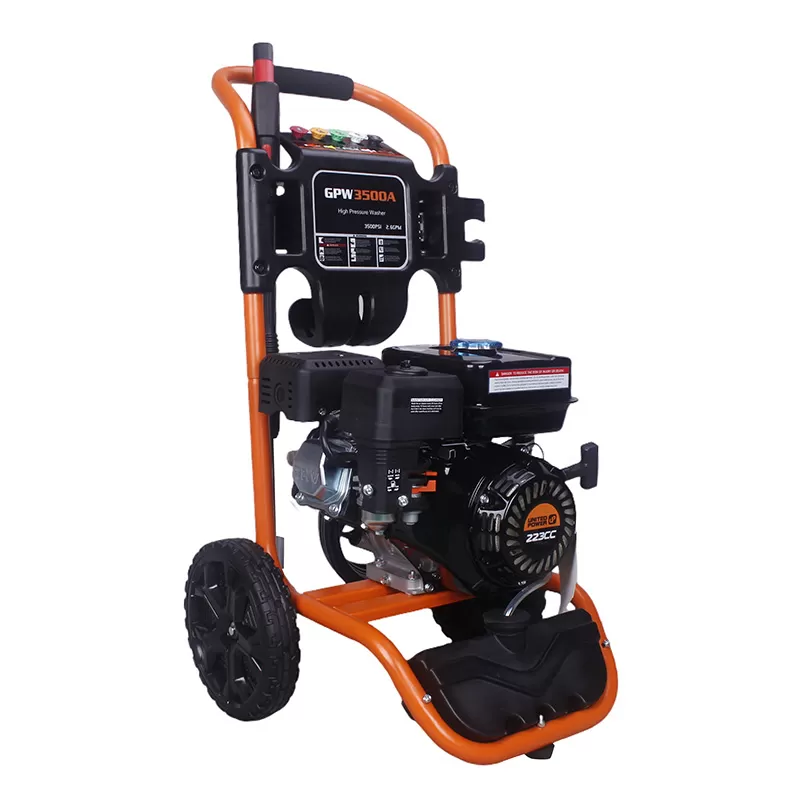
Gasoline Engines: Provide high mobility for construction sites, highway maintenance, and municipal cleaning. Industrial gasoline engines should feature overhead valve (OHV) designs, cast-iron cylinder sleeves, and low-oil shutdown sensors to prevent engine damage.
Diesel Engines: Engineered for extreme duty cycles and remote operations. Diesel powerplants deliver higher torque, greater fuel efficiency, and a significantly longer lifespan compared to gasoline counterparts. They are ideal for mounted skid units on trucks or trailers.
Electric Motors: Necessary for indoor manufacturing, food processing facilities, and enclosed workshops where exhaust fumes are prohibited. Industrial electric motors should be Totally Enclosed Fan Cooled (TEFC) and require three-phase electrical connections (such as 230V, 460V, or 575V) to deliver the torque required for high-flow pumps.
Fluid Volume versus Pressure: GPM vs. PSI
A common misconception in the cleaning industry is that higher pressure (PSI) always equates to better performance. In industrial contexts, the relationship between Pounds per Square Inch (PSI) and Gallons per Minute (GPM) must be carefully balanced based on the target contaminant.
PSI represents the mechanical force required to break the bond between the contaminant and the substrate. High PSI is necessary for tasks such as paint stripping, concrete etching, and rust removal. GPM represents the volume of water delivered, which determines the rinsing capacity and flushing speed. For heavy accumulation of mud, gravel, grease, or agricultural waste, high GPM is far more important than extreme pressure, as it physically flushes debris away from the work area, reducing labor times.
Key System Components and Thermal Management
To maintain operational continuity, the best industrial pressure washer must incorporate precise control valves and thermal management features designed to handle structural stresses.
Unloader Valves
When the operator releases the trigger on the spray gun, the pump continues to run, forcing water into a closed loop. The unloader valve redirects this high-pressure water back to the inlet side of the pump or to an external float tank, preventing catastrophic pressure buildup. Industrial systems utilize pressure-trapping or flow-sensitive unloader valves that can be adjusted to match the exact requirements of different cleaning attachments.
Thermal Relief Valves
When water bypasses within the pump head during trigger release, friction rapidly increases the water temperature. If this hot water remains in the loop, it will damage the pump's low-pressure and high-pressure seals. A thermal relief valve automatically opens to discharge hot water once it reaches a certain temperature (typically 140°F / 60°C), allowing cool fresh water to enter the system and protect the internal packings.
Chassis and Frame Engineering
Industrial environments expose equipment to impacts, vibration, and corrosive elements. Frames should be constructed from heavy-gauge, powder-coated structural steel or aircraft-grade aluminum. A full roll-cage design protects the pump and engine from falling debris, while integrated lifting eyes and forklift pockets facilitate safe transport across multi-level job sites.
Industrial Application Scenarios
Different industrial sectors require tailored pressure washer configurations to maximize process efficiency and comply with regulatory standards.
Manufacturing and Heavy Equipment Maintenance
Fleet operators, mining operations, and manufacturing plants require hot-water pressure washers. Heating coils, typically fired by diesel or fuel oil, raise the water temperature up to 200°F (93°C) or produce wet steam at 250°F (121°C). The thermal energy breaks down the molecular bonds of heavy grease, bitumen, and petroleum lubricants, allowing them to be cleared without excessive chemical detergent use.
Infrastructure and Surface Preparation
Before applying industrial coatings, epoxy, or sealants to concrete and steel surfaces, the substrate must be free of surface laitance, old paint, and rust. This process requires high-pressure cold-water units operating between 4,000 and 5,000 PSI, often paired with rotating turbo nozzles or abrasive sand-blasting kits that mechanical strip surfaces down to bare metal or clean aggregate.
Food Processing and Sanitation
Sanitizing processing lines, conveyor belts, and mixing vats requires strict temperature control and chemical application. Stationary electric-powered hot-water systems are permanently installed in utility rooms, piping pressurized hot water directly to wall-mounted washdown stations throughout the facility. This setup eliminates exhaust emissions and provides consistent sanitation temperatures.
Mitigating Operational Downtime
Equipment failure leads to costly idle labor and delayed production schedules. Implementing preventative care and purchasing equipment with service-friendly layouts can mitigate these operational vulnerabilities.
Inlet water filtration is one of the most effective ways to prevent pump damage. Suspended silt, rust particles, or hard water scale in the supply line can quickly pit ceramic plungers and wear out stainless steel check valves. High-capacity, cleanable mesh filters installed before the pump inlet are necessary to catch these particulates.
Additionally, choosing systems with clear oil-sight glasses, accessible drain ports, and external unloader adjustments ensures that daily maintenance checks can be completed rapidly, reducing the probability of dry running or seal failure.
Frequently Asked Questions
Q1: What is the main difference between belt-drive and direct-drive pumps in industrial pressure washers?
A1: Belt-drive pumps operate at lower rotational speeds (1,000 to 1,500 RPM) compared to direct-drive pumps (3,400 to 3,600 RPM). The belt system isolates the pump from engine vibration and heat, resulting in lower operating temperatures and significantly longer seal life, which makes belt-drive systems preferred for continuous daily operation.
Q2: Why is GPM often considered more important than PSI for heavy-duty industrial cleaning?
A2: While PSI provides the force needed to break surface bonds, GPM determines the volume of water available to flush away debris. High-volume rinsing is crucial for removing large amounts of mud, heavy grease, or agricultural waste, making high GPM units more efficient at reducing total clean-up times.
Q3: When should an industrial facility choose a hot-water pressure washer over a cold-water model?
A3: Hot-water units are required when cleaning grease, oil, paraffin, or heavy organic compounds. The high water temperature melts the bonds of greasy substances, allowing them to be flushed away rapidly. Cold-water units are better suited for physical mud removal, paint stripping, and concrete etching.
Q4: How do solid ceramic plungers compare to ceramic-coated metal plungers?
A4: Solid ceramic plungers are highly resistant to thermal shock, which occurs when cold inlet water hits a warm pump chamber. Ceramic-coated metal plungers are prone to cracking under these temperature differentials, leading to rapid water seal destruction and oil contamination in the crankcase.
Q5: What is the purpose of an unloader valve, and why is it vital for safety?
A5: An unloader valve redirects pressurized water back to the inlet or to a bypass loop when the spray gun trigger is released. Without a functional unloader valve, the pump would continue to build pressure within the closed system, causing hose rupture, manifold cracking, or mechanical engine stalling.
Industrial Inquiry and Technical Support
Selecting the best industrial pressure washer requires matching exact flow rates, pressure ratings, and drive configurations to your facility's operational needs. United Power designs and manufactures high-performance cleaning equipment tailored for heavy manufacturing, maritime, and construction operations. Contact our engineering division today to submit your specific requirements, request a detailed quote, or discuss custom OEM integration options for your facility.
.webp "Engineering Guide to Sizing and Deploying a 10 kW Generator 3 Phase System")