2 Kilowatt Generator Price: B2B Sourcing and Engineering Guide
When evaluating capital procurement for decentralized utility, service vehicles, and mobile fleet operations, determining the baseline 2 kilowatt generator price involves analyzing far more than a catalog sticker figure. A 2 kW (2000-watt) power unit occupies a distinct operational niche. It bridges the gap between ultra-portable recreational hardware and heavy stationary prime power systems. For technical buyers, equipment rental houses, and municipal fleet managers, the commercial expenditure behind these units correlates directly with alternator design, harmonic filtering, metallurgical durability, and long-term mechanical reliability under diverse field loads.
Procuring a 2 kW asset requires matching real-world electrical load demands with suitable generator topography. Whether driving sensitive field diagnostic instrumentation or high-inductive-draw power tools on an off-grid jobsite, structural and electrical componentry dictates both initial price and lifecycle operating expenditure. This technical briefing deconstructs the internal systems, manufacturing variations, and logistical variables that establish commercial market pricing today.
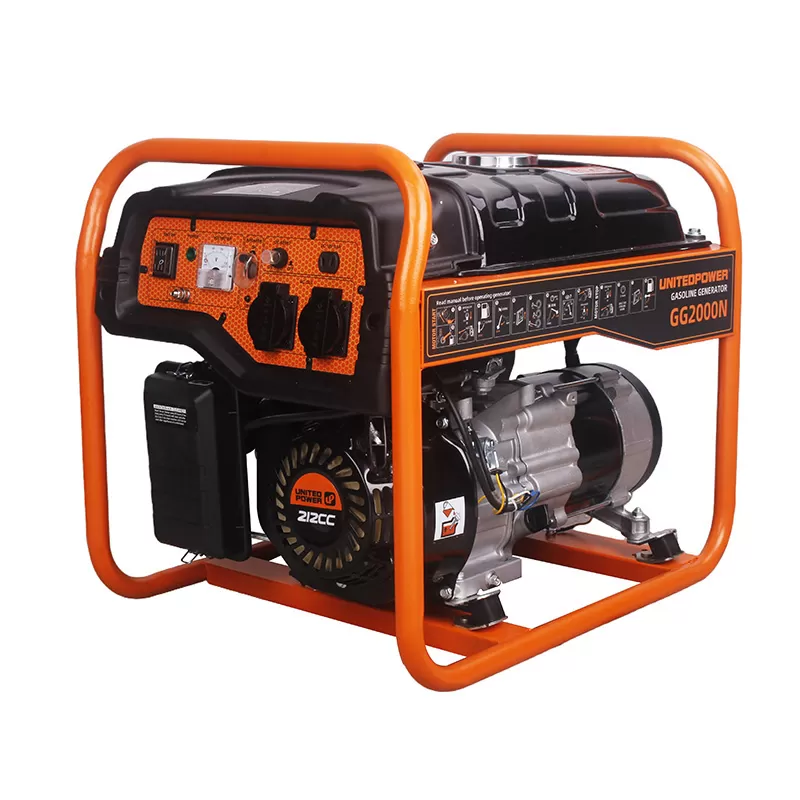
Topology and Internal Architecture: Inverter vs. Conventional
Alternators
The baseline price divergence in the 2000-watt segment stems from fundamental differences in mechanical-to-electrical power conversion. Procurement teams must choose between conventional open-frame synchronous generators and closed-frame digital inverter generators. Each architecture fulfills specific operational requirements and represents a distinct manufacturing cost structure.
Digital Inverter Power Conversion
Modern digital inverter generators produce three-phase high-frequency alternating current (AC). This power is immediately rectified to direct current (DC) and then digitally smoothed into single-phase clean AC power via insulated-gate bipolar transistors (IGBTs) and microprocessor-governed pulse-width modulation (PWM). Units utilizing this configuration produce clean electrical waveforms with Total Harmonic Distortion (THD) consistently below 3%.
Protects sensitive microprocessors, telecommunications gear, and variable-speed lab apparatus from voltage transients.
Features closed-loop electronic throttle governance that scales internal combustion engine (ICE) RPM strictly to real-time connected electrical load, reducing fuel burn at partial capacity.
Commands a higher capital entry point due to sophisticated multi-pole permanent magnet alternators and potted power electronics assemblies.
Conventional Synchronous Alternator Systems
Open-frame conventional models utilize an engine directly coupled to an alternator rotor that must spin at a fixed 3,600 RPM (for 60 Hz systems) or 3,000 RPM (for 50 Hz grids) regardless of electrical demand. Regulation is managed via mechanical governors and an Automatic Voltage Regulator (AVR).
Demonstrates THD ranges between 8% and 20%, rendering them acceptable for resistive loads such as incandescent floodlights, industrial heating bands, and basic universal-motor power tools.
Features lower Bill of Materials (BOM) costs, eliminating high-end power inversion circuitry.
Presents a lower market entry cost while yielding higher mechanical wear, elevated baseline acoustic output, and elevated fuel consumption over sustained idle intervals.
Core Engineering Factors Governing the 2 Kilowatt Generator Price
Discrepancies among commercial quotations within the 2 kW category are governed by component-level specifications. While two disparate machines may state an identical nominal 2,000-watt peak rating on their nameplates, their internal metallurgy, insulation classes, and sub-assemblies diverge sharply.
Stator and Rotor Metallurgy
The electrical generator assembly represents a substantial percentage of base manufacturing costs. Premium units utilize 100% electrolytic copper magnet wire wound around high-grade silicon steel laminations. Copper provides lower electrical resistance, superior thermal dissipation under continuous current draw, and prolonged winding insulation life under Class H or Class F operational temperatures. Lower-tier market variants often incorporate copper-clad aluminum (CCA) or solid aluminum windings. While aluminum drops upfront equipment costs and reduces overall dry weight, it incurs higher internal resistive losses, runs hotter, and possesses a lower thermal threshold before internal insulation degrades under continuous full-load operational profiles.
Internal Combustion Engine Metallurgy and Displacement
The displacement of an industrial 2 kW engine typically ranges between 79cc and 105cc within small displacement 4-stroke overhead-valve (OHV) architectures. Industrial-grade units feature:
Cast-iron cylinder liners pressed into aluminum engine blocks to resist ring wear over thousands of operational hours.
Forged-steel crankshafts and hardened steel camshaft profiles rather than powdered metal or polymer alternatives.
Stellite-faced exhaust valves paired with high-strength sintered valve seats to mitigate valve seat recession under prolonged continuous operation.
Integrated low-oil pressure shutdown sensors and high-temperature thermal limit switches hardwired directly to the ignition primary circuit.
Acoustic Attenuation and Thermal Management Structures
Sound attenuation directly impacts production complexity. Achieving sound pressure levels below 58 dBA at a distance of 7 meters requires double-insulated acoustic enclosures, computational fluid dynamic (CFD) designed cooling air paths, multi-chamber expansion mufflers, and elastomeric vibration isolators. Designing complex labyrinthine baffling that simultaneously limits external decibel transmission while preventing engine heat soak within compact volumes increases design and injection-molding tooling expenses.
Fuel Infrastructure and Subsystem Options
The mechanical delivery of fuel impacts both day-one purchase costs and continuing operational overhead. Standard single-fuel gasoline variants rely on gravity-fed or pulse-pump carburetors calibrated to regional emission standards. These variants offer the most economical point of entry for equipment acquisition.
Dual-fuel (gasoline and liquified petroleum gas / LPG) and tri-fuel systems (adding natural gas / NG) incorporate specialized multi-port venturi mixers or zero-governor demand regulators. Incorporating secondary mechanical shutoff solenoids, pressurized stainless-steel supply hoses, and hardened valve seating suited for dry gaseous combustion increases the purchase price. However, these fuel-flexible platforms eliminate internal fuel degradation issues common to seasonal ethanol-blended fuels, prolong spark plug service cycles, and slash exhaust particulate emissions when operated within indoor adjacent or environmentally regulated perimeters.
Commercial Tier Analysis of the 2 Kilowatt Generator Price
Segmenting the market across engineering profiles clarifies capital distribution for procurement teams:
Tier 1: Utility Open-Frame Baseline
Typically priced from $250 to $450 per unit. These utility units are defined by bare-steel tubular perimeter cages, conventional brush-type alternators with basic solid-state AVRs, manual recoil starting, and engine displacements around 98cc-105cc. Best suited for basic agricultural work, rough construction sites, and standby non-sensitive field service where noise and power waveform harmonics are secondary concerns.
Tier 2: Commercial-Grade Enclosed Inverters
Ranging from $500 to $900, this tier represents the primary choice for mobile work crews, utility diagnostics, and rental fleets. Engines feature iron-sleeve designs, permanent-magnet brushless alternators, microprocessor-controlled inverters producing low THD (<3%), and impact-resistant acoustic polymer enclosures. Integrating advanced platforms from manufacturers like United Power ensures that fleet operations benefit from structural durability, optimized power curves, and lower noise compliance without overspending on niche engineering.
Tier 3: Specialized Industrial & Extreme-Duty Inverters
Exceeding $1,000 and scaling up to $1,500+, these systems integrate auxiliary features: integrated telematics interfaces, parallel run ports for syncing dual generators, electric remote starting, cold-weather carburetor heating kits, and strict military/commercial durability test ratings. Units here are tailored for telecom survival sites, remote border monitoring, and specialized mobile laboratories where downtime cannot be tolerated.
Carefully understanding the tiered distribution of the 2 kilowatt generator price helps buyers balance budget constraints and long-term project uptime, ensuring hardware capabilities match real-world duty cycles.
Industrial Duty Cycles and Power Sizing Realities
A frequent error in commercial equipment acquisition is failing to differentiate between peak starting power and continuous running power. Nameplate values in this segment highlight "2000W," but real-world engineering constraints must guide deployment.
A standard 2 kW generator provides roughly 2,000 surge (starting) watts for a brief duration (typically milliseconds to seconds) to overcome inrush current demands from inductive electric motors. The sustained continuous working output is uniformly lower, typically calibrated at 1,600 to 1,800 running watts. Continuous operation near the absolute peak threshold increases winding temperatures, initiates thermal throttling within the inverter module, and degrades the engine oil film via sustained thermal stress.
Resistive Electrical Loads: Electric space heaters, quartz lighting, soldering equipment. True load equals nominal wattage. Power Factor (PF) is 1.0.
Inductive Electrical Loads: Rotary hammer drills, submersible dewatering pumps, HVAC blower motors. Inrush currents can reach three to five times nominal running amperage during initial motor rotor lock, demanding careful surge-envelope analysis.
Derating Factors: Power output must be derated by approximately 3.5% per 1,000 feet of elevation above sea level, and roughly 1% for every 10°F (5.5°C) increase in ambient temperature above 77°F (25°C). Failure to account for altitude and temperature when selecting a 2 kW platform leads to premature engine stall and thermal protective shutdowns.
Lifecycle Cost Analysis vs Initial Acquisition Capital
When engineering and sourcing departments assess capital allocation, evaluating initial purchase expenditure alone provides an incomplete commercial picture. Operating fleets over three- to five-year lifecycles reveals that maintenance, fuel burn, and unexpected mechanical failure far exceed original acquisition costs.
The total cost of ownership (TCO) equation must account for:
Fuel Economy Metrics: Variable-speed inverter generators operating at 25% to 50% load burn roughly 0.12 to 0.18 gallons of gasoline per hour, compared to fixed-speed open-frame designs consuming 0.25 to 0.35 gallons per hour under the same load. Across a 1,500-hour operational life, this differential exceeds the initial difference in machine purchase price.
Preventive Maintenance Windows: Access to serviceable subassemblies determines labor repair expenses. Designs featuring toolless access panels, spin-on or easily cleared inline fuel filters, visible oil check ports, and accessible spark arrestor screens lower billable technician hours.
Mean Time Between Failures (MTBF): Incorporating proven supply-chain components—such as long-life needle bearings, Viton carburetor seals, and sealed switches—mitigates jobsite failure and crew downtime costs.
Engineering departments utilizing United Power systems regularly leverage comprehensive component cross-referencing and direct parts availability to maintain low total lifecycle costs throughout continuous operational cycles.
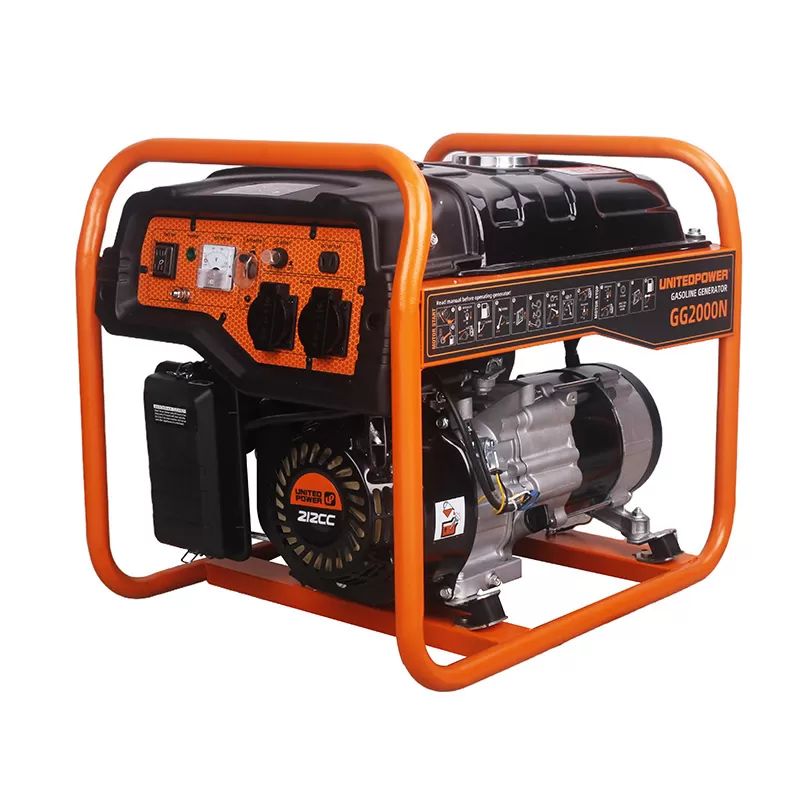
Fleet Integration and Procurement Standards
Procurement teams managing multi-site allocations require strict compliance to ensure field safety and regulatory acceptance across municipal, federal, and corporate domains.
First, environmental compliance requires verification that the internal combustion power plant holds current emissions certifications across the target jurisdiction, such as EPA Phase 3 or CARB compliance for North America, alongside Stage V standards within European territories. Operating non-compliant units risks legal sanctions, regional stop-work orders, and substantial corporate penalties.
Second, electrical system grounding and safety mechanisms must match operational standards. Portable 2 kW units are commonly wired with a floating neutral or bonded neutral system. Construction sites subject to occupational safety oversight typically demand bonded neutral setups when paired with transfer switches or specific ground-fault circuit interrupter (GFCI) receptacles to ensure proper breaker trip kinetics. If units lack native GFCI-protected outlets, external distribution boxes must be supplied, introducing additional site acquisition expenses.
Third, parallel-capability connectivity has transformed procurement approaches. Instead of acquiring heavy, cumbersome 4 kW generators that require two-person handling, maintenance fleets often acquire dual 2 kW lightweight inverter generators coupled with specialized parallel bridging cables. This modular configuration allows operators to deploy a single 45-pound unit for minor diagnostic tasks, or link two machines together to support heavier continuous single-phase loads, optimizing fuel consumption and crew transport ergonomics.
In every deployment scenario, procurement teams must look past the nominal 2 kilowatt generator price and calculate the amortized cost per operating hour, safety compliance record, and field availability metrics.
Frequently Asked Questions
Q1: Why does a 2 kW inverter generator cost significantly more than a 2 kW open-frame generator?
A1: An inverter generator incorporates advanced microelectronics, an electronic governor, and a multi-pole permanent magnet alternator to rectify AC to DC and back to clean AC power with less than 3% THD. It also features custom-engineered sound-dampening enclosures and complex cooling air ducting. In contrast, an open-frame unit relies on basic mechanical governors, heavier wire windings, and a standard AVR, resulting in higher harmonic distortion, louder operation, but a simpler, less expensive build process.
Q2: Can a 2 kW generator safely support sensitive laboratory or telemetry hardware?
A2: Only if the generator utilizes digital inverter technology or an ultra-low THD brushless alternator. Sensitive microprocessors, variable-speed motor controllers, and instrumentation require clean sine wave power with a Total Harmonic Distortion below 3% to 5%. High THD levels from standard synchronous open-frame generators can cause electronic components to overheat, misread sensor signals, or experience premature component failure.
Q3: How many running hours can an industrial-grade 2 kW generator engine last before an overhaul?
A3: Equipment life depends directly on internal metallurgy and maintenance regimens. Economy consumer-grade engines lacking cast-iron cylinder liners typically show compression loss after 300 to 500 hours. Commercial-grade engines engineered with cast-iron sleeves, forged components, and routine 50-to-100-hour oil changes regularly deliver 1,500 to 2,500 operational hours before requiring major cylinder or valve overhauls.
Q4: Does ambient temperature and operational elevation impact the maximum power output of a 2 kW unit?
A4: Yes. Naturally aspirated small engines experience diminished combustion efficiency in thinner air at elevated altitudes and in hot environments. Output power typically drops by roughly 3.5% per 1,000 feet of elevation above sea level and 1% for every 10°F (5.5°C) above standard ambient conditions (77°F / 25°C). High ambient temperatures also trigger thermal protective shutdowns on inverter modules to prevent circuit failure.
Q5: Is it more cost-effective to buy one 4000-watt generator or two 2000-watt generators with a parallel kit?
A5: From a pure equipment cost standpoint, a single 4 kW unit is usually less expensive initially. However, a dual 2 kW parallel system offers superior operational flexibility, provides redundancy if one unit undergoes routine maintenance, reduces fuel consumption when running lighter loads, and permits single-operator transport without lifting equipment or auxiliary cranes.
Technical Sourcing Support and Fleet Consultation
Selecting the ideal generation equipment requires balancing operational uptime parameters with upfront capital limitations. United Power provides customized engineering design, specialized production, and global supply-chain support for commercial, municipal, and industrial fleet applications. For direct engineering evaluations, dynamic volume quotes, or custom fuel-system integration details, connect with our technical application sales team:
Contact Electrical Engineering Sales: sales@unitedpower.cn
![10 kVA Single Phase Generator Price Guide: Costs, Sizing & Best Picks [2026]](https://www.unitedpower.cn/storage/group_1773856485320/202604/DG9000E (5).webp "10 kVA Single Phase Generator Price Guide: Costs, Sizing & Best Picks [2026]")
.webp "Top 5 Factors to Consider When Specifying a Generator Motor 220V for Heavy Equipment")