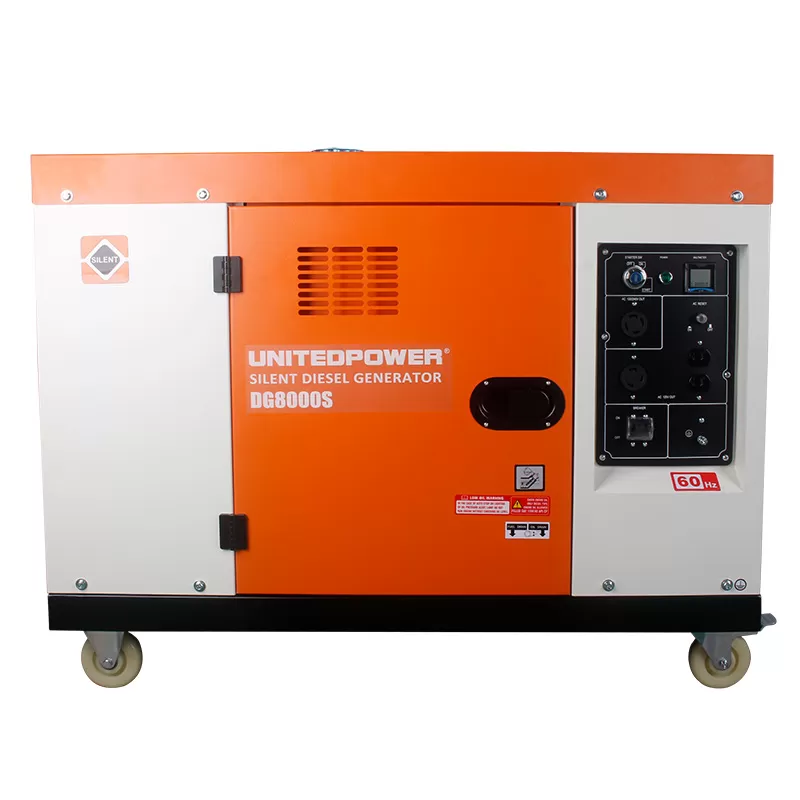
Sistemas de Generadores de 7 Kilovatios: Especificaciones Técnicas y Dimensionamiento Comercial
Decentralized electrical power generation requires balancing mechanical efficiency, electrical stability, and physical footprint. Within fleet operations, light-commercial construction, mobile service operations, and emergency facility management, the deployment of a 7 kilowatt generator represents a pivotal threshold. This specific output tier occupies the intersection between transportable single-operator machinery and stationary power units. Selecting, specifying, and integrating equipment of this class demands a rigorous understanding of the prime mover, excitation mechanisms, load characteristics, and thermal dissipation systems that govern sustained performance under adverse operating conditions.
Prime Mover Architecture and Mechanical Drive Systems
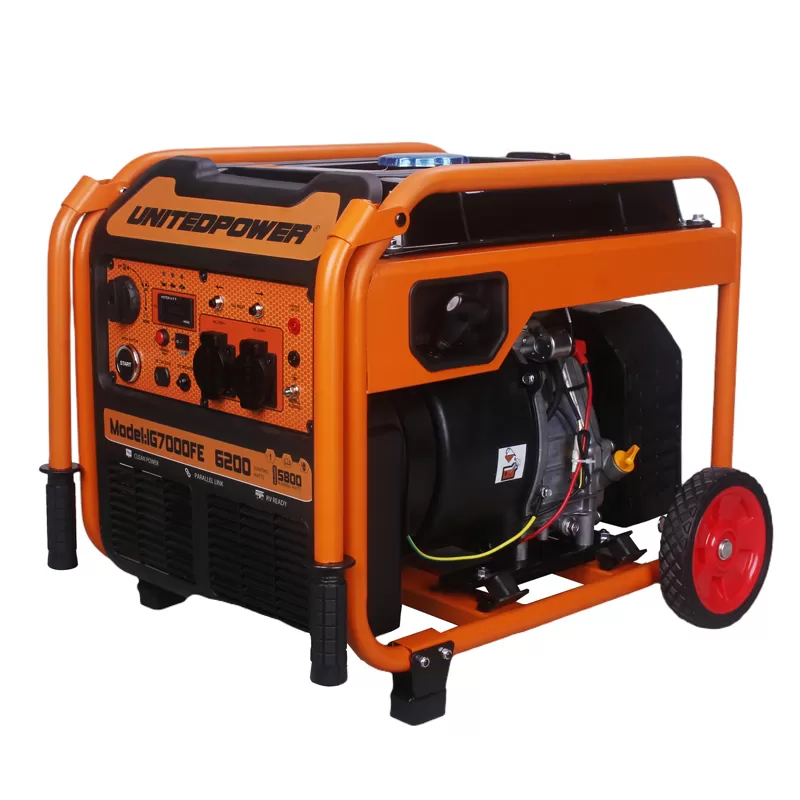
The mechanical performance of a power generation asset dictates its reliability under sustained electrical resistance. In standard manufacturing practices, power units delivering 7 kW of real power integrate heavy-duty, overhead valve (OHV) single-cylinder or compact V-twin internal combustion engines. These powerplants typically displace between 420cc and 460cc for single-cylinder configurations, operating at a nominal speed of 3,000 RPM (at 50 Hz) or 3,600 RPM (at 60 Hz) to maintain synchronous alternator output.
Combustion chamber geometry, cylinder sleeve materials, and lubrication architecture determine operational lifespan. Cast-iron cylinder liners provide dimensional stability and wear resistance under sustained thermal loading, minimizing oil consumption during high-duty runs. Pressurized lubrication circuits with integrated, replaceable spin-on filters maintain fluid film integrity across the crankshaft journals and connecting rod bearings. This proves far superior to splash-only lubrication systems, particularly when operating on uneven terrain or within mobile transport enclosures where tilt angles can disrupt fluid dynamics.
Mechanical governing assemblies control throttle response relative to load application. High-end platforms implement electronic governors that monitor engine speed via magnetic pickups on the flywheel, modulating the fuel delivery rack with response times measured in milliseconds. This rapid transient response mitigates mechanical droop when severe step loads occur, preventing rotational deceleration that degrades electrical frequency stability.
Alternator Construction, Excitation, and Power Quality
The electromechanical conversion within a 7 kilowatt generator relies entirely on stator-rotor pairing and magnetic flux management. Industrial-grade alternators feature 100% electrolytic copper windings across both the armature and field assemblies. Aluminum windings, while economically attractive, demonstrate higher internal resistance, higher thermal expansion coefficients, and lower mechanical yield strength under thermal cycling, precipitating early insulation breakdown.
Insulation integrity correlates directly with component longevity. Manufacturers adhering to Class H insulation standards utilize polyimide and epoxy resins capable of withstanding continuous operational temperatures up to 180°C. This thermal overhead protects against internal shorting during localized hotspots induced by high ambient temperatures or extended operation at full load capacity.
Total Harmonic Distortion (THD) serves as the primary metric for power quality. Standard brushed alternators paired with basic capacitive regulation often yield THD levels exceeding 15% to 20%, which damages sensitive industrial electronics, programmable logic controllers (PLCs), variable frequency drives (VFDs), and battery charging racks. Advanced equipment engineered by United Power incorporates precision-wound stators with skewed slot configurations and digital Automatic Voltage Regulation (AVR). This design reduces THD to under 5%, producing a clean sine wave that stabilizes output voltage within a tight tolerance band of ±1% to ±1.5% across no-load to full-load swings.
Load Profile and Capacity Analysis of a 7 Kilowatt Generator
Precise electrical sizing requires differentiating between real power (kW), apparent power (kVA), and transient starting demands. An electrical unit rated at 7,000 watts continuous power delivers 29.16 amperes at 240 volts single-phase (Unity Power Factor, PF = 1.0). When supplying power to lagging inductive loads—such as submersible pumps, air compressors, and heavy structural saws—the power factor degrades toward 0.8, increasing total apparent power requirements and phase-angle displacement.
| Operational Equipment | Rated Running Watts (kW) | Locked Rotor Amperage Surge Multiplier | Peak Starting Requirement (kVA) | Compatibility Evaluation |
|---|---|---|---|---|
| Direct-On-Line (DOL) 1.5 kW Submersible Pump | 1.5 | 3.5x – 5.0x | 5.25 – 7.50 | Acceptable as solitary starting step; requires sequencing. |
| Rotary Screw Air Compressor (2.2 kW Motor) | 2.2 | 2.5x – 3.0x | 5.50 – 6.60 | Direct match; stable continuous running with residual reserve. |
| Core Drilling Rig (3.0 kW Induction Motor) | 3.0 | 2.0x – 2.5x | 6.00 – 7.50 | Approaches the surge boundary of the power supply. |
| Commercial Inverter Welding Station (SMAW/GTAW) | 4.5 | 1.2x (Soft-start profile) | 5.40 | Requires high AVR response to handle dynamic arc striking. |
| Site Office HVAC & Auxiliary Instrumentation | 3.5 | 2.0x | 7.00 | Demands clean sine-wave output (THD < 5%) for microcontrollers. |
Managing motor inrush currents represents a significant design requirement. Electric motors draw Locked Rotor Amperage (LRA) during acceleration, consuming up to five times their Full Load Amperage (FLA). When selecting a 7 kilowatt generator for auxiliary backup or remote fieldwork, electrical engineers must implement staggered load sequencing. Energizing high-draw inductive equipment first allows the alternator flux to stabilize before auxiliary resistive loads, like quartz lighting or warming plates, are connected to the power bus.
Fuel System Integration and Thermodynamic Efficiency
Fuel selection establishes the operating envelope, supply chain logistics, and continuous run hours for any deployed generator. The 7 kW tier primarily uses either four-stroke gasoline or high-compression diesel prime movers, with liquid propane gas (LPG) and compressed natural gas (CNG) bi-fuel adaptations gaining traction in stationary utility roles.
Diesel powerplants offer superior Brake Specific Fuel Consumption (BSFC), converting roughly 35% of thermal energy into mechanical shaft work, compared to 25% to 28% for equivalent gasoline platforms. A diesel-fueled unit operating at 75% load consumes approximately 1.4 to 1.8 liters per hour, while an equivalent gasoline engine demands 2.2 to 2.8 liters per hour under identical resistive loading. Motores Diésel lack high-voltage electrical ignition systems, which eliminates ignition noise interference and lowers maintenance intervals in damp, saline, or dusty conditions.
Gaseous fuels reduce carbon buildup across valve seats and exhaust ports, prolonging lubricant life and reducing engine wear. However, utilizing propane or natural gas imposes a derating penalty. Because of the lower volumetric energy density of gaseous fuel-air mixtures, engines running on vapor fuels experience a 10% to 15% reduction in brake horsepower unless the displacement is sized larger or the compression ratio is modified specifically for high-octane dry gas.
Chassis Dynamics, Vibration Isolation, and Acoustic Mitigation
Rotational machinery induces mechanical vibration that can loosen structural fasteners, fatigue copper terminals, and cause early failure in control panel relays. Heavy-gauge tubular steel roll frames (minimum 32 mm outer diameter with a wall thickness exceeding 2.0 mm) provide the torsional rigidity required to maintain shaft-alternator alignment.
Elastomeric anti-vibration mounts serve as critical vibration dampening elements. Industrial durometer-rated rubber isolators installed at 45-degree angles between the engine-alternator sub-base and the external frame neutralize primary reciprocating forces. These mounts prevent resonant amplification, which otherwise degrades structural welds and internal wiring harnesses.
Acoustic attenuation remains a priority in urban infrastructure projects, telecom maintenance, and night-shift applications. Open-frame units typically generate 74 to 78 dBA measured at a distance of 7 meters under full electrical load. To meet strict municipal or occupational noise thresholds, sound-attenuated enclosures utilize high-density polyurethane acoustic foam, labyrinthine air intake channels, and multi-chamber reactive silencers. These systems redirect sound waves through baffled paths, reducing boundary noise levels below 65 dBA at 7 meters without constricting airflow or compromising internal cooling efficiency.
Environmental Derating Factors in Field Operations
Standard rating metrics for electrical generation equipment are calibrated at standard conditions: an ambient temperature of 25°C (77°F), a barometric pressure of 100 kPa, and a relative humidity of 30% at sea level. Real-world operations deviate from these baselines, requiring engineers to apply mathematical derating coefficients.
Altitude Derating: Atmospheric air density drops as elevation increases, reducing the oxygen available per intake cycle. Naturally aspirated power units lose approximately 3.5% of rated engine horsepower for every 300 meters (1,000 feet) of elevation above sea level. Operating a system at 1,800 meters requires derating the baseline output by roughly 21%.
Thermal Derating: Ambient temperatures exceeding 40°C decrease alternator heat rejection efficiency while lowering air charge density. Field calculations require a continuous derating of 1% to 2% for every 5°C rise above the 40°C threshold to protect the stator winding insulation.
Relative Humidity: Saturated intake air displaces oxygen molecules, slightly reducing peak combustion pressure. While minor compared to altitude effects, high humidity combined with ambient heat requires a combined derating factor of up to 5% under tropical conditions.
Failure to integrate these environmental correction factors when sizing power systems leads to mechanical overloading, elevated exhaust gas temperatures (EGT), thermal shutdown, and accelerated piston ring degradation.
Preventive Maintenance and Lifecycle Management
Adherence to proactive maintenance schedules maintains operational readiness and extends service intervals. Industrial equipment requires structured servicing routines scaled against run-time hours rather than calendar intervals.
Every 50 to 100 hours of runtime requires checking valve lash clearances. In single-cylinder OHV configurations, thermal cycling can shift rocker arm geometry, altering valve timing, dropping volumetric efficiency, and causing hard-starting conditions. Air filtration media require regular inspection; operating in aggregate crushing or structural demolition zones demands dual-element cyclonic pre-cleaners to block abrasive particulate matter before it reaches the intake manifold.
Modern equipment includes diagnostic interfaces that monitor operational statistics. Digital run-time meters, tachometers, and fault indicator LEDs allow fleet managers to monitor voltage fluctuations, operating frequency, and total service hours. Standardizing equipment builds according to the manufacturing guidelines defined by Poder unido ensures cross-compatibility of wear items, including air filters, AVR blocks, spark igniters, and seal kits across broader equipment fleets.
Technical Comparison: Alternator Technologies
Selecting the right generation architecture depends on the nature of the electrical load. The table below outlines trade-offs between primary alternator designs available in this operational class.
| Technology Classification | Voltage Regulation Precision | THD Profile | Motor Starting Capability | Maintenance Requirements |
|---|---|---|---|---|
| Capacitor Regulated (Brushless) | ± 5% to 7% | 10% – 15% | Moderate to High; relies on magnetic saturation. | Zero brush maintenance; simple diode replacement. |
| Brushed with Digital AVR | ± 1.0% to 1.5% | < 5% | High; field current surges instantly on command. | Periodic carbon brush inspection and slip ring cleaning. |
| Inverter Engine-Generator Architecture | ± 0.5% | < 2.5% | Moderate; electronically limited overload envelopes. | No brushes; electronic modules require clean cooling paths. |
Industrial applications with inductive tools typically favor AVR-equipped brushed copper units due to their strong transient surge capacity and low electrical noise. In contrast, sensitive laboratory, diagnostic, or computational setups benefit more from pure inverter topologies.
Industrial Compliance, Safety Switches, and Grounding Protocols
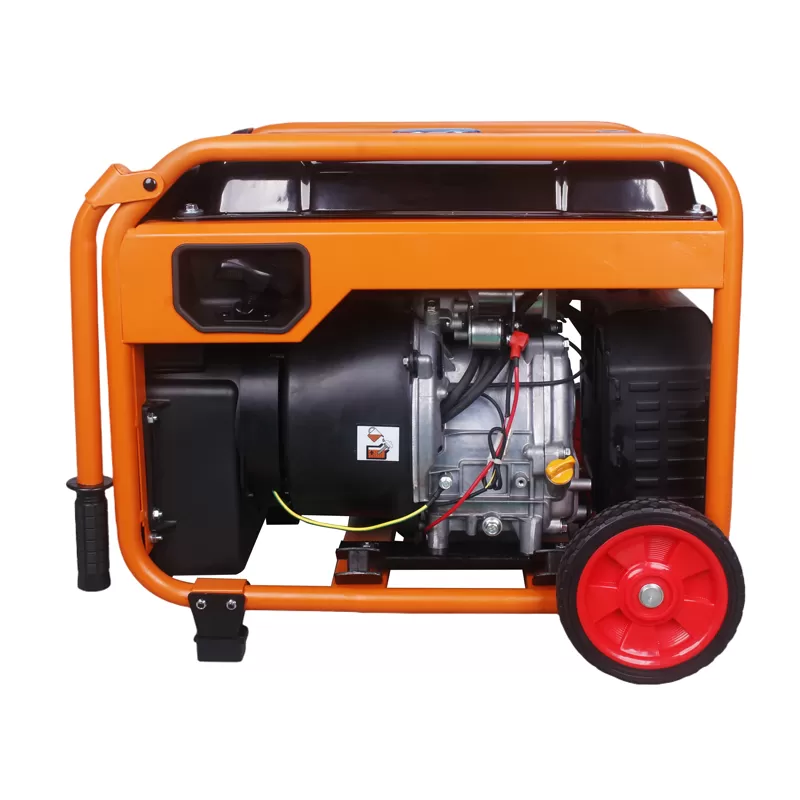
Commercial job site equipment must comply with regulatory, electrical, and workplace safety standards, such as OSHA, CE, and NFPA protocols. Electrical safety centers on grounding architecture and circuit interruption speeds.
The distinction between bonded-neutral and floating-neutral configurations directly dictates system safety. In mobile environments where the generator powers cord-and-plug connected equipment directly through chassis-mounted receptacles, a bonded neutral—where the neutral conductor connects directly to the generator frame—ensures ground-fault circuit interrupters (GFCIs) trip reliably during insulation faults. When integrating into existing facility switchgear through an automatic transfer switch (ATS), a floating neutral is required to prevent dual-grounding paths and circulating ground currents that disrupt upstream ground fault relays.
Circuit protection must include magnetic or thermo-magnetic double-pole breakers designed to interrupt the circuit under short conditions without nuisance tripping during standard motor-starting surges. Emergency stop buttons integrated into the low-voltage ignition circuit provide immediate manual shutdown during mechanical or structural failure.
Frequently Asked Questions
Can a 7 kilowatt generator power a three-phase motor load?
Most standard commercial platforms in this class are single-phase systems outputting 120V/240V split-phase power. While three-phase configurations (e.g., 400V/230V or 208V/120V) are manufactured, delivering balanced three-phase power from a 7 kW package reduces the available single-phase capacity per leg to roughly 2.3 kW. Attempting to start large three-phase industrial motors directly on a small power plant introduces phase unbalance problems, which causes motor overheating unless paired with variable frequency drives featuring soft-start functions.
What is the functional difference between continuous output and peak surge output?
Continuous output (rated watts) defines the maximum thermal load the alternator windings and engine block can handle indefinitely without tripping thermal breakers or accelerating insulation breakdown. Peak surge output (maximum watts) provides short bursts of kinetic and electrical energy—typically limited to 5 to 10 seconds—to overcome inductive motor starting resistances. Running an electrical asset above its rated capacity leads to frequency drops, mechanical stalling, and rapid thermal tripping.
How does fuel age impact the stability and operational longevity of the power unit?
Modern gasoline blends containing ethanol undergo phase separation when stored for over 30 days. Ethanol draws ambient moisture, precipitating an acidic water-alcohol layer at the bottom of the fuel tank that corrodes internal carburetor orifices, swells elastomer seals, and causes lean combustion misfires. High-load operations require ethanol-free fuel treated with antioxidant stabilizers or high-cetane, moisture-separated diesel fuel stored in sealed reservoirs.
Is it possible to integrate this system directly into a municipal electrical transfer panel?
Direct tie-ins require a listed, code-compliant manual transfer switch (MTS) or automatic transfer switch (ATS) featuring mechanical interlocks to prevent utility backfeeding. Backfeeding energizes municipal transmission lines during utility outages, violating safety codes and endangering line crews. Installation must verify whether the generator neutral is bonded or floating to match the grounding design of the existing distribution panel.
What steps are required to calculate the exact running costs of this platform?
Calculating operational expenditures requires tracking hourly fuel burn, oil change intervals, consumable replacements (air filters, spark plugs, or fuel filters), and long-term capital depreciation. With a typical fuel burn of 2.0 liters per hour at 50% load, plus preventative component replacements every 200 operating hours, the baseline operational cost (excluding equipment purchase depreciation) generally ranges between $2.50 and $4.50 per operational hour, depending on local fuel pricing.
Technical Specification Inquiries and System Procurement
Specifying a commercial-grade 7 kilowatt generator requires aligning electrical surge margins, ambient environmental factors, and fuel strategies with your specific field operational requirements. Equipment platforms must maintain consistent performance standards to ensure safe, continuous operation across varying climates and load conditions.
To request detailed technical schematics, full alternator dynamometer test reports, or bulk procurement pricing for specific industrial and commercial projects, contact the Poder unido technical engineering and equipment application group. Our design specialists are ready to provide comprehensive specification sheets, electrical wiring schematics, and custom enclosure configurations suited directly to your operational requirements.
.webp "¿Cuánto cuesta el mejor generador diésel para el hogar? (Desglose completo de precios 2026)")