United Power Equipment Co., Ltd | 一站式动力机械制造商

Why a Gas Generator 4000 Watt Model Serves as the Baseline for Industrial Job Sites-United Power Why a Gas Generator 4000 Watt Model Serves as the Baseline for Industrial Job Sites-United Power

联系我们
🇨🇳简体中文

Blog

首页 / News / Why a Gas Generator 4000 Watt Model Serves as the Baseline for Industrial Job Sites

Why a Gas Generator 4000 Watt Model Serves as the Baseline for Industrial Job Sites

联合动力 July 20, 2026

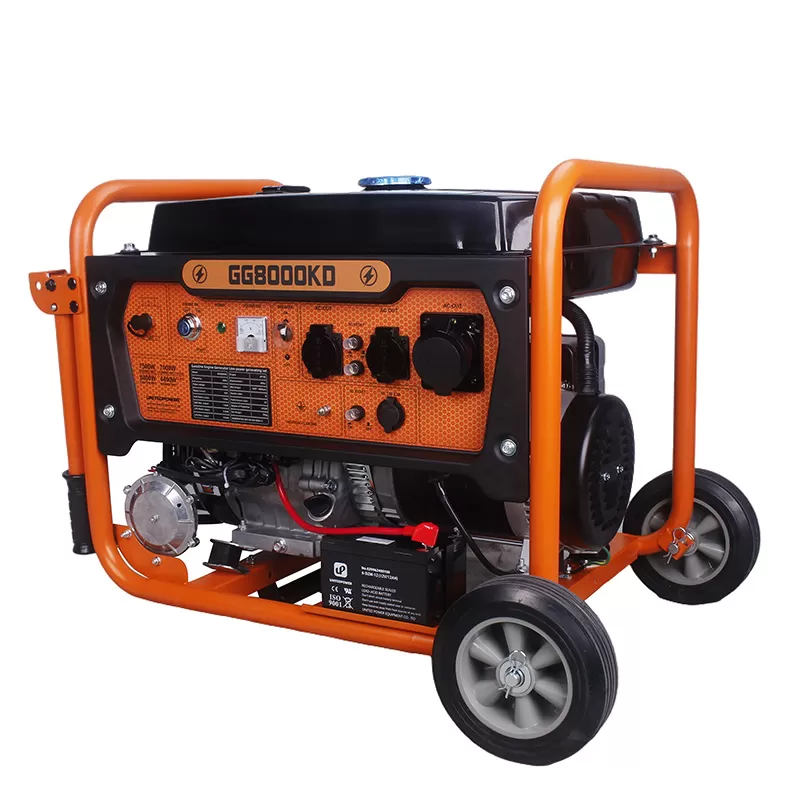
Industrial operations, remote job sites, and emergency backup systems require dependable, decentralized electrical power. Within the portable power generation market, the gas generator 4000 watt classification represents a highly versatile capacity threshold. This power band balances physical portability with sufficient electrical output to run high-draw machinery and sensitive diagnostic gear simultaneously. Manufacturers like 联合动力 focus engineering efforts on maximizing thermal efficiency, structural integrity, and electrical stability in this specific segment to meet the demands of commercial operators.

Understanding the mechanical attributes, load capacities, and operation profiles of these power units is necessary for fleet managers, procurement officers, and distributors. Selecting appropriate machinery requires looking beyond simple nominal ratings and looking closely at engine architecture, electrical circuitry, and fuel efficiency parameters under sustained loads.

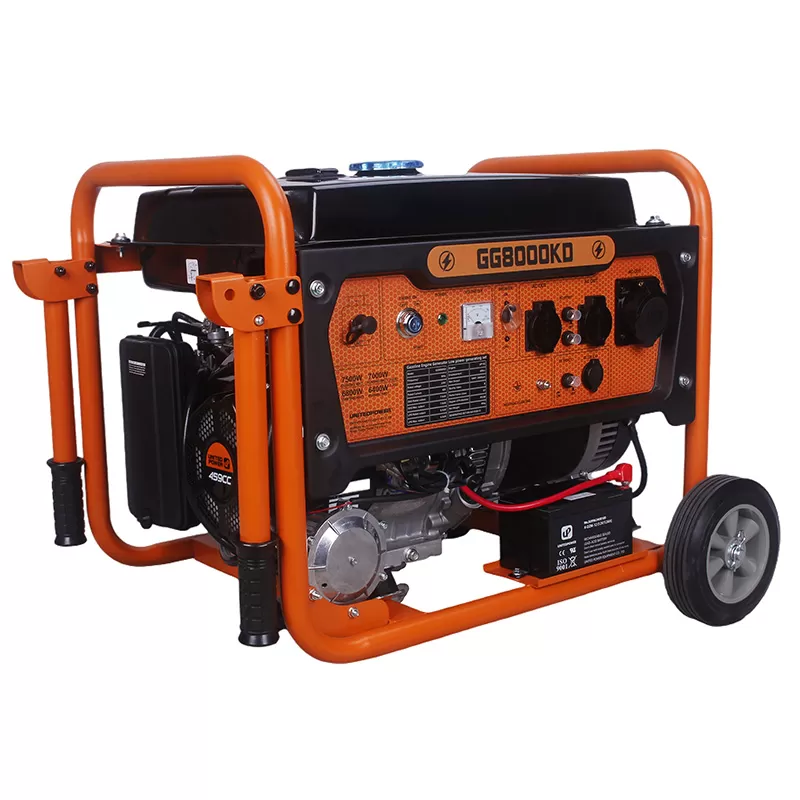
GG8000KD-5

Engine Architecture and Alternator Design

The core performance of a gas generator 4000 watt unit is defined by the marriage of its internal combustion engine and the electromagnetic alternator. To deliver reliable performance over extended runtimes, these components must be built to rigorous industrial standards.

Overhead Valve (OHV) Engines

Modern commercial generators in this power range typically employ four-stroke Overhead Valve (OHV) engines. These power plants, ranging from 208cc to 224cc in displacement, offer several design advantages:

  • Thermal Efficiency: The OHV configuration allows for a compact combustion chamber design, which minimizes heat loss and improves fuel combustion. This design yields higher power output per cubic centimeter of displacement.

  • Lubrication Systems: Splash lubrication systems, combined with high-quality oil sensors, protect moving parts. The inclusion of a low-oil shutdown mechanism is standard practice, preventing catastrophic engine seizure when operating on uneven ground or during extended unsupervised runtimes.

  • Decompression Systems: Automatic mechanical decompression systems reduce the force required for recoil starts, facilitating smoother activation in cold weather environments.

Alternator Construction and Power Quality

The alternator converts the mechanical energy of the engine into electrical energy. In high-grade units designed by 联合动力, the selection of materials dictates the longevity and efficiency of this process.

Windings made of 100% copper are a standard requirement for commercial applications. Compared to aluminum, copper exhibits lower electrical resistance, which minimizes thermal buildup during continuous operation. This lower operating temperature reduces degradation of the winding insulation, extending the operational life of the generator.

Voltage regulation is managed by an Automatic Voltage Regulator (AVR). The AVR continuously monitors the output voltage and adjusts the exciter current to maintain a stable voltage level, usually within a +/- 2% tolerance. This stability is vital when powering devices with sensitive microprocessors, where voltage fluctuations can lead to system errors or component failure.

Power Dynamics: Starting Watts vs. Running Watts

A primary point of evaluation when selecting a gas generator 4000 watt model is the distinction between surge (starting) power and continuous (running) power. Electrical loads are categorized into two primary types, each placing different demands on the generator.

Resistive Loads

Resistive loads convert electrical energy directly into heat or light. Examples include incandescent lighting, heating elements, and electric kettles. These loads maintain a constant power demand from the moment of activation. For resistive loads, the calculation of power requirements is straightforward, requiring a simple tally of the wattage ratings of all connected equipment.

Inductive Loads

Inductive loads rely on an electromagnetic field to run electric motors. Examples include air compressors, circular saws, submersible pumps, and refrigeration units. These devices require a massive influx of current—often three to four times their running wattage—to overcome inertia and start the motor. This temporary demand is known as the starting or surge wattage.

A typical gas generator 4000 watt unit might offer 4000 starting watts and 3300 running watts. Engineers design these systems with transient overload capacity, allowing the alternator to sustain the peak start-up currents of electric motors without tripping the main circuit breakers or causing a voltage dip that could shut down other connected devices.

Operational Scenarios and Load Profiling

To maximize the utility of a portable power system on a commercial site, operators must understand how different tools load the generator. The following table illustrates typical tool loads and how a 4000-watt power source can accommodate them simultaneously or sequentially.

Equipment TypeRunning Watts (Continuous)Starting Watts (Surge)Operational Compatibility Notes
Circular Saw (15 Amp)1,8002,300Can run concurrently with small hand tools and halogen work lights.
Air Compressor (1 HP)1,5003,000Requires careful power management; start compressor first before connecting other high-draw tools.
Submersible Sump Pump8001,200Ideal for utility maintenance; leaves ample overhead for lighting and battery chargers.
Job-site Halogen Lights1,0001,000Purely resistive; provides a steady, predictable load across the duty cycle.

When deploying a gas generator 4000 watt unit on a job site, managing the load sequence is highly effective. Connecting and starting the device with the highest starting wattage first, followed by lower-draw items, prevents the system from entering an overload state.

Overcoming Common Operational Challenges

Deploying portable power equipment in demanding environments introduces distinct challenges that can impact efficiency and machinery lifespans. Addressing these issues requires robust design choices and systematic operational protocols.

Environmental Adaptation and Air Intake Maintenance

Industrial environments are frequently plagued by high particulate matter, such as concrete dust, wood shavings, and airborne soil. If these particles enter the engine, they cause rapid wear on the piston rings and cylinder walls, leading to loss of compression and premature engine failure.

United Power utilizes dual-element air filtration systems to mitigate this risk. These systems consist of a foam pre-filter to catch larger debris and a paper element to capture fine dust. Regular cleaning and replacement schedules for these filters are necessary to maintain the proper air-to-fuel ratio, preventing running rich, which increases fuel consumption and carbon deposits inside the combustion chamber.

Acoustic Management in Restricted Environments

Noise pollution on construction sites and in municipal areas is subject to strict regulatory standards. High decibel levels can also impact worker safety and communication on site.

Engineers manage sound output through several mechanical designs:

  • Muffler Chamber Engineering: High-volume expansion mufflers with spark arrestors help dissipate exhaust noise without creating excessive backpressure, which would reduce engine power.

  • Vibration Isolation Mounts: Mounting the engine and alternator on heavy-duty rubber dampers isolates the steel frame from high-frequency vibrations, significantly reducing structure-borne noise.

  • Enclosure Optimization: Some specialized configurations feature semi-enclosed frames that redirect cooling airflow and sound waves away from the operator, keeping noise levels within acceptable OSHA parameters.

GG8000KD-5

Sustained Fuel Efficiency and Maintenance Protocols

For fleet managers running multiple units, fuel consumption directly impacts operational costs. A gas generator 4000 watt system must be designed to maximize runtime per gallon of gasoline while operating under varying loads.

Fuel consumption is generally measured at both 50% and 100% load capacities. A standard 4-gallon fuel tank on a 4000-watt commercial unit typically provides between 10 and 13 hours of operation at half load. This coverage ensures that a single fuel fill can power a standard work shift without interruption.

To sustain this fuel efficiency and ensure starting reliability, organizations must follow strict preventive maintenance protocols:

  1. Oil Change Intervals: The break-in oil should be changed after the first 20 hours of operation. Subsequent oil changes should occur every 100 operating hours or every 6 months, using high-detergent, API-certified oils suitable for the ambient temperature.

  2. Spark Plug Inspection: Spark plugs should be checked every 100 hours for carbon buildup and electrode wear. Correct gapping is essential for complete combustion and reliable starting.

  3. Fuel System Preservation: Gasoline can degrade and form gum deposits in the carburetor if left unused for more than 30 days. For standby applications, the fuel system must be run dry, or treated with a fuel stabilizer to prevent hard starting and rough idling.

Procurement Standards for B2B Buyers and Distributors

When purchasing power generation equipment in volume, distributors and B2B buyers must evaluate manufacturers based on manufacturing consistency, regulatory compliance, and post-sale support. A reliable partner like United Power ensures that every gas generator 4000 watt unit meets stringent international standards, including EPA and CARB certifications for emissions, as well as CE compliance for European distribution networks.

Selecting a manufacturer that prioritizes component standardization simplifies parts management for fleet operators. When spark plugs, oil filters, and AVR boards are uniform across a product line, maintenance teams can minimize inventory costs and complete repairs faster, reducing downtime in the field.

Frequently Asked Questions

Q1: What is the main difference between copper and aluminum windings in a 4000-watt generator alternator?
A1: Copper windings offer lower electrical resistance and superior thermal conductivity compared to aluminum. This results in greater efficiency, lower heat generation during sustained loads, and a significantly longer operating life for the alternator. Aluminum windings are lighter and cheaper but degrade faster under heavy industrial use.

Q2: Can a gas generator 4000 watt unit run sensitive electronic equipment directly?
A2: Yes, provided the generator is equipped with a high-quality Automatic Voltage Regulator (AVR) that keeps Total Harmonic Distortion (THD) within safe limits (typically under 5%). For highly sensitive diagnostic tools or computers, using an inverter generator or incorporating an external power conditioner is recommended to prevent any risk of logic board damage.

Q3: How does operating at high altitudes affect the power output of this class of generator?
A3: Internal combustion engines experience a reduction in power as altitude increases due to lower air density. Generally, you can expect a power loss of approximately 3.5% for every 1,000 feet (approx. 300 meters) of elevation above sea level. This loss can be partially offset by installing a high-altitude carburetor jet kit, which restores the proper air-to-fuel ratio.

Q4: Why is a low-oil shutdown mechanism necessary on industrial job sites?
A4: Job sites are rarely perfectly level. When a generator operates on an incline, the engine oil can shift, leaving some components inadequately lubricated even if the oil reservoir is technically full. The low-oil sensor detects this drop in localized pressure or volume and shuts down the engine immediately, preventing catastrophic mechanical damage.

Q5: What is the recommended storage procedure for a gas generator when it is not in use for several months?
A5: To prevent fuel varnish from clogging the carburetor jets, the fuel tank and carburetor float bowl should be completely drained. Alternatively, a high-quality fuel stabilizer can be added to a full tank of fresh fuel, and the engine should be run for 10 minutes to distribute the treated fuel throughout the system. The spark plug should also be removed, a tablespoon of engine oil added to the cylinder, and the engine cranked slowly to distribute the oil before replacing the plug.

Commercial Consultation and Inquiry

As a global manufacturer with decades of expertise in power equipment production, United Power designs and manufactures reliable power generation equipment tailored to industrial requirements. If your organization requires high-performance power solutions, bulk pricing, or custom OEM configurations, our engineering and commercial teams are ready to assist with your specific requirements.

Please contact our sales division directly to discuss how our manufacturing capabilities can support your distribution network or fleet operations. We will provide detailed specifications, production timelines, and customized commercial terms to meet your business objectives.


继续阅读